Can You Grow Moringa in Texas, Arizona, or California? A Zone Guide
Can you grow moringa where you live? A zone-by-zone guide for Texas, Arizona, Southern California, the Gulf Coast, Georgia, the Carolinas, and everywhere colder.
Can you grow moringa in Texas? In Arizona? In a Georgia backyard, or on a balcony in Ohio? The answer is yes to all of them, with a different plan for each. I grow the tree at my nursery in Weeki Wachee, Florida, which is about the easiest place in the country to do it, and a good share of my seed customers are in places that are not easy. What follows is the tree's real requirements, then a region-by-region translation, built from what the plant needs and what growers in those places report back to me. I have not grown moringa in Phoenix or Charlotte myself, and I will say so where it matters.
What the tree actually needs
Strip away the geography and moringa wants four things.
- Heat. Growth starts around 70°F and is fastest at 85 to 95°F. The tree does not mind 105°F if it has water.
- A frost-free stretch long enough to matter. From seed, it needs roughly four to five warm months to become a productive tree. Every month of warmth beyond that is more leaf.
- Sun. Full sun, all day. Shade makes a thin, pale, leggy plant.
- Drainage. Sandy or gravelly soil, or a raised bed, or a pot with holes. Wet feet kill it faster than cold does.
What it does not need is rich soil, much water once established, or humidity. That last point surprises people: moringa evolved in the dry foothills of northern India and grows across the Sahel. Florida's humidity is something it tolerates, not something it requires. Deserts suit it fine.
Cold is the one real limit. Leaves die at 32°F, wood in the upper 20s, and the root, under mulch, survives brief dips into the low 20s. That maps onto USDA zones like this: reliable perennial in 10 and 11, die-back perennial in 9 and often 8b, and an annual or a container plant colder than that. The full winter picture is in the frost care guide.
Texas
Texas is big enough to hold every version of the answer.
- The Rio Grande Valley and the Gulf Coast (Brownsville, Corpus Christi, Houston, Zones 9b to 10a) grow moringa about the way Florida does. Plant in the ground in April, mulch deep in November, cut back after the last frost. Houston clay is the main problem; plant on a mound or in a raised bed so the taproot is never in standing water. The Valley's occasional hard freeze, like the one in 2021, will kill trees to the ground, and most regrow from the root.
- San Antonio and Austin (Zone 8b to 9a) are die-back country. The root usually survives a normal winter under a foot of mulch and regrows in spring, but a bad year takes it, so keep seed in reserve or grow a backup in a pot. Long hot summers mean a spring-sown seedling still gives a real harvest by August.
- Dallas and north (Zone 8a and colder) are container or annual territory. Grow it in a big pot, bring it into a garage for winter, or sow fresh each spring and treat it as a fast annual green.
Alkaline, limestone-based soils in central Texas sometimes cause yellowing between the leaf veins from locked-up iron. Chelated iron fixes it. See why moringa leaves turn yellow.
Arizona and the desert Southwest
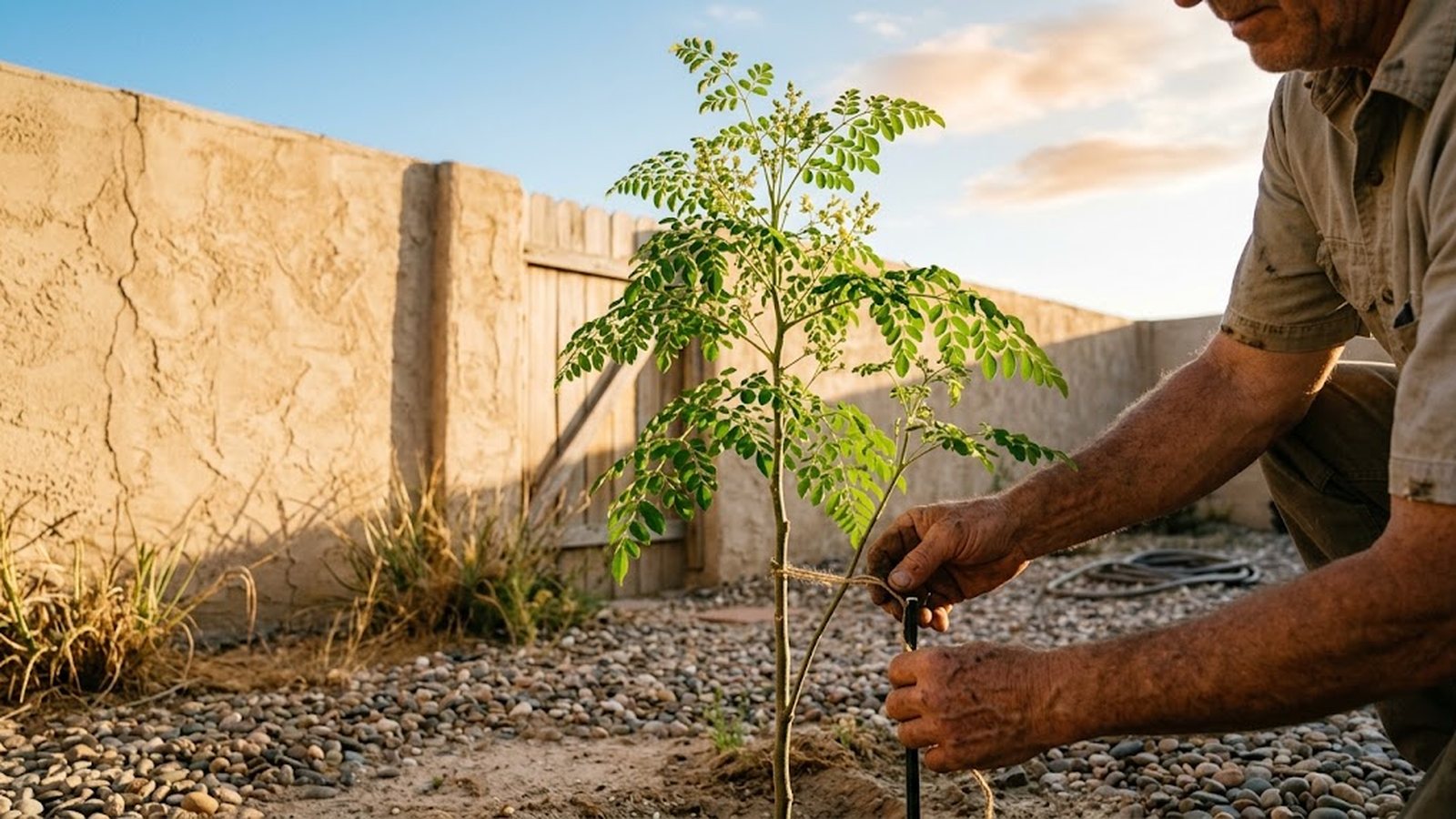
Phoenix, Tucson, and the low desert (Zones 9b to 10a) may be the best moringa country in the United States. The heat is ideal, the sun is relentless in the way the tree likes, and the sandy, gravelly soil drains the way its roots want. Growers there report trees that outrun Florida trees in summer.
Two adjustments. First, water. A desert moringa is not the no-water tree it is in Florida; it needs a deep soak every week or two in summer, more in a pot. Let the soil dry between soaks, but do not let a young tree go bone dry for weeks in 110°F. Second, afternoon shade for seedlings in the first month. A seedling in full Phoenix sun in July can scorch before its root is established; a shade cloth for the first few weeks solves it, after which the tree wants every hour of sun it can get.
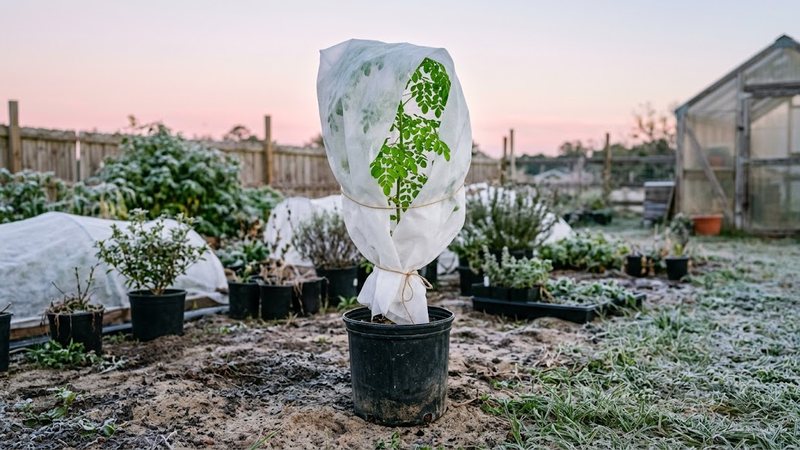
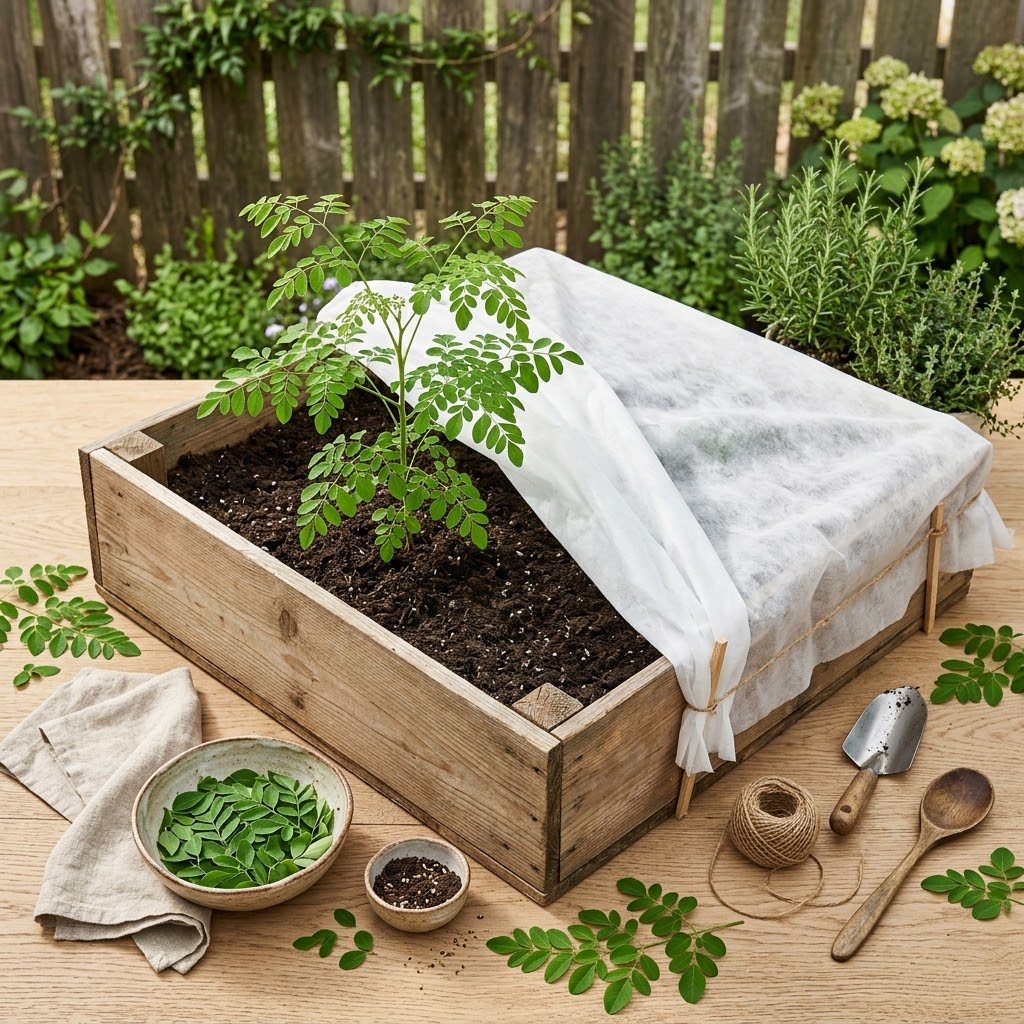
Winters in the low desert are mild but get frosts. Mulch, cover young trees, and expect some dieback. Higher elevations, Flagstaff and the like, are container-only.
California
Southern California from San Diego through the Inland Empire and into the low desert (Zones 9b to 10b) grows moringa well, and there is a long tradition of it in the state's Filipino and South Asian communities. Coastal spots have one problem: cool. A foggy summer in a beach town keeps nights in the 50s, and the tree sulks. Move inland ten miles and it thrives. Inland valleys with real heat, Riverside and Bakersfield, grow it like Arizona does.
Central and Northern California (Sacramento, the Central Valley, Zone 9a to 9b) have the summer heat but cooler, wetter winters. The tree grows fast from May to October and dies back in winter; wet winter soil is the killer, so drainage and a raised bed matter more than frost cloth. The Bay Area is coastal-cool and moringa there is a slow, disappointing plant except in the warmest inland pockets.
Dry summers mean watering, as in Arizona.
The Gulf Coast: Louisiana, Mississippi, Alabama
New Orleans, Mobile, and the coast (Zones 9a to 9b) are close to Florida conditions with more clay and more rain. Raised beds or mounds are nearly mandatory in heavy soil. Summer humidity and rainfall mean you will see more of the pests and leaf spots in the pest guide than a desert grower would, and pruning for airflow matters. Winter dieback is routine; regrowth from the root is routine too.
Georgia, the Carolinas, and the upper South
Savannah, Charleston, and the coastal plain (Zones 8b to 9a) can keep moringa as a die-back perennial with deep mulch and some luck. Atlanta, Columbia, and Raleigh (Zones 7b to 8a) cannot, at least not reliably in the ground. The practical plan in the upper South is one of three:
- Grow it as an annual. Sow after the last frost, harvest all summer, and let the frost take it. From seed in April to a five-foot leafy bush by August is realistic, and the leaf is the same leaf.
- Grow it in a container and overwinter it dormant in a garage. The container guide covers it.
- Dig the root. Some growers lift the taproot in fall, store it dry above freezing like a dahlia tuber, and replant in spring. I have not needed to try it, but it is reported to work.
Everywhere colder
Zone 7 and below, which is most of the country: moringa is a container plant or a summer annual, full stop. It still works. A seed sown indoors in March in a deep pot, moved outside in May, and pinched a couple of times is a productive shoulder-high bush by August in nearly any state, and it will give you fresh leaf and enough surplus to dry into powder for winter. Start it under a grow light on a heat mat if your spring is slow. Expect it to be an annual in the ground and a perennial only in a pot you bring inside.
Hawaii and the tropics
Zones 11 and up grow moringa as a true perennial tree with no winter and no dieback. The only management is pruning, because a tree that never stops will be thirty feet tall before you know it, and pod production, which is continuous. Everything in the pruning guide applies year-round.
The one-paragraph plan for any climate
Sow fresh seed in a deep pot or a raised bed once the soil is above 70°F. Full sun, gritty soil, water deeply but rarely. Pinch at two to three feet. Harvest from midsummer. In fall, either mulch the base a foot deep and hope (Zones 8b and 9), bring the pot inside (anywhere colder), or let frost end it and sow again next spring. Keep seed on hand. It is a fast, cheap tree, and the whole cycle from seed to harvest fits inside one summer nearly anywhere in the country.
FAQ
Can you grow moringa in Texas?
Yes. South Texas and the Gulf Coast grow it in the ground much like Florida. Central Texas keeps it as a die-back perennial under heavy mulch. North Texas grows it in a container or as a summer annual.
Does moringa grow in Arizona?
Very well in the low desert around Phoenix and Tucson, where the heat and drainage suit it. It needs regular deep watering there and afternoon shade for the first few weeks as a seedling.
What USDA zones can moringa grow in?
Perennial in Zones 10 and 11. Die-back perennial, regrowing from the root each spring, in Zone 9 and usually 8b. A container plant or summer annual in Zone 8a and colder.
Can moringa grow in cold climates?
As a summer annual or a potted plant that comes indoors for winter, yes, almost anywhere. Started in a deep pot in early spring, it reaches a productive size by late summer even in northern states.
Does moringa need humidity?
No. It comes from dry foothills and grows across arid regions. It tolerates Florida humidity but is equally happy, or happier, in a desert with regular deep watering.
The short version
Moringa needs heat, sun, drainage, and about four to five frost-free months. That makes it an in-ground perennial in Zones 10 and 11, a die-back perennial in 9 and 8b with deep mulch, and a container plant or fast summer annual anywhere colder. Deserts suit it as well as Florida does, with more watering. Clay and wet winters are the enemy everywhere, so plant on a mound or in a raised bed. Wherever you are, the cycle from seed to harvest fits in one summer.