Moringa Leaves Turning Yellow: 7 Causes and How to Tell Them Apart
Why moringa leaves turn yellow and drop, from overwatering and cold to hungry sand and pot-bound roots, with the pattern for each cause and the fix that works.
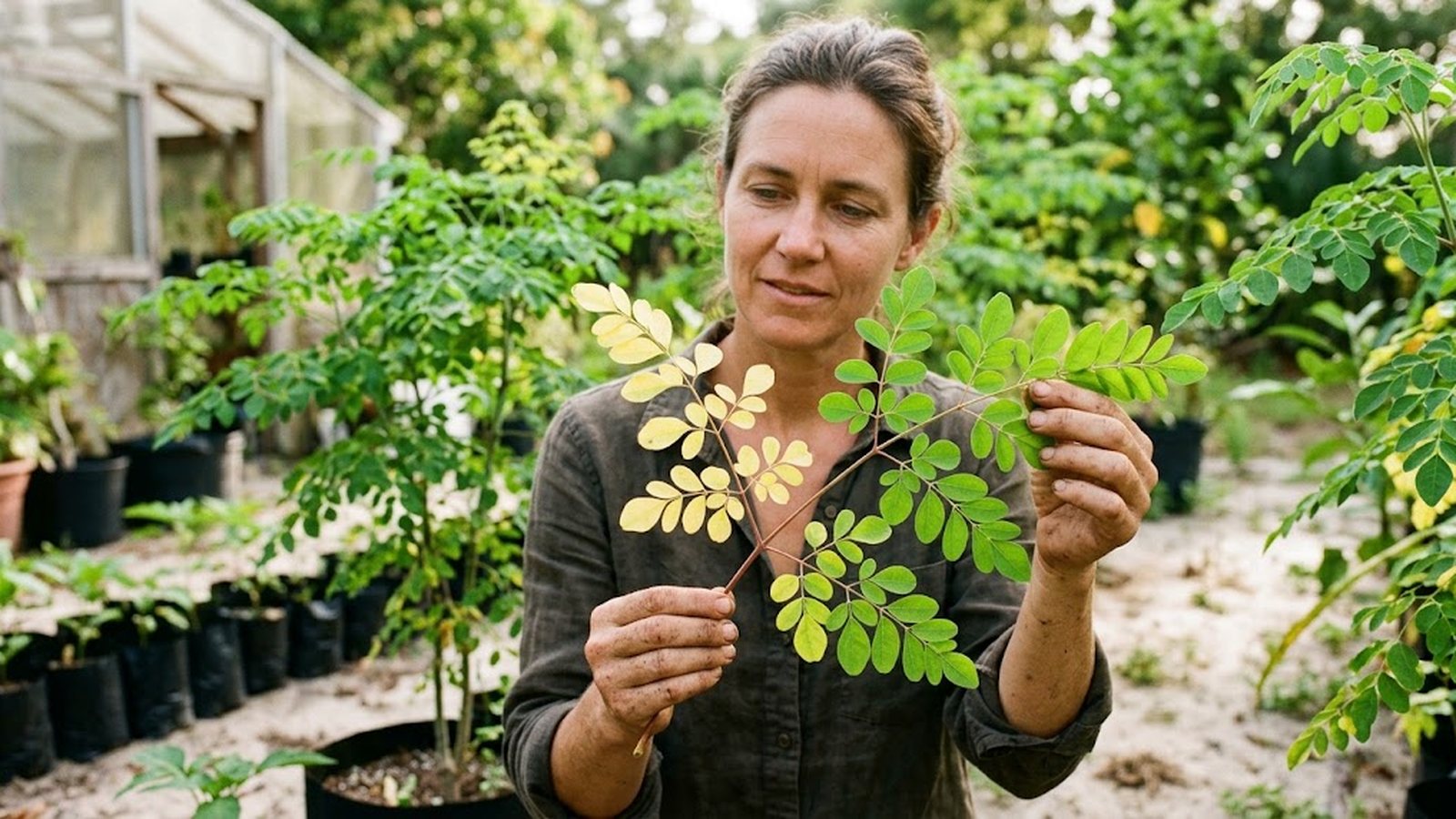
Moringa leaves turning yellow is the most common question I get from people growing the tree for the first time, and the honest answer is that yellow is a symptom, not a diagnosis. The tree yellows for at least seven different reasons, and the fix for one of them is the exact opposite of the fix for another. Water a cold-stressed tree and you drown it. Feed a drowning tree and you burn it. The trick is reading the pattern: which leaves, how fast, and what else is going on. After years of growing moringa in sand at my nursery in Weeki Wachee, Florida, here is how I sort it out.
First, the yellowing that is normal
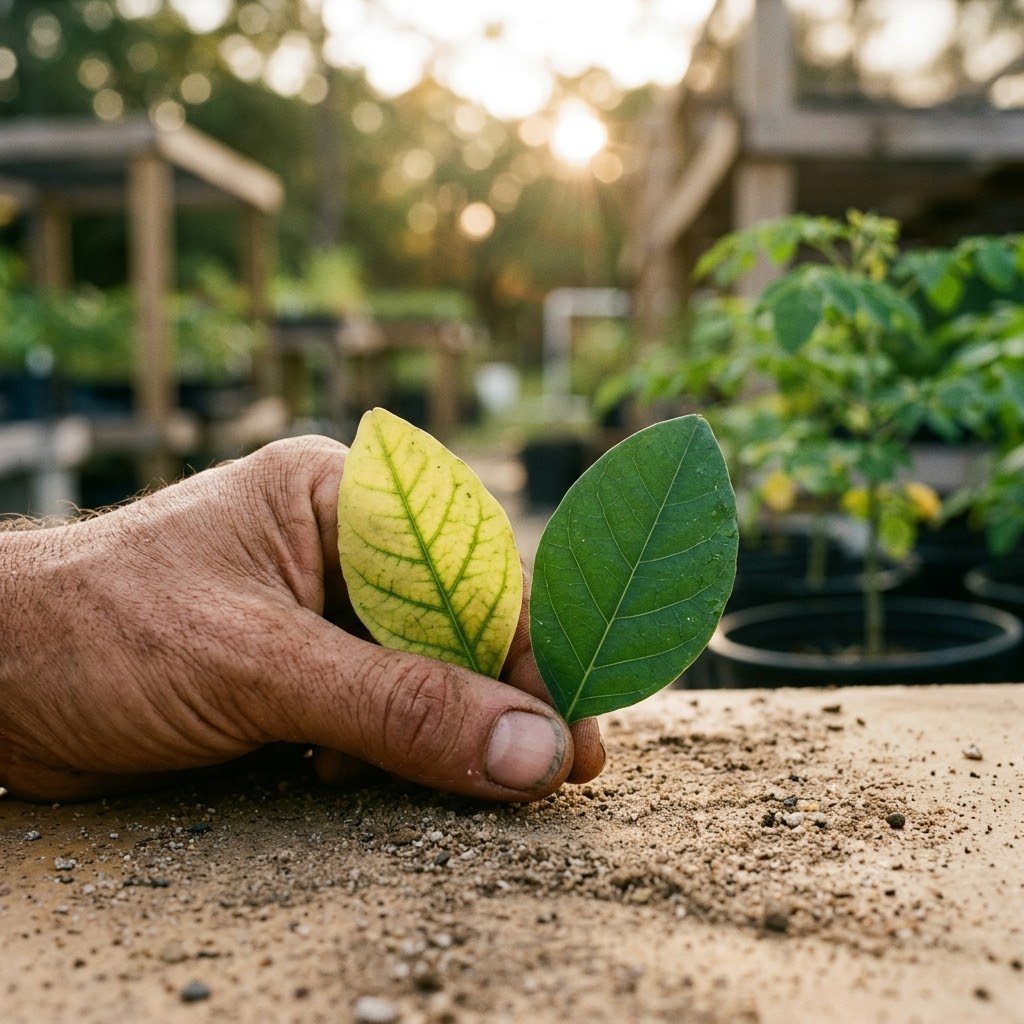
Moringa sheds its oldest leaves constantly. The lowest, innermost leaflets on any branch turn pale, then yellow, then drop, while the tips keep pushing new green. If the yellow is confined to a few of the oldest leaves at the bottom and the tree is otherwise growing, that is housekeeping, not trouble. A big tree in full production drops a light snow of yellow leaflets every week. Rake them into the mulch and move on.
The same goes for the fall shutdown. Once nights settle into the 50s, growth stops and the tree lets go of most of its leaf over a few weeks. That is the tree resting. It is covered in the winter care guide, and there is nothing to fix.
Everything below is the yellowing that is not normal.
1. Too much water (the number one killer)
Pattern: Yellowing starts on the lower and middle leaves and spreads upward. Leaflets go a soft, uniform yellow, often with a limp look, and drop easily. The soil is damp when you push a finger in. New growth may look fine at first, then stalls.
Moringa has a fleshy taproot built for drought, and it rots in wet soil faster than any other problem can hurt it. Clay soil, a low spot, a pot without drainage, an irrigation zone set for lawn, or just a rainy month can all do it. By the time the leaves yellow, the fine roots are already damaged.
Fix: Stop watering. Completely, until the top two inches are bone dry. In a pot, tip it on its side so water can drain from the holes, or unpot and repot into dry, gritty mix if the root smells sour. In the ground, pull the mulch back for a week to let the surface dry, and if the site floods, plan to move the tree or raise the bed next season. Moringa in the ground here gets no supplemental water at all once established. If you are watering an established tree on a schedule, that is probably your answer.
2. Too little water
Pattern: The opposite look. Leaflets wilt and fold along the midrib in the afternoon, then yellow at the edges and go crisp. Young trees and potted trees show it first. The soil is dry and pulling away from the pot edge.
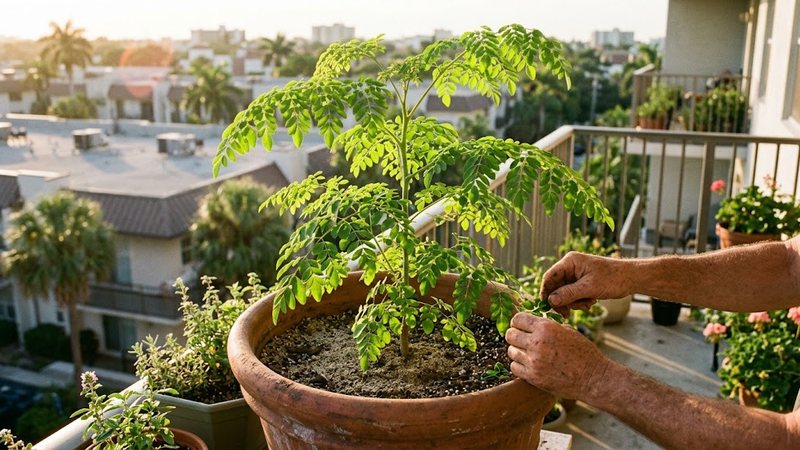
Established trees in the ground almost never need water, but seedlings, first-year trees, and anything in a container do. A potted moringa in July sun can drink a five-gallon pot dry in a day.
Fix: Water deeply, then check again in a day or two. Drooping leaves perk up within hours if thirst was the problem. If they do not, look at the other causes.
3. Cold
Pattern: Sudden, widespread yellowing after a run of cool nights, often with a bronze or purplish tint on the leaves facing the cold, and heavy leaf drop within days. Growth stops. Below freezing, the tips go black instead of yellow.
Moringa starts complaining at 50°F. It is not damage in the way frost is damage, but it looks alarming the first time.
Fix: Nothing, except patience and not overreacting. Do not water more, do not feed, and do not prune. The tree re-leafs as soon as the soil warms. If frost is coming, mulch the base and cover small trees.
4. Hungry sand
Pattern: New leaves come in small and pale, and the whole tree looks washed-out yellow-green rather than deep green, with the oldest leaves yellowing first. Growth is slow for the season. This is common in pure sand, in pots that have not been fed, and in beds that grew something heavy the year before.
Sandy soil holds almost no nitrogen. Moringa can grow in it, and grows well in it once it is established with a good mulch layer feeding the surface, but a young tree in bare sand runs out fast. Potting mix runs out too, usually by midsummer.
Fix: Feed, but gently. A balanced organic fertilizer, compost worked into the mulch, or a diluted liquid feed every two weeks until the color returns. Fish emulsion turns a pale tree dark green in ten days. Do not dump a strong synthetic fertilizer on a stressed tree; that burns the roots and you get yellow from a different cause. Full feeding schedule in the growing guide.
Yellowing between the veins while the veins stay green, especially on young leaves, points to iron or magnesium being locked up, which happens in alkaline soils and in overwatered pots. A dose of chelated iron or a tablespoon of Epsom salt in a gallon of water usually clears it in a couple of weeks.
5. Transplant shock
Pattern: A recently moved tree yellows and drops a third or half its leaves in the first two weeks, then stabilizes and pushes new growth.
The taproot hates being disturbed. Every transplant costs the tree some root, and it sheds leaf to match. This is why direct-sowing seed beats transplanting whenever you can.
Fix: Water once well at planting, then leave it alone. Shade it for a few afternoons if it is high summer. Do not feed until new growth appears. Almost every tree recovers.
6. Pot-bound roots
Pattern: A container tree that grew well for a season now yellows despite normal water and feeding, dries out within hours of watering, and has roots circling out of the drainage holes.
Fix: Pot up to a container at least twice the volume, or root-prune and refresh the mix. The container guide has sizes.
7. Pests and rot
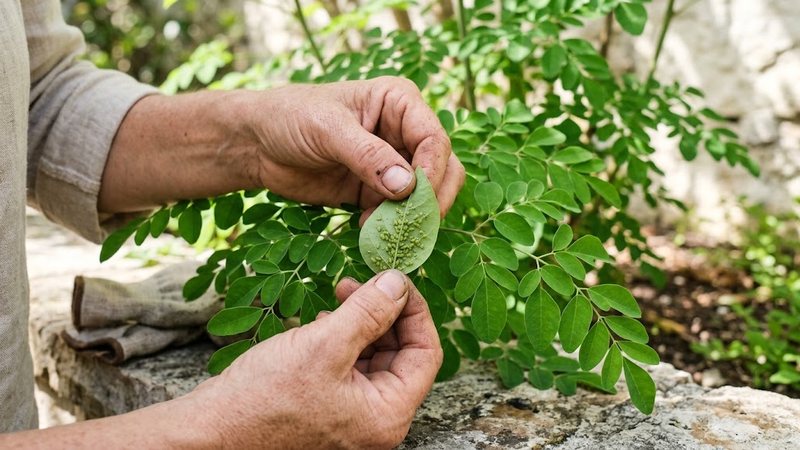
Pattern: Yellow that comes with something else. Speckled, stippled yellow with fine webbing means spider mites, usually in a hot dry spell. Curled yellow new growth with sticky residue means aphids. Yellow patches with holes means caterpillars have been eating and the leaf is dying back around the damage. Sudden yellowing of the whole tree with a soft, dark, foul-smelling base means root or collar rot, and the tree is usually past saving.
Fix: Depends on the pest, and each one has a simple answer covered in the pests and problems guide. For rot, improve drainage and start over with fresh seed; do not replant in the same wet spot.
The quick diagnosis table
| What you see | Most likely cause | First move |
|---|---|---|
| Lower leaves yellow, soil damp, leaves limp | Overwatering | Stop watering, improve drainage |
| Leaves wilt in afternoon, soil dry, edges crisp | Underwatering | Water deeply |
| Sudden drop after cool nights, bronze tint | Cold | Wait; mulch; cover if frost |
| Whole tree pale, small new leaves, slow growth | Nutrient shortage | Feed lightly and often |
| Yellow between green veins on new leaves | Iron or magnesium lock-up | Chelated iron or Epsom salt; check drainage |
| Yellowing within two weeks of moving | Transplant shock | Water once, leave alone |
| Pot dries in hours, roots out the holes | Pot-bound | Pot up |
| Stippling, webbing, sticky residue, holes | Pests | Identify and treat |
| Whole tree yellow, base soft and smelly | Rot | Start over in a drier spot |
FAQ
Why are my moringa leaves turning yellow and falling off?
Overwatering is the most common cause, followed by cold nights and a shortage of nitrogen in sandy soil or old potting mix. Check the soil first: damp soil with limp yellow lower leaves means too much water; dry soil with wilting means too little.
Should I remove yellow leaves from my moringa?
You do not need to. They drop on their own, and pulling them does nothing for the tree. Focus on the cause. The exception is pest-damaged leaves, which are worth removing to reduce the population.
Can yellow moringa leaves turn green again?
A leaf that is fully yellow will not recover, but a tree that is pale from hunger will green up its new growth within a couple of weeks of feeding, and the pale leaves often deepen in color too.
Is it normal for moringa to drop leaves in winter?
Yes. Once nights are consistently in the 50s the tree stops growing and sheds most of its leaves. It is resting. New growth returns when the soil warms.
How do I know if my moringa has root rot?
The whole tree yellows and wilts at once despite wet soil, the base of the trunk is soft or dark, and the soil smells sour. Fine roots pull away brown and mushy. Prevention is drainage; there is no reliable cure.
The short version
Read the pattern before you act. Old lower leaves yellowing slowly on a growing tree is normal. Limp yellow on damp soil is overwatering, and the fix is to stop. Wilted crisp yellow on dry soil is thirst. Sudden drop after cool nights is cold, and the fix is to wait. A pale, slow tree is hungry. A tree that yellows right after moving is in shock. A potted tree that dries out in hours is root-bound. Yellow with webbing, stickiness, or holes is pests. Match the pattern, make one change, and give it two weeks.