Moringa in Winter: Frost Protection, Dieback, and Spring Recovery
What frost does to a moringa tree, how to protect it on cold nights, when to cut back frost damage, and why a tree that looks dead in January is fine by April.
The first winter with a moringa tree is a small heartbreak. The tree that was fifteen feet of green in October is a bare stick in January with blackened tips, and every new grower assumes it is dead. It almost never is. Moringa frost protection comes down to understanding one fact: the tree you see above ground is disposable, and the root below it is not. I grow moringa in Weeki Wachee, Florida, in Zone 9b, where we get a handful of frosts most winters and a real freeze every few years. Here is what the cold does, what I do about it, and what I have stopped bothering with.
What cold actually does to moringa
Moringa is a tropical tree. It has no dormancy mechanism the way an oak does; it simply stops growing when nights drop into the 50s and starts dropping leaves when they drop into the 40s. That leaf drop is not damage. It is the tree shutting down, and a moringa in December here looks thin and sad even in a frost-free year.
Frost is a different matter. At 32°F the water in the soft new growth freezes and ruptures cells. The tips turn black and mushy within a day. A light frost takes the outer foot or two of each branch. A hard freeze, say the mid-20s for several hours, can kill the trunk to the ground.
What survives is the taproot and the base of the trunk, which are insulated by the soil. In Zone 9, and often in 8b with mulch, the root lives through winters that kill everything above it, and the tree regrows from the base in spring. Growers in Zones 10 and 11 rarely see any of this. Growers in Zone 8a and colder should read the container guide, because a tree in a pot that moves indoors is the only reliable answer there.
Before winter: the two things that matter
Stop feeding by early fall. Fertilizer pushes tender growth, and tender growth is what frost burns first. My last feeding is in September. The tree hardens off what it has, and the wood that goes into winter is tougher for it.
Mulch the base deep. This is the single most useful thing you can do, and it costs almost nothing. In late fall I pile six to eight inches of pine straw, wood chips, or dry leaves around the base of each tree, out to a foot or more from the trunk. That blanket keeps the soil around the root crown several degrees warmer than the air. It is the difference between a tree that regrows from a live trunk base and one that has to start from deep root buds, which is slower.
Do not water heavily going into a cold snap. Dry soil around a moringa is fine; the root stores its own water. Wet soil in a freeze is how roots rot.
On a frost night
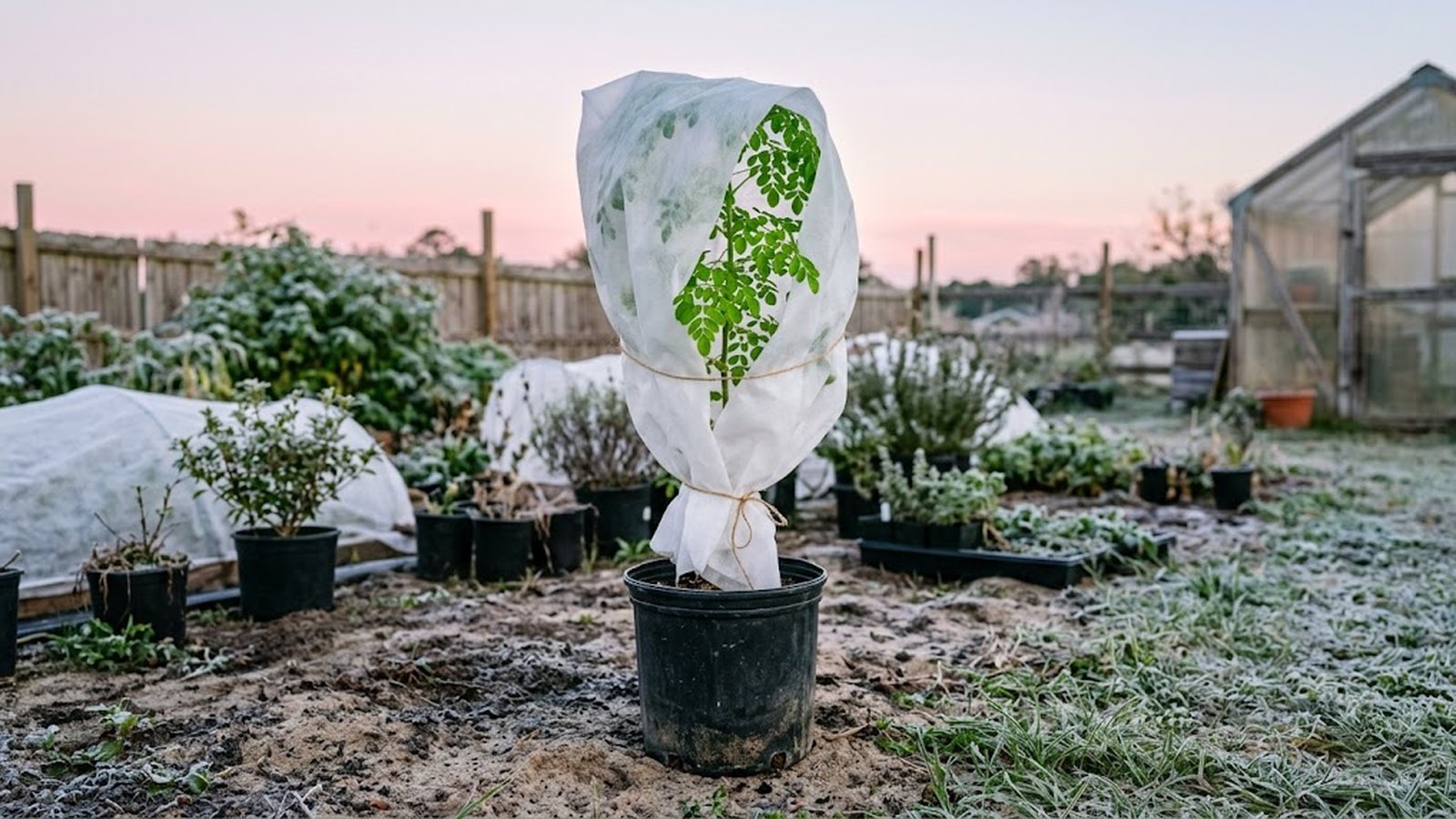
For a young tree, or a tree you care about keeping tall, cover it. Frost cloth, an old bedsheet, or burlap draped over the tree and pinned to the ground traps the heat rising from the soil. The cover has to reach the ground to work; a sheet tied around the trunk does nothing. Plastic touching the leaves will freeze them, so if plastic is all you have, put stakes under it to hold it off the foliage. Take covers off in the morning once the air is above freezing so the tree does not cook.
Adding a string of old-fashioned incandescent lights under the cover, or a bucket of warm water at the base, buys another few degrees on a bad night. I have done both for a tree I did not want to lose.
For a big established tree, I do not bother. I cannot cover a fifteen-foot tree, and I do not need to. It will lose its top, and it will regrow. What I protect is the base, with mulch.
After a frost: wait
Here is the mistake almost everyone makes. They see black, mushy branches, and they prune them off the next day. Do not. Those dead tips are now insulation for the live wood below them. Cutting into the tree in January exposes fresh green wood to the next frost, which then kills the tree lower down. Leave the ugliness alone.
Scratch the bark with a fingernail to check how far down the damage goes. Green under the bark means live. Brown and dry means dead. You will usually find the line somewhere in the middle of the trunk, and it will move a little lower with each cold snap. That is fine. Wait.
In spring: cut back hard
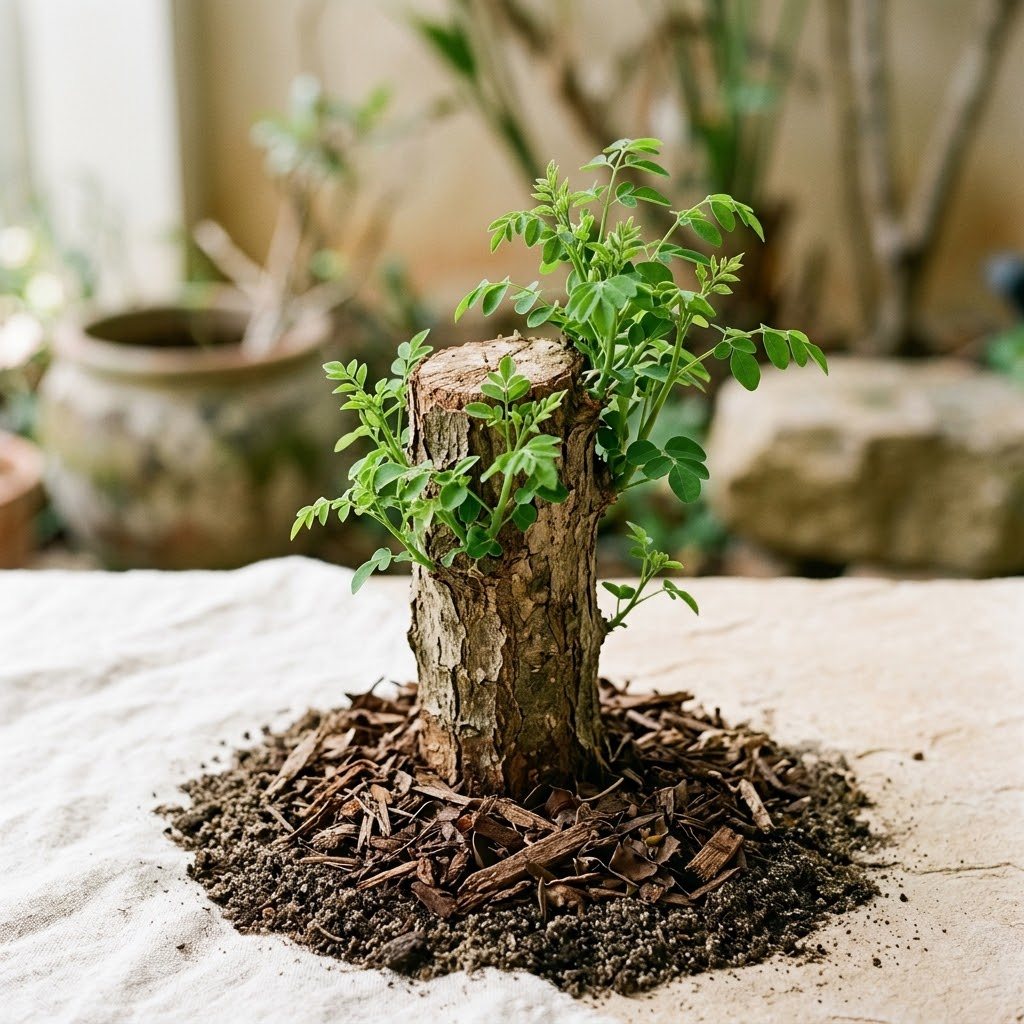
Once the last frost date has passed, and I mean actually passed, not just a warm week in February, cut every branch back to live wood. If the trunk is dead to a foot above the ground, cut it there. If the whole thing looks dead, cut it a few inches above the mulch and wait a month before you decide anything. Roots that look hopeless in March routinely push shoots in April once the soil warms.
The tree regrows from buds just below the cut and from the root crown. The regrowth is startling. Multiple shoots erupt, each one pushing a foot or more a week in May, and a tree cut to a stump in March is a dense six-foot bush by June. Many growers, including me, cut back this hard every spring on purpose, frost or no frost, because a coppiced tree produces more leaf at picking height than a tall one. The details of managing that regrowth are in how to prune moringa.
Once the shoots are up, thin them. Five or six strong stems make a better tree than twenty weak ones. Water when the soil is dry, start feeding once there is real leaf, and it will out-produce the tree you lost.
When the tree really is dead
It happens. A young seedling in its first winter with a small root, a tree in a low spot where cold air pools, a freeze into the teens, or a wet winter that rotted the root before the cold ever got to it. Signs that a tree is truly gone: no green under the bark all the way to the ground by late April, a root crown that is soft and brown when you dig a little, and no shoots by the time your neighbor's moringa is three feet tall. At that point pull it, and plant fresh seed in the same spot. From seed to a productive tree is one warm season here, so the loss is smaller than it feels.
Zone-by-zone reality
- Zones 10 to 11: Leaf drop in the coolest weeks, occasional tip burn. Mulch if you like. Nothing else needed.
- Zone 9b (my nursery): Expect top dieback most winters and regrowth from the trunk or base every spring. Mulch deep, cover young trees, cut back after the last frost.
- Zone 9a and 8b: The root survives most winters under heavy mulch, but not all. Treat it as a die-back perennial and keep a few seeds in reserve.
- Zone 8a and colder: Grow in a container and bring it inside, or grow it as an annual from seed each spring. Some growers in these zones dig the taproot in fall, store it like a dahlia tuber in dry peat above freezing, and replant in spring. I have not needed to try it, but the growers who do it report it works. The regional guide goes into more detail on each climate.
FAQ
Will moringa survive a frost?
A light frost kills the soft tips and leaves; the tree regrows from lower wood. A hard freeze can kill the trunk to the ground, but in Zone 9 the mulched root usually survives and regrows in spring. Below Zone 8b, the root itself is at risk in a bad winter.
Should I prune frost-damaged moringa right away?
No. Leave the dead tips on through winter as insulation, and cut back to live wood only after your last frost date has passed. Pruning early exposes live wood to the next cold snap.
Why is my moringa dropping leaves in winter when there has been no frost?
Cool nights alone do it. Once nights sit in the 40s the tree stops growing and sheds most of its leaf. It is resting, not dying. New growth returns when the soil warms in spring.
How cold can moringa tolerate?
Leaves and soft growth are damaged at 32°F. Woody trunk tissue tolerates brief dips into the upper 20s. The taproot, under soil and mulch, can survive short freezes into the low 20s. Prolonged cold at those temperatures, or wet soil during a freeze, is what actually kills the tree.
Does covering a moringa tree really help?
For a small or young tree, yes, if the cover reaches the ground and traps the soil's heat. A large tree is another matter. Cover is impractical; protect the root with deep mulch and plan to cut the top back in spring.
The short version
Stop feeding by early fall, mulch the base six to eight inches deep, cover young trees to the ground on frost nights, and then leave the frost damage alone until the last frost has passed. Cut back to live wood in spring and the tree regrows faster than you would believe. In Zone 9 the root almost always survives. In Zone 8 it is a gamble worth mulching for. Colder than that, grow it in a pot or from fresh seed each spring.