What Moringa Powder Should Cost: Price per Ounce, by a Grower
What moringa powder costs and why: price per ounce across the market, what a daily teaspoon costs, why the cheapest jars are the oldest leaf, where value peaks.
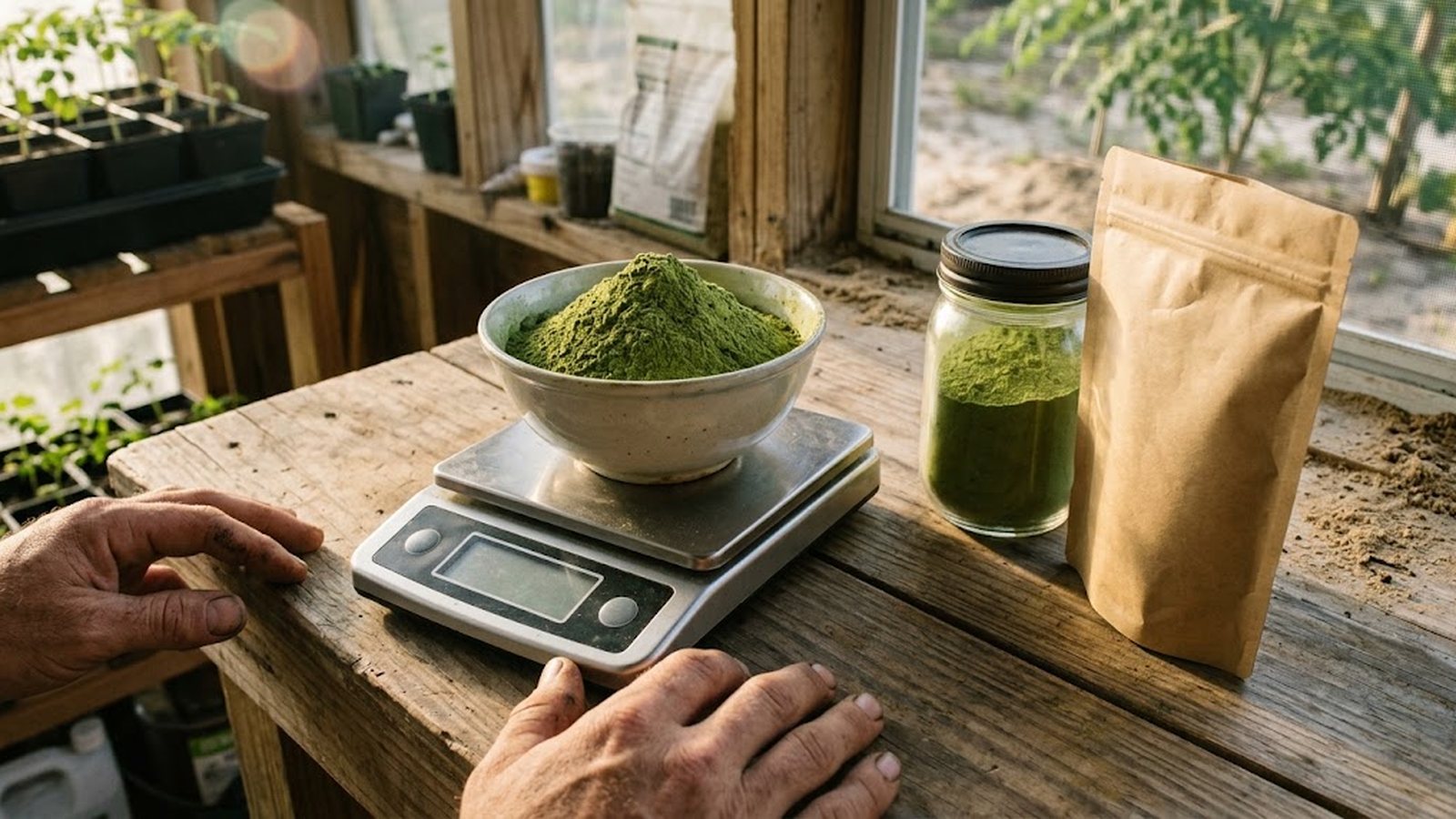
Moringa powder price is all over the map, from bulk bags that work out to under a dollar an ounce to boutique jars at ten times that, and the label rarely explains the difference. I grow and sell moringa from my small nursery in Weeki Wachee, Florida, so I have the cost sheet in front of me: what it takes to grow, dry, and mill leaf here, what good wholesale leaf costs when my own harvest runs out, and what the market charges at every level. This is an honest look at what you are paying for, what a daily habit actually costs, and where the value is.
The range, per ounce
Prices move. I would rather give you the market's shape than numbers that go stale by spring. Roughly, in the United States:
- Bulk and commodity: large bags, often imported, sold by the pound. The cheapest per ounce by far. Quality ranges from decent to hay, and you cannot tell from the listing.
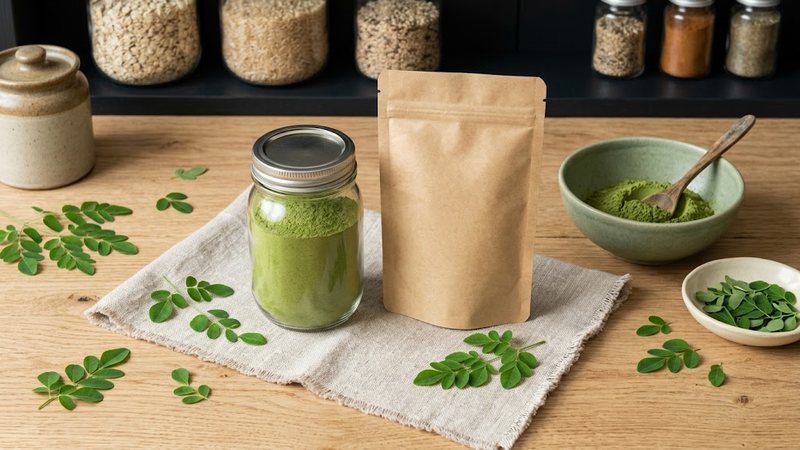
- Mid-market: four- to sixteen-ounce jars and pouches from established supplement and health-food brands. Several times the bulk price per ounce. Usually consistent, often organic-certified, usually anonymous about origin and drying.
- Small-grower and specialty: small jars from farms and small brands that can tell you where the leaf came from and how it was dried. Higher again per ounce, with the widest range in both price and quality.
A four-ounce jar from a mid-market brand and a four-ounce jar from a small grower may differ by a few dollars or by a factor of two. What matters is what is inside, and that is the part of the price this article is really about.
What a daily teaspoon costs
This is the number that should drive the decision, because nobody uses moringa by the pound.
A level teaspoon of powder is about two grams. There are roughly fourteen teaspoons in an ounce, so a four-ounce jar holds fifty-five or so teaspoons: nearly two months at a teaspoon a day, a month at two. Work the math on any jar and the cost of a daily teaspoon lands somewhere between a dime and fifty cents, from the cheapest bulk to the most expensive specialty jar.
Put another way: the difference between the cheapest powder and a good one, for someone using a teaspoon a day, is roughly the price of one coffee a week. That is the whole argument for not buying the cheapest jar. The capsules comparison works the same math for capsules, which cost far more per gram of leaf.
What honestly drives the price up
Drying temperature. Leaf dried gently, at or below 105°F, dries slower and takes more space, more time, and more attention than leaf dried hot and fast. It is the single biggest quality factor and a real cost. My own leaf is dried at that standard, and I hold the growers I buy from to it.
Harvest and handling. Leaf picked by hand in the morning, stripped from stems, and dried the same day costs more in labor than leaf cut by machine, stems and all, and dried whenever.
Freshness. Powder milled in small batches close to shipping has not sat in a drum for a year. Small-batch milling is inefficient and it is the reason small-grower powder tastes like something.
Testing. Lab testing for heavy metals and microbes is a real cost that responsible sellers carry. It is invisible on the label unless they say so.
Certification. USDA Organic certification costs a farm money every year and shows up in the price. It documents practices; it does not, on its own, tell you about drying or freshness. The buying guide explains what it does and does not mean.
Scale. A small nursery cannot spread its costs the way an importer can. That is honest, and it is also why I buy wholesale from vetted growers when my own harvest runs out, so the price stays fair instead of boutique.
What does not justify a higher price
- Words. "Superfood," "miracle," "premium," "ancient," and a long list of health claims cost nothing to print and tell you nothing about the leaf.
- Packaging. A heavy glass jar and a designed label add to the price and not to the powder. Dark glass is useful; the rest is marketing.
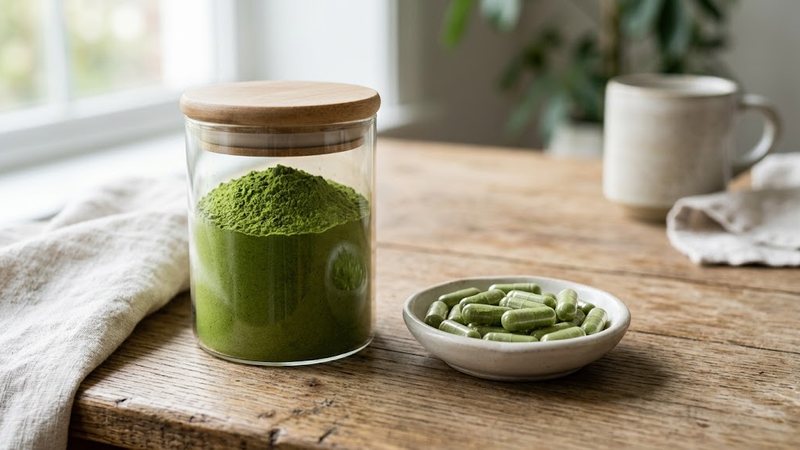
- Capsules. Encapsulating powder roughly doubles to quadruples the cost per gram of leaf for the convenience of not tasting it.
- Blends. Powder cut with other greens, sweeteners, or fillers is cheaper to make and often priced as if it were pure.
Why the cheapest jar is usually the oldest leaf
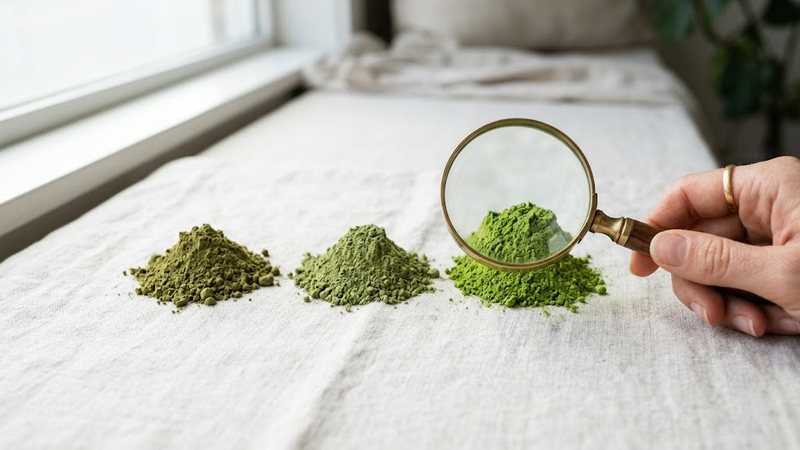
At the bottom of the market, the economics push toward one outcome. Leaf is bought in bulk from the lowest bidder, dried fast and hot because time is money, milled in large runs, stored in drums, and repackaged over months or years. The powder that reaches you is olive-brown, smells like hay, and tastes bitter and flat. It is safe, it is cheap, and it is a bad advertisement for moringa. Most people who "tried moringa and didn't like it" tried this.
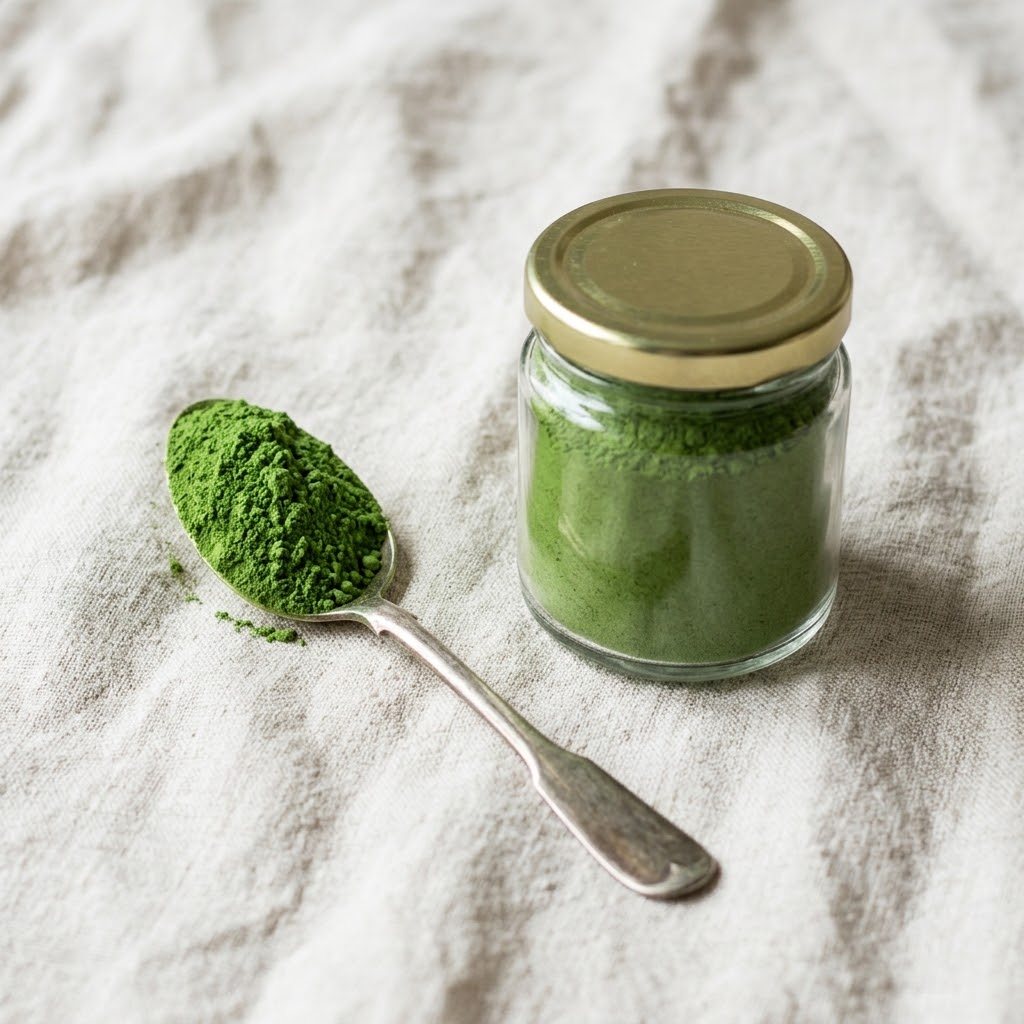
You can see it before you buy it if the seller shows a real photo of the powder, and you can smell it the moment you open it. The taste guide explains the tells.
Where paying more stops making sense
Above the small-grower tier, price stops tracking quality. A jar at three times the specialty price is not three times greener. At that point you are paying for a brand, a jar, a story, or a health claim, and none of those are in the powder. The sweet spot is a seller who can answer two questions plainly, what temperature the leaf was dried at and when it was milled, at a price that is a few dollars above the mid-market. That seller is charging for the thing that matters.
How I price mine
I sell moringa leaf powder at a price I consider fair for leaf that is gently dried, hand-checked, and milled close to shipping, and the current price is on the shop page and my Etsy listing, where it is easy to compare. When my own harvest covers the orders, that is what is in the jar. When it does not, I buy wholesale from a short list of growers I have vetted, check the lot against my own standard, and pass on the wholesale saving rather than marking it up as if it were boutique. I do not name my suppliers, for reasons explained on the nursery page, but every jar meets the same test: vivid green, fresh-grass smell, dried at or below 105°F.
Making it go further
- Use the right amount. A teaspoon a day, spread across food, is a normal habit. The ratio chart keeps you from wasting it in dishes where more is not better.
- Store it well. Powder that fades in the light is money lost. A dark jar in a cupboard, per the storage guide, keeps it worth what you paid.
- Buy the size you will finish in six months. A big bag at a better price per ounce is no bargain if the last half is stale.
- Grow a tree if you live where it is possible. A packet of seed and one summer gives you fresh leaf for free and enough surplus to dry your own powder for the off season.
FAQ
How much does moringa powder cost?
From under a dollar an ounce for bulk imported powder to several dollars an ounce for mid-market brands and more for small-grower jars. Per daily teaspoon, that is roughly a dime to fifty cents across the whole range.
Why is some moringa powder so cheap?
Because it was bought in bulk, dried hot and fast, milled in large runs, and stored for a long time before packaging. It is usually dull olive-green, smells like hay, and tastes bitter. Cheap moringa is mostly old moringa.
Is expensive moringa powder better?
Up to a point. Gently dried, recently milled, tested leaf costs more to produce and is worth a few dollars more per jar. Above the small-grower tier, higher prices buy branding and packaging, not better leaf.
How long does a 4 oz jar of moringa powder last?
About fifty-five level teaspoons: nearly two months at a teaspoon a day, or a month at two teaspoons.
Is moringa powder worth the money?
At a dime to fifty cents a day for a teaspoon of a nutrient-dense leafy green, most people find it easy to justify. The waste is in buying the cheapest jar, disliking it, and giving up; a good jar at a fair price is the better value.
The short version
Moringa powder runs from under a dollar an ounce in bulk to several dollars an ounce from small growers, and a daily teaspoon costs a dime to fifty cents anywhere on that scale. The price that matters is the one that buys gently dried, recently milled, tested leaf; that is worth a few dollars more a jar and is where the value peaks. The cheapest powder is usually the oldest, and the most expensive is usually paying for a jar and a story. Ask two questions, drying temperature and milling date, and pay for the answers.