What Does Moringa Taste Like? Good Powder vs Bitter, Hay, and Fishy
A grower explains what fresh moringa leaf and good powder taste like, why some powder tastes bitter, like hay, musty, or fishy, and how to make it taste better.
What does moringa taste like is a question with two honest answers: what it should taste like, and what a lot of the powder on the market actually tastes like. They are not the same, and the gap between them is the reason so many people try moringa once and never again. I grow the tree here in Weeki Wachee, on Florida's Gulf coast, dry my own leaf, and taste every lot I buy from other growers before it goes into a jar. That tasting is most of my quality control. Here is the flavor of moringa done right, the off-flavors that mean it was done wrong, and what each one tells you about the leaf.
Fresh leaf
Start with the plant. A fresh moringa leaflet, picked in the morning and chewed raw, tastes green and clean with a light peppery bite, close to watercress or young arugula, and a faint horseradish note at the end. The plant is called the horseradish tree, though the root, not the leaf, is where that flavor lives at full strength. Young leaflets are milder and a little sweet. Older leaflets from low on the branch are stronger and slightly bitter. Cooked, the pepper fades and the leaf tastes like a mild, slightly earthy spinach.
That is the baseline. Everything that happens to the leaf between the tree and your cup either preserves that flavor or degrades it.
Good powder
Dried gently, at or below 105°F, and milled recently, moringa powder tastes like the fresh leaf with the water taken out and the pepper turned down: green, grassy, a little like matcha or green tea, with a soft earthy depth and a mild, clean bitterness at the finish, no stronger than a good green tea. The smell is the best test. Open a jar of good powder and it smells like a lawn just after mowing, or like the inside of a bag of fresh spinach. Fresh, sharp, green.
In water it is grassy and a bit vegetal. In a smoothie with fruit it is a mild green background. In a sauce with oil and garlic it disappears. That is what you are aiming for, and it is what a well-made powder delivers. It should never make you wince.
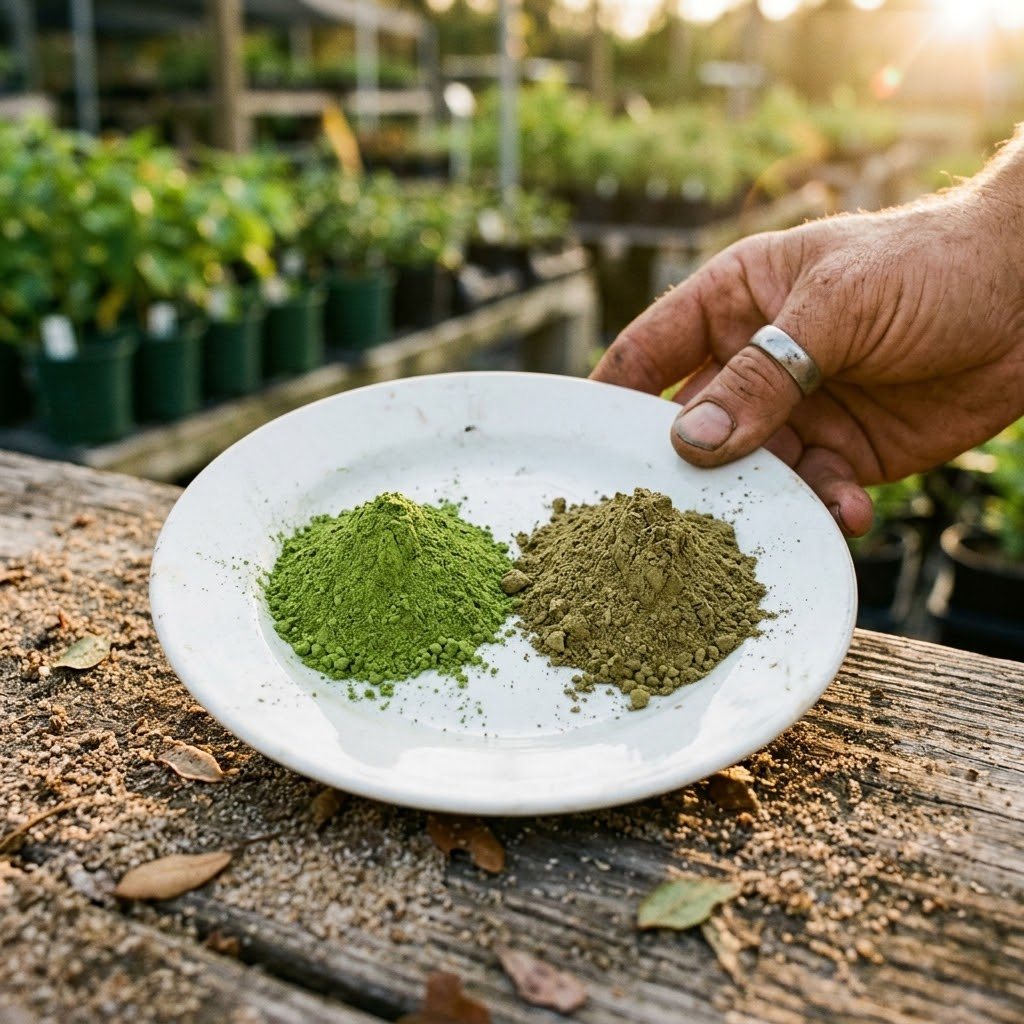
The off-flavors and what they mean
Hay
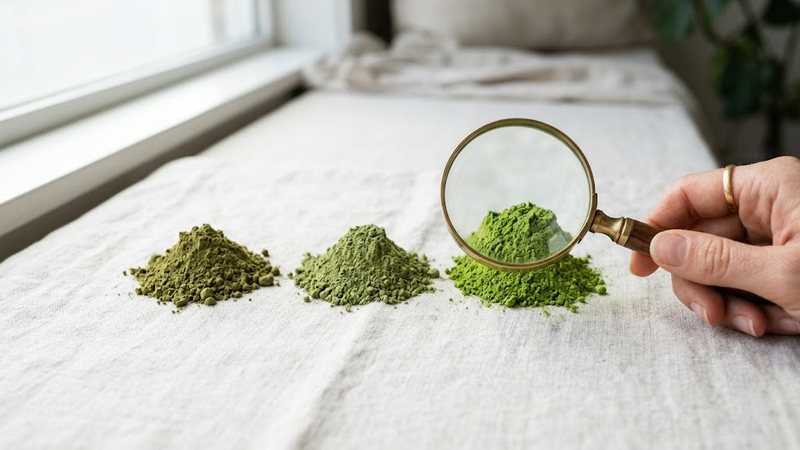
The most common complaint. Powder that tastes and smells like dried hay, straw, or old dry leaves has lost its fresh green notes. That happens two ways: the leaf was dried too hot, which cooks the flavor out and turns the color olive, or the powder is old and has oxidized in light and air. Look at the color. Hay-flavored powder is nearly always dull olive or khaki instead of vivid green. It is safe to eat and fine in cooked dishes, but it is not fresh, and no seller should be describing it as such.
Strong bitterness
A clean, mild bitterness is part of moringa. Harsh, lingering bitterness is not, and it points to one of three causes. Stems ground in with the leaf, which is common in cheap powder and shows up as pale fibrous flecks. Old, tough, low leaves harvested with the good ones. Or over-drying, which concentrates the bitter compounds. Sifting your own powder and stripping stems are the fixes for homemade; for bought powder, it is a reason to change suppliers.
Musty or sour
Damp. Leaf that sat wet before drying and started to ferment, or powder that took on humidity in storage. A musty, cellar-like smell or a sour edge means moisture got in at some point. If there is any clumping or fuzz with it, discard the powder. If it is only a faint mustiness in an otherwise dry powder, it is probably safe but it will not taste good, and it is not worth eating.
Fishy or rancid
This one surprises people. Moringa leaf contains some fat, and old powder can develop a faintly fishy, oily, or crayon-like note as those fats oxidize. It shows up in powder that is well past its best, or that was stored warm. It is the same rancidity you would smell in old nuts or old flour. Not dangerous in small amounts, not pleasant, and a clear sign the jar is done.
Dusty and flat, no flavor at all
Sometimes the problem is not an off-flavor but no flavor. Powder that tastes like nothing, faintly dusty, with none of the green, is usually very old, or was dried at high heat and then sat, or has been cut with something. Fresh moringa is not subtle. If you cannot taste it, something has been lost.
Chalky or gritty
A texture problem rather than a flavor one. Coarse milling, or a lot of stem, leaves grit that sits on the tongue. Good powder is fine and disperses. Grit also makes the bitterness read stronger because the particles sit in the mouth longer.
A quick tasting method
You can judge a powder in a minute, the way I judge a lot.
- Look. Vivid, saturated green is right. Olive, khaki, brownish, or streaky is faded or overheated.
- Smell the jar. Fresh-cut grass or green tea is right. Hay, dust, mustiness, or anything fishy is wrong.
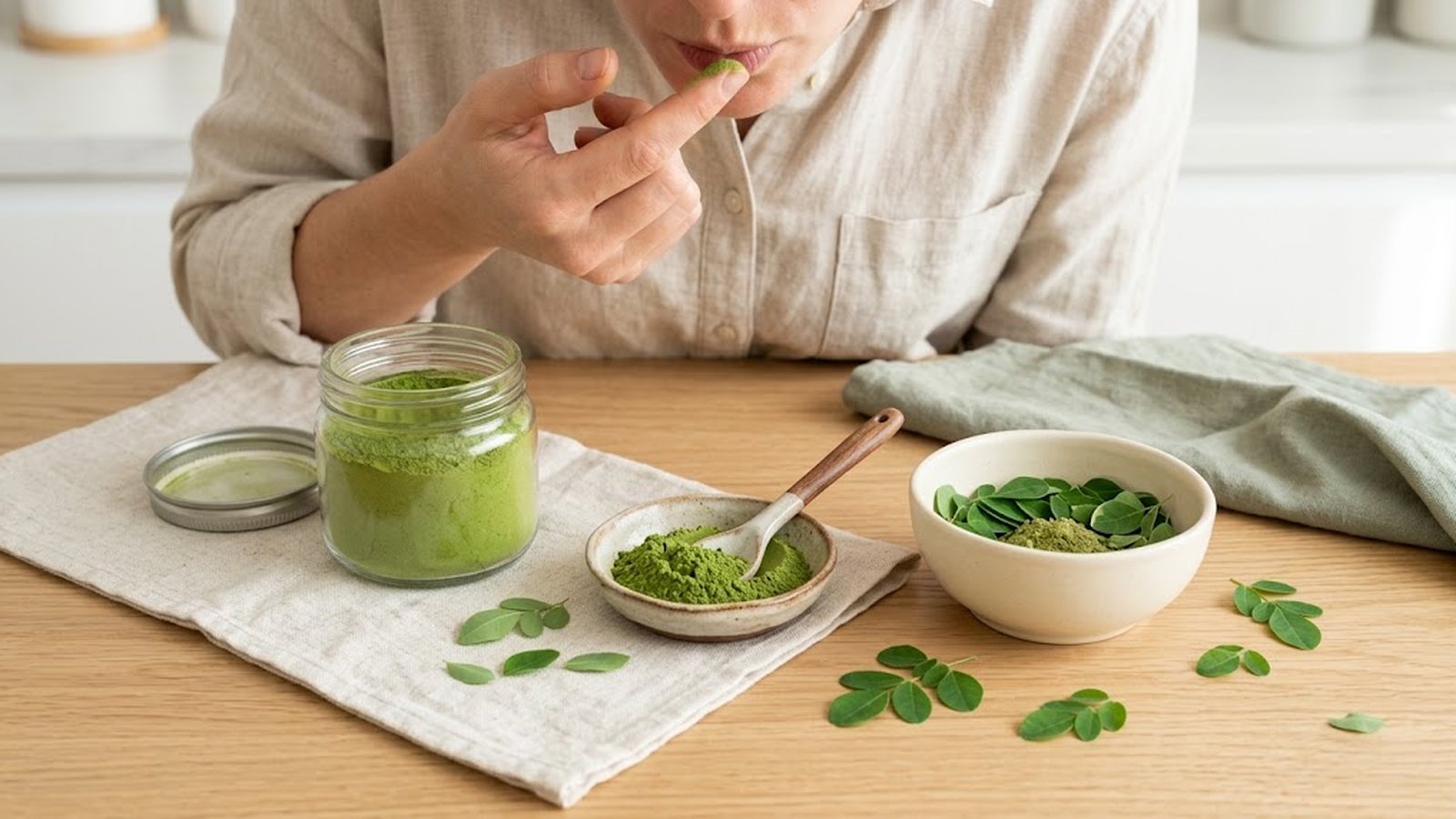
- Taste a pinch dry, off a fingertip. Green, grassy, mildly bitter at the end, like a strong green tea. Harsh, sour, musty, or flat is wrong.
- Stir a quarter teaspoon into a glass of water and taste. This is the fairest test, because water hides nothing. Good powder is grassy and drinkable with a squeeze of lemon. Bad powder is obvious.
This is the same checklist in the buying guide, and it is what I use on my own leaf and on every lot I source. A powder that fails the smell test does not go into a Better Moringa jar.
How to make moringa taste better
Assuming the powder is good, three things make it taste better in food, and they are the same three that make any green taste better.
- Fat. Milk, oil, avocado, nut butter, coconut. Fat carries the green flavor and softens the bitterness. This is why moringa works in a latte and fights in plain water.
- Acid. Lemon, lime, vinegar. Acid brightens the green notes and cuts the earthy ones.
- Sweetness or spice. Fruit, honey, cocoa, or the warm spices of a curry cover the rest.
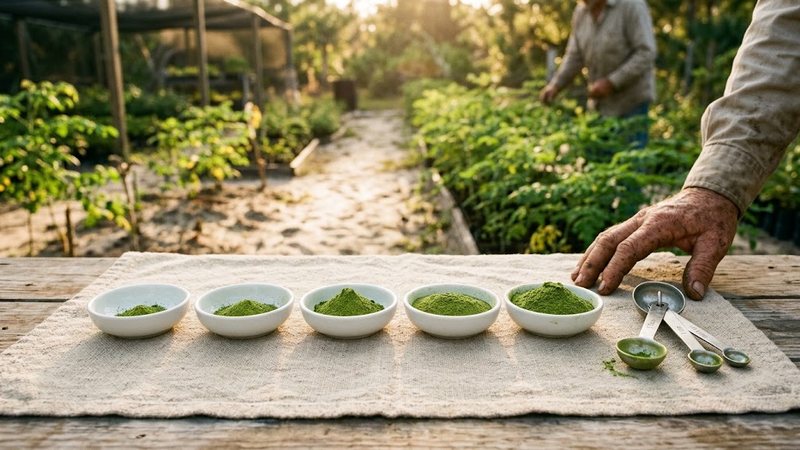
And less. Most people use too much. A quarter teaspoon in coffee, a teaspoon in a big smoothie, a teaspoon in a pot of soup. The ratio chart has the amounts for everything, and using them is the difference between "I don't like moringa" and "I can't taste it, is it in there?"
Fresh leaf, for anyone with a tree, is the easiest of all to make delicious: two minutes in a pan with garlic and oil, salt and lemon. The fresh-leaf guide has the rest.
Why this matters more than the label
Moringa is a food whose quality you can judge with your own senses, in a minute, for free. The color tells you about the drying. The smell tells you about age and storage. The taste tells you about stems and heat. A label can say organic, premium, pure, and single-source, and the powder inside can still taste like hay. Trust your nose over the label. If a jar smells like a fresh lawn, it was made by someone who cared, and that is the whole test.
FAQ
What does moringa powder taste like?
Good powder tastes green and grassy, like a mild matcha or green tea with a soft earthy note and a light bitter finish. It smells like freshly cut grass. It should not be harsh.
Why does my moringa taste bitter?
Mild bitterness is normal. Harsh bitterness usually means stems were ground in with the leaf, old tough leaves were used, or the leaf was over-dried. Fat, acid, and using less powder all soften it.
Why does moringa powder taste like hay?
The fresh green notes have been lost, either because the leaf was dried too hot or because the powder is old and has faded in light and air. Hay-flavored powder is usually dull olive rather than vivid green.
Does moringa taste like matcha?
They are close. Both are green, grassy, and slightly bitter. Moringa is a little more vegetal, like spinach, and less savory than matcha, and it has no caffeine.
How do you get rid of the taste of moringa?
Add fat (milk, oil, avocado), acid (lemon, lime), or sweetness (fruit, honey), and use less: a quarter teaspoon in coffee, a teaspoon in a big smoothie. If the powder tastes like hay or mud, no recipe fixes it; the powder is the problem.
The short version
Fresh moringa leaf tastes like peppery watercress; good powder tastes like a mild, grassy green tea and smells like a cut lawn. Hay means heat or age. Harsh bitterness means stems or old leaves. Musty means moisture. Fishy means rancid fat. Flat means it is spent. Judge a powder by color, smell, and a pinch in water, and make good powder taste better with fat, acid, sweetness, and a lighter hand.