How to Store Moringa Powder: Shelf Life, Freezing, and Signs It's Off
How long moringa powder lasts, why light and air fade it faster than time, the right container and place, fridge versus freezer, and the signs it is past it.
How to store moringa powder matters more than the date printed on the jar, because moringa does not spoil so much as fade. A jar kept sealed in a dark cupboard is nearly as good at twelve months as it was at one. The same jar left open on a sunny counter is dull, brown, and hay-scented in three. I dry my own leaf at my nursery in Weeki Wachee, Florida, mill it in small batches, and have watched enough jars age to know exactly what shortens their life. Here is what the powder is fighting, how long it really lasts, where and how to keep it, and how to tell when it is time for a fresh jar.
What happens to moringa powder over time
Dried moringa leaf is a stable food. It has almost no water, so it does not rot or grow mold as long as it stays dry. What it does is oxidize and fade. Three things drive that.
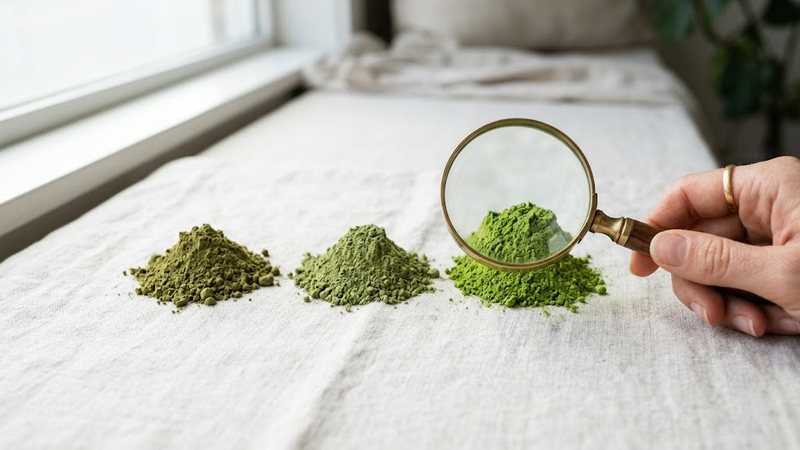
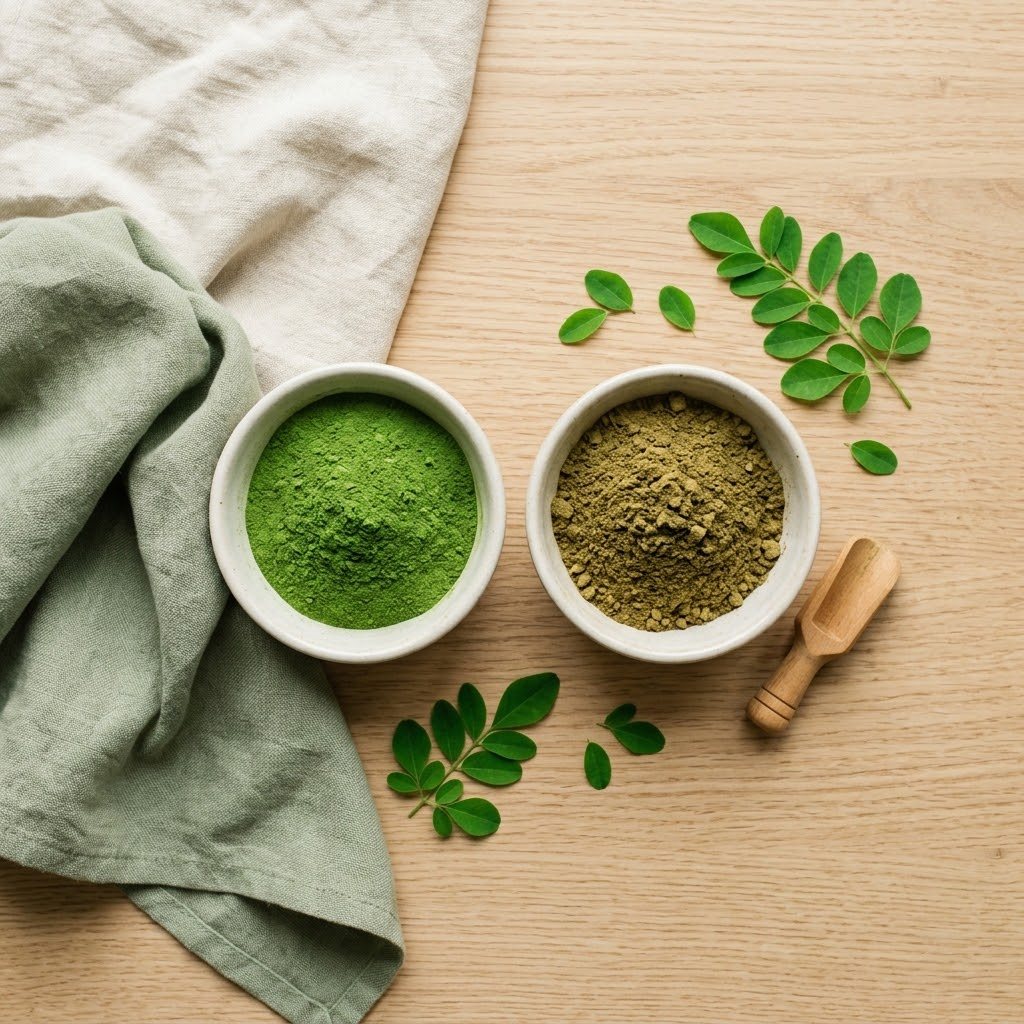
Light bleaches chlorophyll. Powder on a lit shelf goes from vivid green toward olive and then khaki, and the color change tracks a loss in the delicate compounds along with it.
Air oxidizes the leaf's fats and pigments. Every time the jar opens, fresh oxygen gets in. A half-empty jar ages faster than a full one because it holds more air.
Heat speeds both processes. A cupboard over the stove or a shelf in a hot pantry ages powder several times faster than a cool cabinet.
Moisture is the fourth enemy, and the only one that causes actual spoilage. Powder that takes on humidity clumps, then goes musty, then molds. This is rare in a sealed jar and common in a bag left open in a humid kitchen.
Time on its own is the least of the four. Kept dark, sealed, cool, and dry, the powder changes slowly.
How long it lasts
- Unopened, sealed, dark, and cool: a year or two, and the best of it is in the first year. Most sellers print a best-by date of eighteen months to two years, which is reasonable.
- Opened, stored well: six months to a year of near-peak quality, fading gently after that.
- Opened, stored badly: on a sunny counter in a plastic bag, three months before it is noticeably dull.
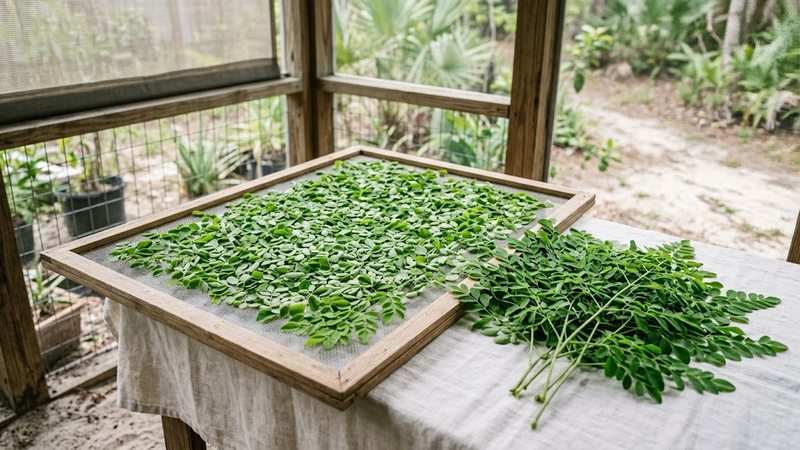
Two things move those numbers more than storage does. The first is how the leaf was dried. Leaf dried gently at or below 105°F, my standard, starts vivid green and has more to lose slowly; leaf dried hot starts out already faded and has nowhere to go but worse. The second is how long the powder sat before you bought it. A jar milled close to shipping is fresh at purchase; powder that spent a year in a warehouse drum is not, whatever the label says. The buying guide covers how to tell.
The right container
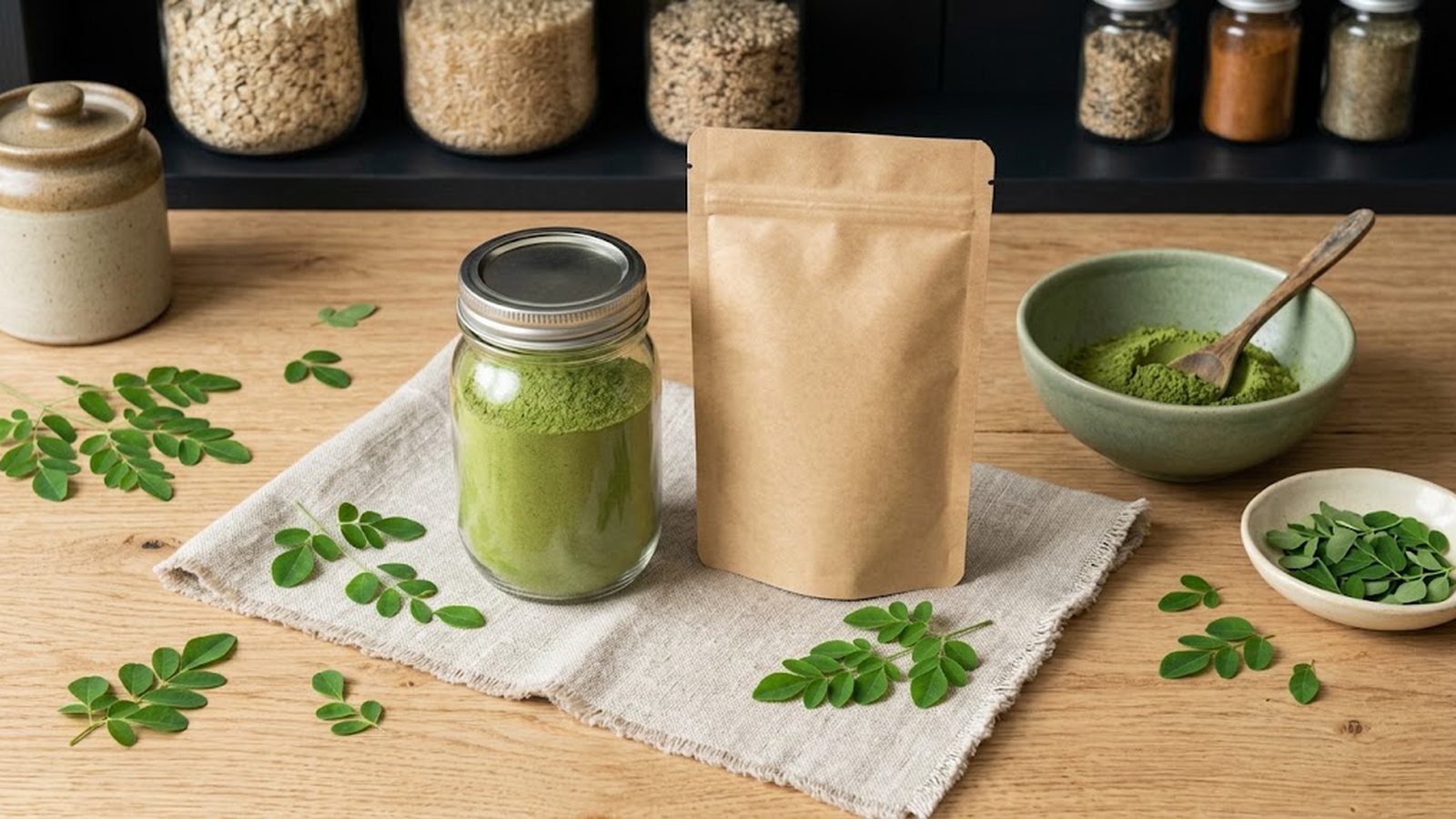
Glass, opaque or dark, with a tight lid. A canning jar in a dark cupboard is ideal. Amber glass is better still if the jar will see any light. Tins with a good seal work. The kraft pouches with a zip seal that a lot of powder ships in are fine for a few weeks but let in air with every opening and are not light-tight; decant a pouch into a jar once you open it.
Avoid clear plastic bags and clear plastic tubs on an open shelf. Plastic breathes a little, lets in light, and does nothing to slow the fade.
Keep the jar as full as you can. If you buy a large bag, split it: a small working jar in the kitchen and the rest sealed away, opened only to refill the small one. That way the bulk of your powder sees air a handful of times instead of every morning.
The right place
A cool, dark cupboard away from the stove, the dishwasher, and any window. That is the whole instruction. A pantry shelf at the back, a cabinet on an interior wall, a drawer. Room temperature in a normal house is fine; it is heat above that, and light, that do the damage.
Refrigerator and freezer
The fridge is not a good place for an everyday jar. Every time a cold jar is opened in a warm kitchen, moisture condenses on the powder, and moisture is the one thing that actually spoils it. Cold does slow the fade, but the condensation risk outweighs it for a jar that opens daily.
The freezer is a different story and the right choice for long-term storage of a large quantity. Pack the powder in a jar or a vacuum-sealed bag with as little air as possible, freeze it, and leave it frozen until you need it. When you take a container out, let it come fully to room temperature before you open it, so nothing condenses inside. Handled that way, powder holds its color and freshness for two years or more. This is what I do with the bulk of my own late-summer harvest: small jars in the cupboard for daily use, the rest frozen in sealed jars, opened one at a time.
The three signs it has gone off
- Color. Fresh powder is a vivid, saturated green. Powder that has dulled to olive, khaki, or brownish-green has faded. It is still safe to eat; it is just less than it was.
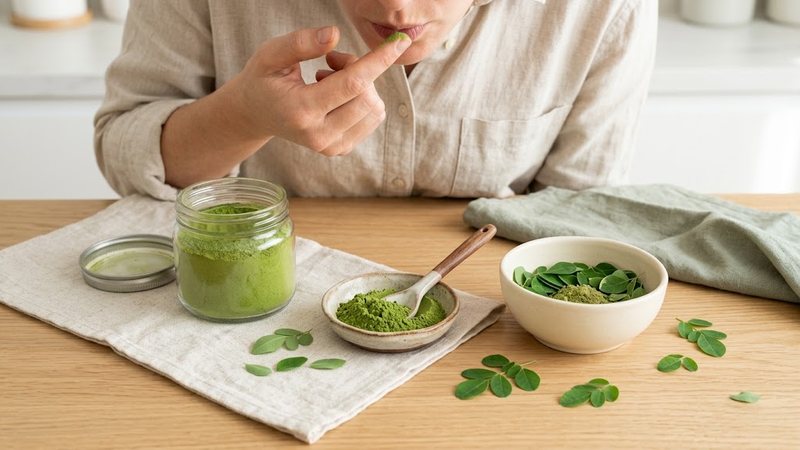
- Smell. Fresh powder smells like freshly cut grass or green tea. Aged powder smells flat, like hay or dry leaves. Musty, sour, or moldy smells mean moisture got in, and that jar should go in the compost.
- Texture. Fine, dry, free-flowing powder is right. Clumping that does not break up with a shake means moisture. Hard lumps or any fuzz means mold.
Taste follows the smell: fresh powder is green and mild, faded powder is flat and a little bitter. The taste guide goes through the whole range of what good and bad powder taste like.
Faded powder is not dangerous, and there is no need to throw it out unless it smells musty or shows moisture. Use it up in cooked dishes, where the flavor and color matter less, and put the fresh jar in the smoothies and tea.
Homemade powder
If you make your own, as described in how to make moringa powder, everything above applies with one addition: be certain it is bone dry before it goes into a jar. Home-dried leaf that is even slightly under-dried will clump and mold within weeks in a sealed container. When in doubt, spread it on a tray for another day.
A simple storage routine
- Buy or make no more than you will use in about six months, unless you plan to freeze the rest.
- Decant into a dark glass jar the day it arrives. Keep it full; refill from sealed bulk.
- Cupboard, not counter. Away from the stove, out of the light.
- Lid on tight, right after every scoop, with a dry spoon.
- Freeze bulk in sealed containers; thaw fully before opening.
- Check color and smell every month or two. When it turns olive and hay-like, cook with it and open a fresh jar.
FAQ
How long does moringa powder last?
A year or two sealed and stored dark and cool, with the best quality in the first year. Six months to a year after opening if stored well. It fades rather than spoils; only moisture makes it go bad.
Does moringa powder need to be refrigerated?
No, and a jar opened daily is better in a cool cupboard, because a cold jar opened in a warm kitchen collects condensation. Use the freezer, not the fridge, for long-term storage of sealed containers.
Can you freeze moringa powder?
Yes. Pack it in sealed jars or vacuum bags with little air, freeze, and thaw each container fully before opening. Frozen this way it keeps its color and freshness for two years or more.
How do I know if moringa powder has gone bad?
Faded powder turns olive or brownish and smells like hay instead of fresh grass; it is still safe to eat. Powder that clumps hard, smells musty or sour, or shows any fuzz has taken on moisture and should be discarded.
Can I use moringa powder after the expiration date?
If it is still green and smells fresh, yes. The best-by date is a guide; light, air, heat, and moisture matter more than the calendar. If it has faded, cook with it rather than drinking it.
The short version
Moringa powder fades from light, air, and heat, and only moisture actually spoils it. Keep it in a full, dark glass jar with a tight lid in a cool cupboard away from the stove and the window, and decant bulk into a small working jar so most of your powder rarely meets air. Skip the fridge; freeze sealed containers for long storage and thaw them before opening. Vivid green and fresh-grass smell is good. Olive-brown and hay is faded but fine to cook with. Musty, clumped, or fuzzy is the compost.