How Much Moringa Powder to Use: A Ratio Chart for Every Dish
The exact amount of moringa powder for smoothies, tea, coffee, soup, eggs, dough, dressings, and yogurt, with the taste threshold for each dish.
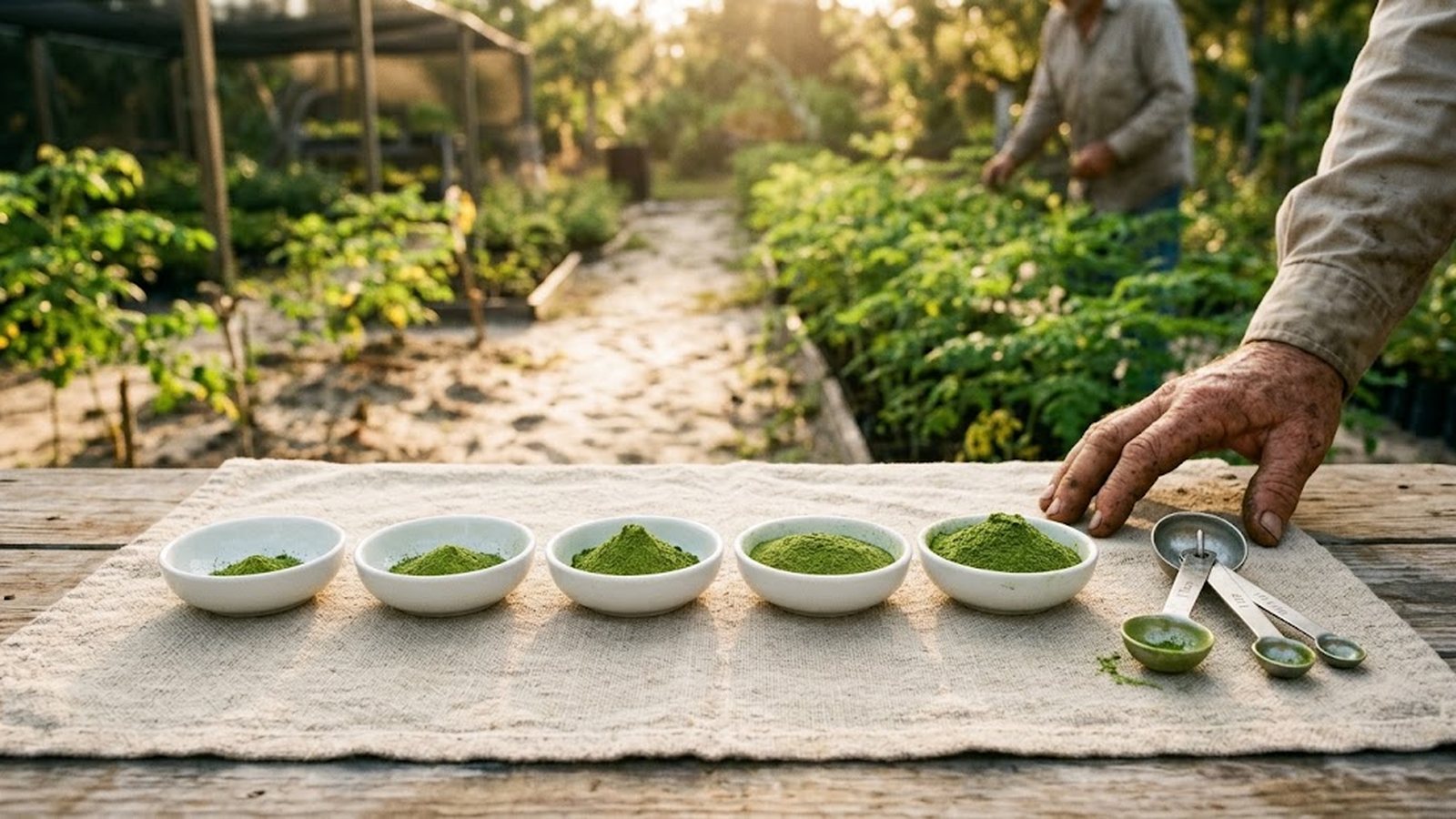
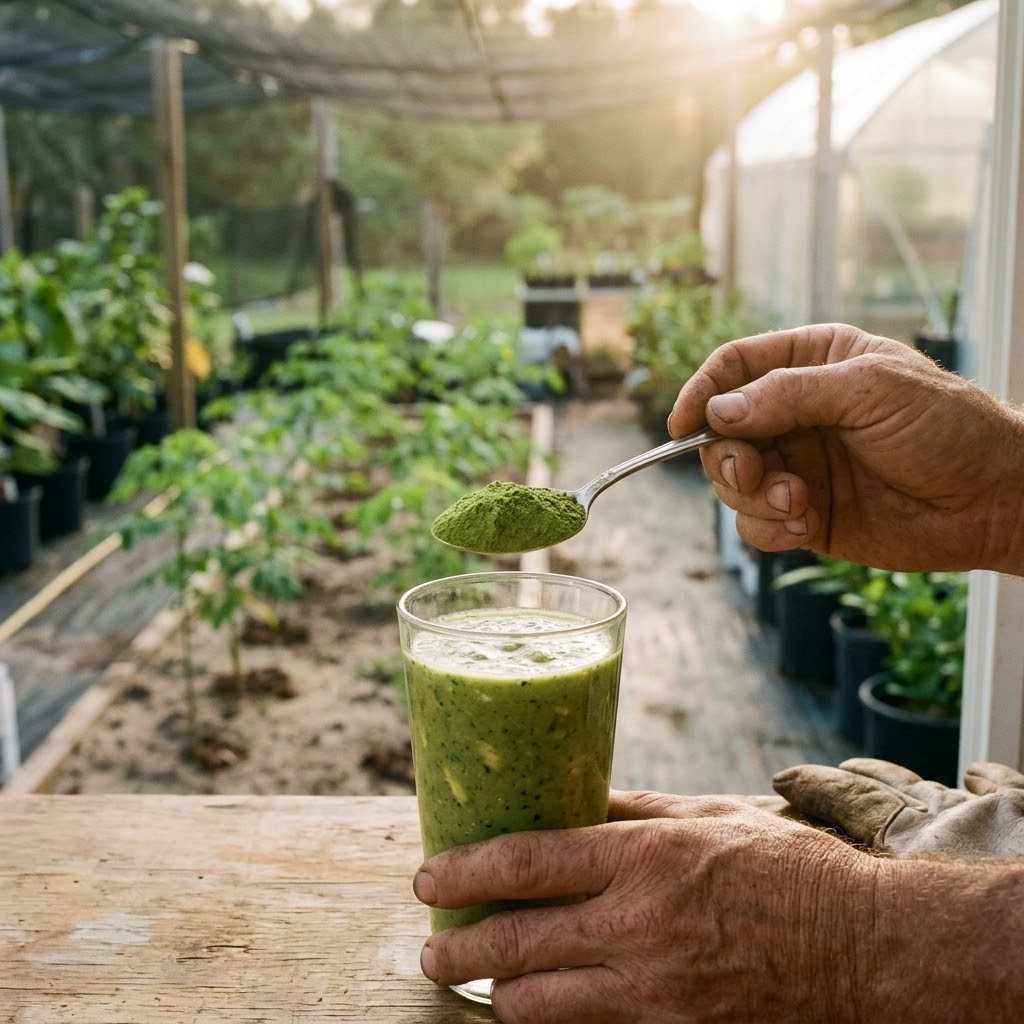
How much moringa powder to use is the question behind most bad first experiences with the leaf. A teaspoon is the right amount in a big smoothie and far too much in a small cup of coffee, and nobody tells you which is which. So here is the chart. It comes from years of cooking with my own leaf here in Weeki Wachee, on Florida's Gulf coast, and from tasting my way to the point in each dish where the moringa is present but not in charge. Use it as a starting point, then adjust to your own powder and your own tongue.
First, what a teaspoon is
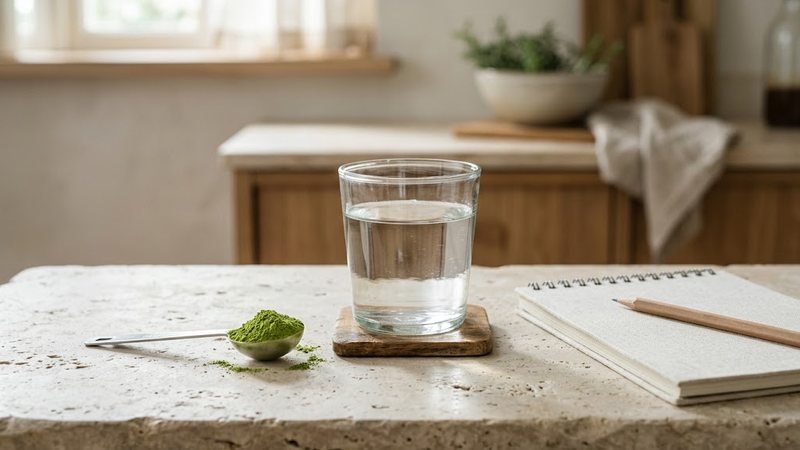
A level teaspoon of fine, fresh moringa leaf powder weighs about two grams. A heaping teaspoon is closer to three. A tablespoon is six to seven grams. These are approximate, because powders vary in fineness and how much they settle, but they are close enough for the kitchen.
Two grams of powder is roughly what you would get from a loosely packed handful of fresh leaflets, dried and ground. Keep that in mind when a recipe calls for fresh leaf and you only have powder, or the reverse: one teaspoon of powder for each handful of fresh, and adjust.
How much in a day
Most people who use moringa as a daily food settle somewhere between half a teaspoon and two teaspoons a day, often split across two dishes. That is one to four grams of dried leaf, an amount that fits comfortably inside a normal diet of green vegetables. Start at the low end for the first week so you learn the taste and see how you feel with it, then move up if you like. The chart below assumes you are putting a teaspoon or two into your day and spreading it around, which is the way it tastes best. The safety and dosage FAQ covers the questions people ask about amounts in more depth.
The chart
| Dish | Amount of powder | Per | Notes |
|---|---|---|---|
| Smoothie | 1 teaspoon | 12 to 16 oz | Up to 2 tsp with banana, mango, or cocoa to cover it |
| Hot tea | 1/2 to 1 teaspoon | 8 oz cup | Whisk into water off the boil, 160 to 175°F |
| Iced tea or cold brew | 1 teaspoon | 1 quart | Shake in a jar; strain or shake again before pouring |
| Coffee | 1/4 to 1/2 teaspoon | 1 cup | Paste it with warm milk first; more fights the coffee |
| Latte (milk only) | 1/2 to 1 teaspoon | 8 to 10 oz | Froth it into the milk |
| Soup or stew | 1 to 2 teaspoons | 4 to 6 servings | Whisk into a ladle of broth off the heat, stir back in |
| Scrambled eggs | 1/4 to 1/2 teaspoon | 2 eggs | Whisk into the raw egg |
| Oatmeal | 1/2 to 1 teaspoon | 1 bowl | Stir in after cooking |
| Yogurt | 1/2 teaspoon | 1 cup | Sweeten slightly; honey or fruit |
| Salad dressing | 1 teaspoon | 1/2 cup dressing | Shake in a jar with the oil and vinegar |
| Pesto or green sauce | 1 heaping teaspoon | 1 batch (about 1 1/2 cups) | Let rest 10 minutes before adjusting |
| Hummus or dip | 1 teaspoon | 1 1/2 cups | Blend in; the tahini carries it |
| Guacamole | 1/2 teaspoon | 2 avocados | Any more and it tastes grassy |
| Pancake or muffin batter | 1 tablespoon | 2 cups flour | Mostly for color; flavor is mild after baking |
| Bread or pizza dough | 1 tablespoon | 3 cups flour | Green dough; add with the dry ingredients |
| Energy balls | 1 tablespoon | 1 batch of 12 | Dates and cocoa cover it completely |
| Rice or grains | 1/2 teaspoon | 1 cup cooked | Stir in with butter or oil at the end |
| Popcorn or roasted vegetables | a pinch to 1/4 teaspoon | 1 bowl | Mix with salt and dust over |
| Nut butter | 1 teaspoon | 1/2 cup | Stir in; good on toast |
| Fresh-leaf substitute | 1 teaspoon | 1 handful fresh leaflets | Approximate; fresh has more volume and water |
The taste threshold
Every dish has a point where moringa stops being a background note and starts being the flavor. Roughly:
- In sweet things with fruit, cocoa, dates, or honey, the threshold is high. Two teaspoons in a big smoothie is fine. This is where to put a bigger dose.
- In savory dishes with fat and acid, sauces, soups, dressings, and eggs, it is medium. A teaspoon per batch disappears; two starts to show.
- In plain, thin, or bitter things, black coffee, plain yogurt, water, it is low. A quarter to half a teaspoon is the ceiling before it reads as grassy.
If a dish tastes too green, it is almost always one of three fixes: add fat (milk, oil, avocado), add acid (lemon, vinegar), or add sweetness. Salt helps in savory dishes more than people expect.
When the powder itself is the problem
The chart assumes fresh, bright green, gently dried powder that tastes like fresh-cut grass and green tea. Old or badly dried powder, the kind that is olive-brown and smells like hay, tastes bitter at half these amounts and does not improve with more milk or more honey. Before you decide you do not like moringa, check the powder. The taste guide explains what good powder tastes like and what the off flavors mean, and the buying guide covers how to avoid the bad stuff.
Three habits that make every ratio work
- Never boil it. Add powder off the heat, or to liquid below about 175°F. It keeps the color and the fresh flavor.
- Paste before you pour. Powder clumps in thin liquid. Mix it with a spoonful of something first: milk, oil, yogurt, a ladle of broth. Then combine.
- Shake, don't stir, for anything thin. A lidded jar disperses powder into tea, dressing, or cold coffee better than a spoon ever will.
Fresh leaf conversions
For growers with a tree, the chart works in reverse. A loosely packed cup of fresh leaflets is about a handful and cooks down to a tablespoon or two, roughly the flavor and bulk of a teaspoon of powder, though fresh leaf is milder and brighter. Use two to four cups of fresh leaflets where the chart says one to two teaspoons of powder in a soup, and a handful in a smoothie in place of a teaspoon. The fresh-leaf guide covers the cooking side, and the fresh versus powder comparison explains why the two are not quite equivalent.
FAQ
How much moringa powder should I use in a smoothie?
One teaspoon per 12 to 16 ounces, up to two if the smoothie has banana, mango, or cocoa to cover the green flavor.
How much moringa powder is a serving?
A level teaspoon, about two grams, is the common unit. Most people use one to two teaspoons a day spread across a couple of dishes.
How many grams is a teaspoon of moringa powder?
About two grams level, three heaped. A tablespoon is roughly six to seven grams.
Can I put moringa powder in hot food?
Yes, but add it after cooking or off the heat. Boiling dulls the color and the fresh flavor. Whisk it into a spoonful of liquid first so it does not clump.
How much fresh moringa equals a teaspoon of powder?
Roughly one loosely packed handful of fresh leaflets. Fresh leaf is milder and has more water, so you can use a little more of it.
The short version
A level teaspoon is two grams. Use a teaspoon in a big smoothie or a pot of soup, half a teaspoon in tea, yogurt, or eggs, a quarter to a half in coffee, and a tablespoon in a batch of dough or energy balls. Sweet and fatty dishes hide more; thin and bitter ones hide less. Add it off the heat, paste it with a spoonful of something first, and shake anything thin in a jar. If it tastes bitter at these amounts, the powder is old, not the recipe.