Moringa in Coffee: How to Do It Without Ruining Either
How to add moringa powder to coffee so it tastes good: the right amount, when to add it, why heat matters, a moringa latte method, and a grower's take on blends.
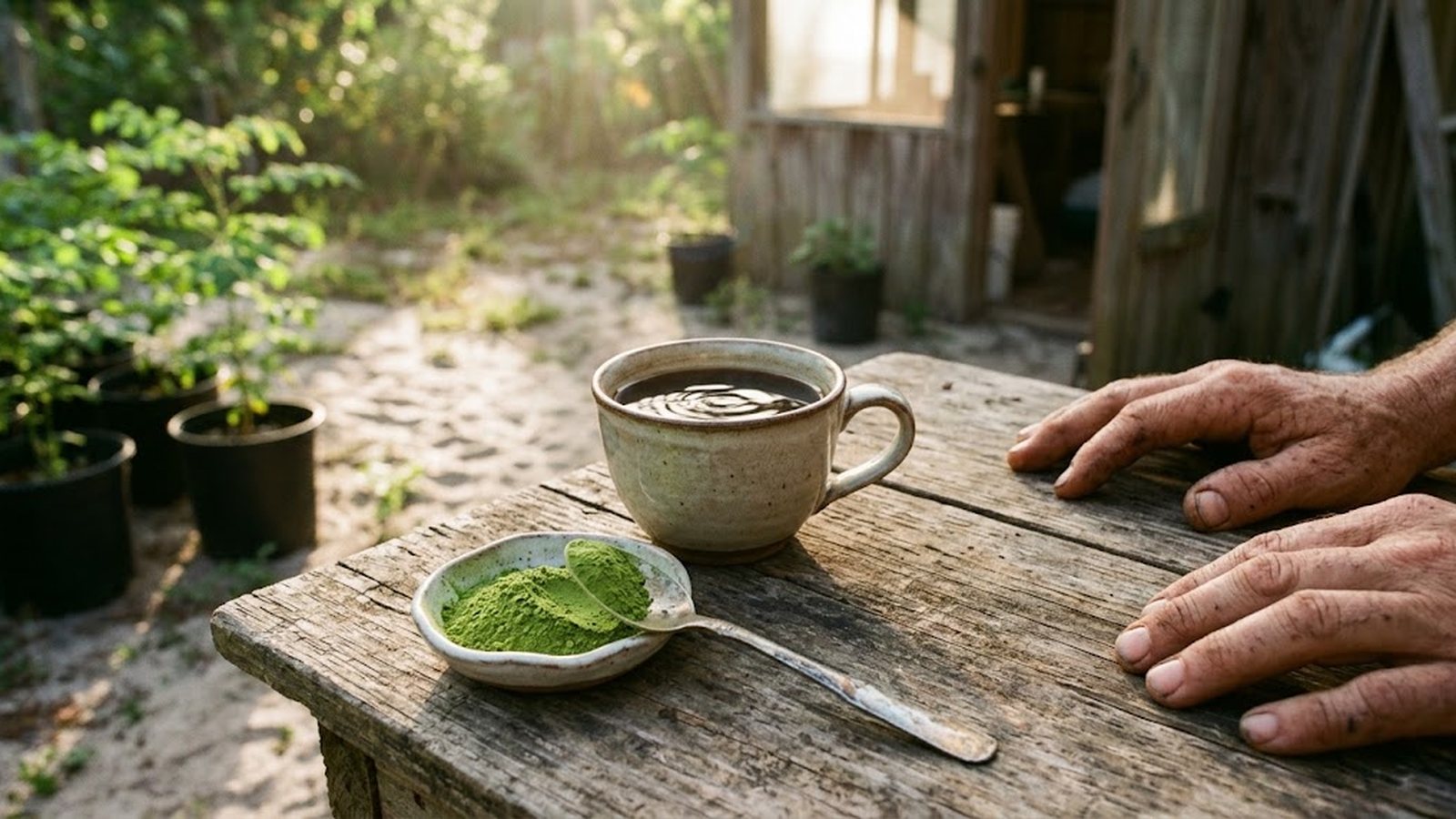
Putting moringa in coffee is one of the most common questions I get, and it usually arrives with a confession: the person tried it, stirred a teaspoon of green powder into a black coffee, and got a gritty cup that tasted like a lawn. That is the wrong way, and it puts people off a habit that works well once you know three things. Amount, timing, and milk. I grow moringa here in Weeki Wachee, on Florida's Gulf coast, and I drink coffee every morning, so I have had plenty of practice getting this right.
Why the first attempt goes wrong
Moringa leaf powder is a dried green vegetable ground fine. It does not dissolve in liquid; it suspends, and in thin black coffee it settles to the bottom in a green sludge within a minute. The flavor is green and grassy with a mild bitterness, and black coffee is also bitter. Stack two bitternesses with nothing to round them off and you get a drink that is all edges.
Add too much and it gets worse. A full teaspoon in a small cup is a lot of leaf. Half that amount, in a coffee with some fat in it, disappears. Most people who say they hate moringa in coffee have only ever tried the full-teaspoon-in-black-coffee version.
The amount
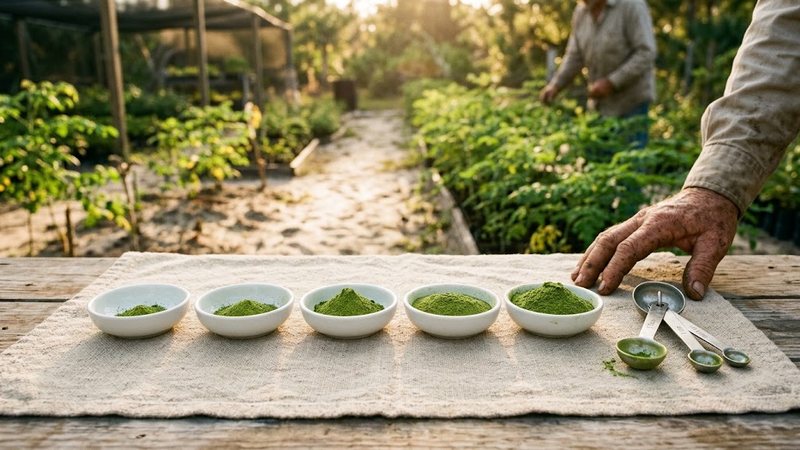
Start with a quarter teaspoon per cup. That is enough to taste faintly green behind the coffee and not enough to argue with it. Move up to a half teaspoon once you are used to it. I stop there. If you want more moringa than that in a day, put the rest in a smoothie or a savory dish, where a full teaspoon has room to hide. The ratio chart has amounts for everything.
A note on what a teaspoon is: a level teaspoon of fine moringa powder weighs about two grams. Half a teaspoon in a morning coffee is one gram of dried leaf, which is a modest and pleasant place to be.
The timing: after the brew, not in it
Do not put moringa in the grounds, the filter, the French press, or the espresso portafilter. It clogs filters, it tastes stewed, and it gets the full heat of the brew. Good moringa is dried gently, at or below 105°F in my case, and a boiling kettle undoes some of that care and turns the flavor toward hay.
Add it to the cup after brewing. Coffee out of a drip machine is around 175 to 185°F, hot enough to disperse the powder well and cooler than the brew itself. If you want to be gentle, let the cup sit for two minutes first. The difference in flavor between powder added to 185°F coffee and to 165°F coffee is small but real: the cooler cup tastes greener and fresher.
Milk fixes almost everything
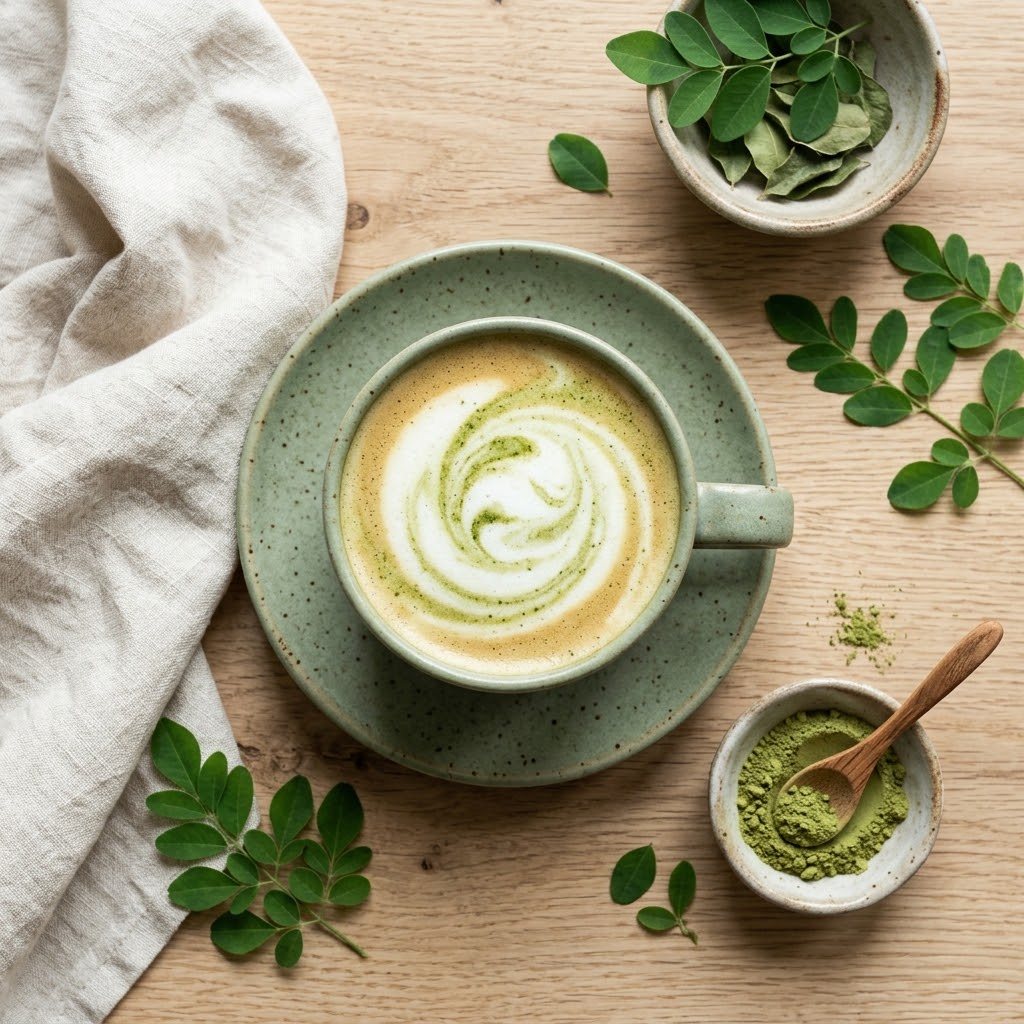
Moringa and fat are friends. A splash of whole milk, oat milk, a spoon of coconut cream, or a pat of butter for the people who do that, changes the drink from "coffee with grass in it" to something that tastes like a lightly earthy latte. The fat carries the green flavor, softens the bitterness, and keeps the powder suspended far longer.
The best method I have found:
- Put the moringa in the empty cup with a tablespoon of warm milk.
- Stir or whisk it into a smooth green paste. This is the step that prevents clumps and sludge.
- Pour the coffee over the paste, stirring as you pour.
- Top with the rest of your milk.
For a real moringa coffee latte, froth the milk with the moringa already in it, then pour it over a shot of espresso or a half cup of strong coffee. The foam comes out a soft green, which is either charming or off-putting depending on your household.
Cold coffee is even easier
Iced coffee and cold brew take moringa better than hot, because the fresh green flavor reads as bright rather than vegetal when it is cold. Shake a quarter to half teaspoon with cold brew concentrate and milk in a jar with a lid, pour over ice, done. The shaking disperses the powder better than any stirring. A cold moringa coffee with a little maple syrup and oat milk is, on a Florida afternoon, better than the hot version.
The flavor question, honestly
Even done right, moringa is a taste you notice. Good fresh powder tastes green, a bit like matcha or spinach with a faint radish edge; it does not taste like nothing. At a quarter teaspoon in coffee it reads as a slight earthy depth. Think of a pinch of cinnamon or cardamom. At a half teaspoon in a milky coffee it is a mild green note behind the roast. Beyond that it takes over.
If your powder tastes strongly of hay, mud, or fish, the problem is the powder, not the coffee. That is old or badly dried leaf, and no amount of milk fixes it. The taste guide explains what fresh powder should taste like and what the off flavors mean.
About the caffeine
Moringa has none. Adding it to coffee does not change the caffeine in the cup, and swapping the afternoon coffee for a moringa tea is how a lot of people get their second green cup without a second dose of caffeine. If you want moringa in a morning drink with no coffee at all, the latte method above works with steamed milk alone.
What about the moringa coffee products?
There are pre-blended moringa coffees on the market: ground coffee mixed with moringa powder, and instant blends. I have tried a few. They are convenient, and the ratios are mostly sensible. Two reservations. You cannot see or smell the moringa on its own, so you have no way to judge its quality, and moringa quality varies enormously. And you are paying coffee-plus-supplement prices for what is a quarter teaspoon of powder per cup. A jar of good leaf powder and your own coffee costs less and lets you check the color and smell of what you are drinking. If a blend is what gets you to drink it, though, it is not a bad thing.
FAQ
Can you put moringa powder in coffee?
Yes. Use a quarter to a half teaspoon per cup, make a paste with a little warm milk first, and add it to brewed coffee rather than to the grounds. Milk or another fat makes it taste far better than it does in black coffee.
Does heat destroy moringa in coffee?
Brewed coffee is below boiling, and adding the powder to the cup rather than the brewer keeps it out of the hottest part of the process. Letting the cup cool a minute or two before stirring in the powder gives a fresher green flavor.
Does moringa coffee have caffeine?
Only what the coffee has. Moringa itself is caffeine-free, so it adds nothing to the caffeine in the cup.
Why does moringa sink to the bottom of my coffee?
Because it is a fine ground leaf, not a soluble powder. Making a paste with a spoonful of milk before adding the coffee, and using some milk or cream in the drink, keeps it suspended much longer. In cold coffee, shaking in a lidded jar works best.
How much moringa should I put in coffee?
Start at a quarter teaspoon per cup and work up to a half. More than that fights the coffee. Put any additional moringa into smoothies or savory food instead.
The short version
A quarter to a half teaspoon of moringa per cup, whisked into a spoonful of warm milk first, then coffee poured over and topped with more milk. Never in the grounds or the filter. Cold coffee takes it even better than hot. If it tastes like hay, the powder is old, not the method. Moringa adds no caffeine, so it is also a good excuse for an afternoon green latte with no coffee at all.