Growing Moringa in Pots: Container Care for Balconies and Cold Zones
How to grow moringa in a pot: container size, the soil mix that stops root rot, watering, sun, feeding, pruning to keep it short, and overwintering indoors.
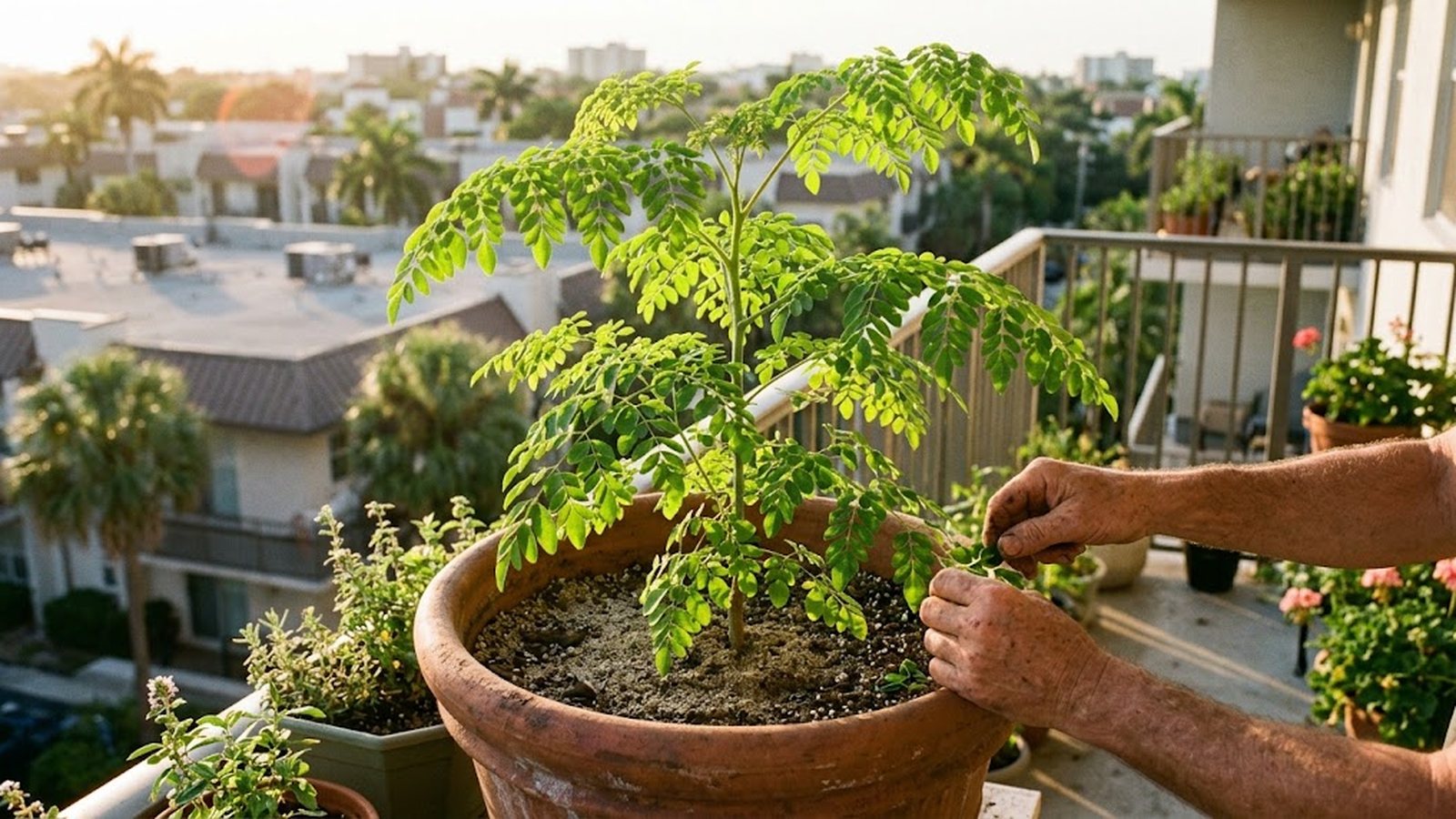
Growing moringa in pots is how most people outside the warm South ever get to pick fresh leaf. A moringa tree in the ground wants to be a tree, twenty feet tall and rooted deep in sand. In a container it becomes something else: a fast, leafy shrub you can keep at shoulder height, drag into the sun, and carry indoors when frost comes. I grow mine in the ground in Zone 9b Florida, where I grow it, but I keep several in pots too, partly for selling seedlings and partly because a potted tree by the kitchen door is convenient. Here is what works and what kills them.
Why moringa takes to containers
Moringa grows from a thick, fleshy taproot that stores water. That root is the reason the tree shrugs off drought, and it is also the reason so many potted moringa die: it rots the moment it sits in wet soil. A container gives you total control over drainage, which is the one thing a pot does better than the ground. Get drainage right and everything else about container moringa is easy. Get it wrong and nothing else matters.
The tree also responds to cutting by branching, so a pot does not frustrate it the way it frustrates a fruit tree. Prune a potted moringa hard and it comes back bushier. It behaves like a perennial herb that happens to have a trunk.
Pot size: bigger sooner than you think
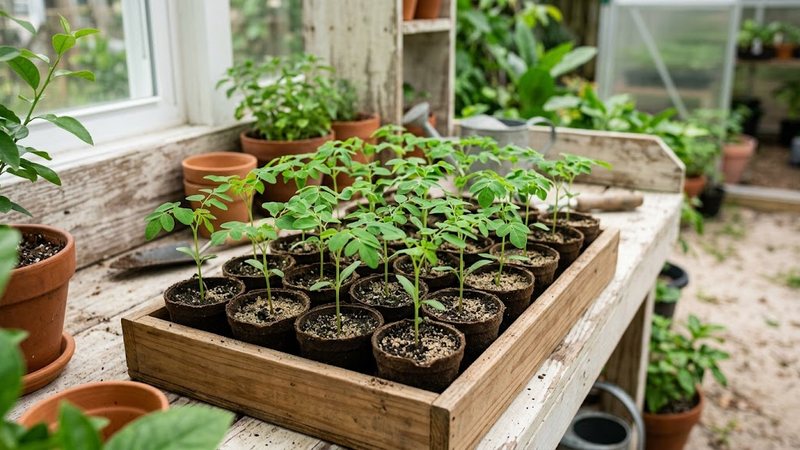
Start seeds in a deep four-inch pot or a tall tree pot, never a shallow seed tray. The taproot goes down before the top goes up, and a seedling that hits the bottom of a shallow cell at two weeks old stalls.
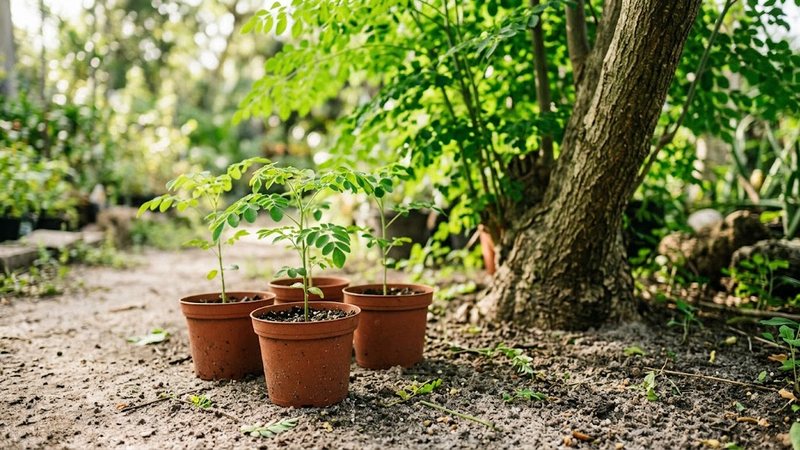
Move it into its long-term home early. A five-gallon pot will carry a tree through its first season. A fifteen to twenty-gallon pot, or a half whiskey barrel, will hold a pruned tree for years. Whatever you choose, it must have real drainage holes, several of them, and it should sit on pot feet or bricks so water runs out rather than pooling under the base. Terracotta breathes and dries faster, which suits this plant. Dark plastic heats up in full sun, which the roots tolerate better than most, but it dries unevenly and cracks in cold.
The soil mix
Moringa in the ground here grows in what is almost pure sand. Copy that. A standard potting mix holds too much water on its own. My mix is roughly two parts quality potting soil, one part coarse sand or perlite, and a handful of compost. It should feel gritty and drain within seconds when you water. If you can squeeze a handful into a ball that holds its shape, add more grit.
Skip moisture-retaining crystals and anything sold as "water saving." Skip a layer of gravel at the bottom, which does not improve drainage and just steals root space. Fill the pot, water it once so it settles, then plant.
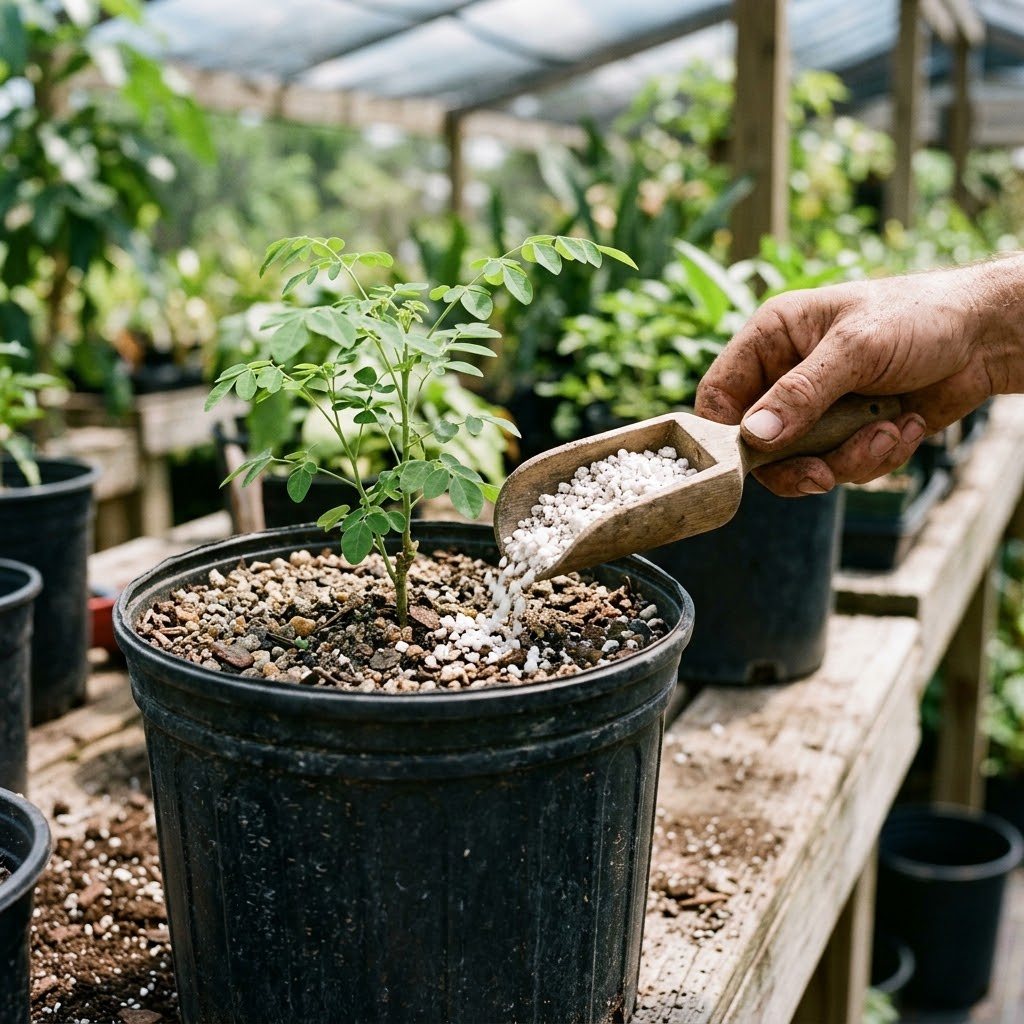
Planting
Sow two or three seeds about an inch deep in the final pot and thin to the strongest seedling once they are a few inches tall. Direct sowing beats transplanting because the taproot dislikes being disturbed. If you are starting from a purchased seedling, slide it out gently, do not tease the roots, and set it at the same depth it was growing. Water once, thoroughly, then leave it alone until the top inch of mix is dry. The full germination timeline and early-care details are in moringa seedlings: the first 90 days.
Sun
Full sun. Six hours is the minimum for a plant that looks like moringa; eight or more gives you a plant that produces like moringa. A south- or west-facing balcony is perfect. A bright east window is a place to overwinter, not a place to grow. Indoors under a strong grow light the tree will survive and put out some leaf, but it will be leggy and pale next to an outdoor tree, and you should expect it to sulk until it goes back outside.
Watering
This is where potted moringa lives or dies. Water deeply, until it runs from the holes, then do not water again until the top inch or two of mix is dry. In summer heat that may be every day or two for a big tree in a small pot. In cool weather it may be once a week. The tree will tell you when it is thirsty by drooping its leaflets in the afternoon, and it recovers within an hour of a drink. It will not tell you it is drowning until the leaves yellow and drop, by which point the root is already in trouble. If you are unsure, wait a day.
Never let the pot sit in a saucer full of water. Empty saucers after every watering, or do not use them at all.
Feeding
Container soil runs out of nutrients faster than the ground. Feed lightly and often rather than heavily and rarely. A balanced organic fertilizer once a month through the growing season, or a diluted liquid feed every couple of weeks, keeps the leaf dark green. Fish emulsion works well and the tree does not seem to mind the smell even if your neighbors do. Stop feeding in fall as growth slows. A tree that is pushing pale, thin leaf despite good sun and water is asking to be fed.
Pruning to keep it small
An unpruned moringa in a twenty-gallon pot will still try to reach ten feet by the end of summer, and it will do it on one skinny trunk that snaps in the first storm. Pinch the growing tip when the seedling is two to three feet tall. It will branch. Pinch those branches when they reach a foot or so. Keep going. A potted tree kept at four to five feet with six or eight branches produces far more leaf than a tall single stem, and it stays stable in wind. Every pinch is a harvest. The technique in detail is in how to prune moringa.
Harvesting from a potted tree
Take leaflets from the outer third of branches, a little at a time, and never strip a small tree bare. A tree in a pot has less reserve than a tree in the ground, and a total strip in midsummer can set it back for a month. Steady light picking every week or two keeps it in a constant state of regrowth, which is what you want.
Overwintering
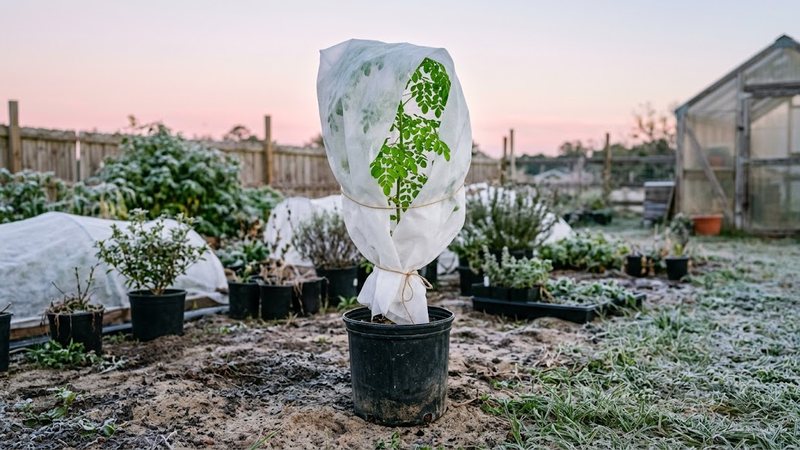
If your winters drop below freezing, the tree comes inside, and you have two choices.
- Keep it growing in the brightest window you have or under a grow light. Water sparingly, do not feed, and accept a leggy, thinned-out plant that will recover fast in spring.
- Let it go dormant. Cut the tree back to a foot or two above the soil, move it to a garage, basement, or shed that stays above freezing, and water it a cupful once a month so the root does not desiccate. In spring, bring it out after the last frost, water well, and watch new shoots erupt from the trunk. This is easier, takes less space, and the tree does not seem to mind at all.
Either way, harden it off in spring: a week of afternoon shade before full sun, or the first new leaves will scorch.
For growers in the ground in marginal climates, the winter and frost care guide covers the same problem from the other side.
Common container problems
- Yellow lower leaves, soggy mix. Overwatering. Let it dry out, and check the drainage holes are not blocked.
- Wilting despite wet soil. Root rot. Unpot it, cut away any brown, mushy root, repot into fresh dry mix, and hope. Prevention is much easier than the cure.
- Tall, thin, pale. Not enough sun. Move it, and pinch it.
- Leaf drop after moving indoors. Normal. It is a light-shock reaction. It will re-leaf when it adjusts or when it goes back outside.
- Aphids on new growth, especially indoors. A blast of water or a wipe with a soapy cloth handles it. More in the pests guide.
FAQ
What size pot does a moringa tree need?
Start in a deep four-inch pot, move to five gallons for the first season, and settle it into fifteen to twenty gallons for the long term. Depth matters more than width because of the taproot. Any pot must have several real drainage holes.
Can moringa grow indoors year-round?
It can survive indoors with a strong grow light, but it will not thrive. Expect leggy growth and thin leaf. The realistic plan for most people is outdoors from spring to fall and dormant or resting indoors over winter.
How tall does moringa get in a pot?
Left alone it will still try for eight to ten feet in a season. Pinched regularly, it stays at four to five feet with many branches, which is both more productive and far more stable.
How often should I water a potted moringa?
Deeply, then not again until the top inch or two of mix is dry. That may mean daily in summer heat and weekly in cool weather. Drooping means thirsty; yellowing usually means too wet.
Can I grow moringa from a cutting in a pot?
Yes. A pencil-thick to broom-handle-thick cutting a foot or two long, pushed a third of its length into gritty mix and kept barely moist, will root in a few weeks in warm weather. Cuttings give you a leafy plant faster but with a weaker root system than a seed-grown tree. See the seed guide for the varieties that suit containers.
The short version
A deep pot with real drainage, a gritty mix that is two parts potting soil to one part sand or perlite, full sun, deep watering only when the top of the mix is dry, light monthly feeding, and constant pinching to keep the tree at four to five feet. Bring it inside or cut it back and store it above freezing for winter. Do all that and a single potted tree will keep a household in fresh leaf from late spring through fall.