Moringa Seedlings: The First 90 Days From Seed to First Harvest
A week-by-week guide to germinating moringa seeds and raising seedlings through their first three months: sowing depth, soil temperature, watering, first pinch.
Moringa seedlings are easy in the way a puppy is easy: they grow fast and forgive a lot, but the first few weeks set everything that follows. Most failures I hear about happen in those weeks, and nearly all of them are one of two mistakes: a seed drowned in wet soil, or a seedling stunted in a shallow tray. I start hundreds of seedlings a year in Zone 9b Florida, where I grow it, from the PKM-1, PKM-2, and ODC3 seed I grow, and this is the schedule I follow from the day the seed goes in to the first handful of leaf about three months later.
Before you start: the seed
Use fresh seed. Moringa seed loses viability quickly; seed under a year old sprouts at 80 percent or better, and two-year-old seed can be down near half. If you are not sure of the age, the germination test in the seed buying guide takes a week and saves you a month of wondering. Plant two or three seeds per spot and thin, rather than one and hope.
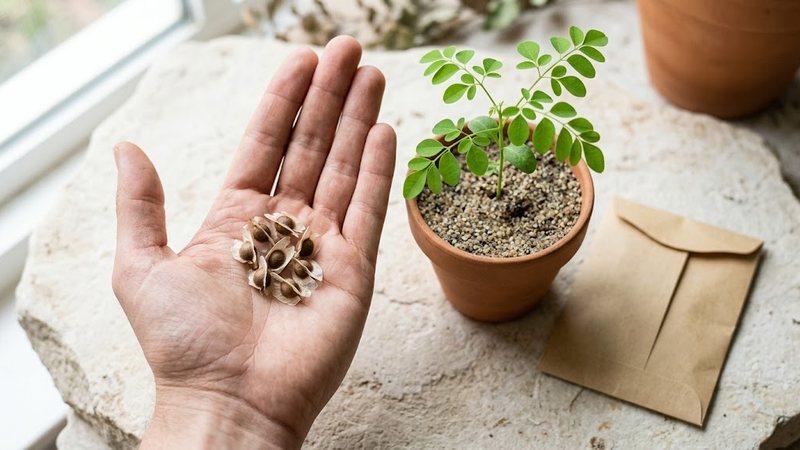
You do not need to remove the papery wings or the shell. The seedling pushes through both. Some growers soak seed overnight in room-temperature water before sowing, and it does speed things up by a day or two. It is not necessary, and a seed left soaking for more than a day can rot. If you soak, sow the next morning.
Days 1 to 3: sowing
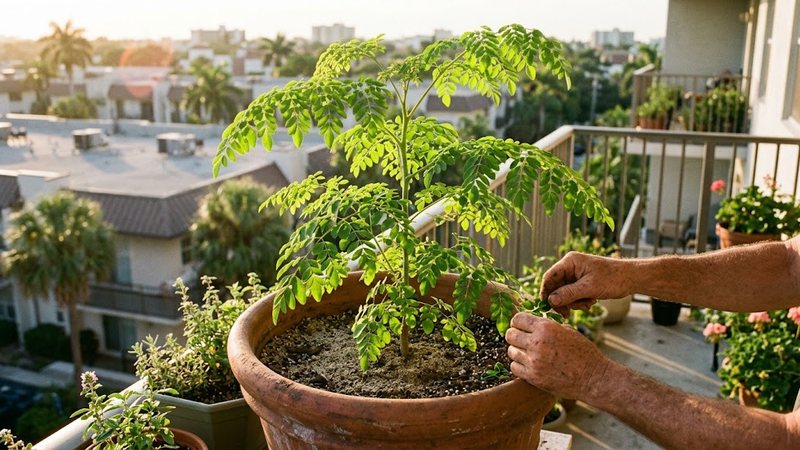
Where. Directly in the final spot whenever the soil is warm enough, because the taproot hates transplanting. In the ground, that means a sunny site with sharp drainage; if water stands after rain, pick a different spot or build a mound. In a pot, use a deep container, never a shallow seed tray, and the gritty mix described in the container guide.
When. Soil temperature is the trigger. Moringa germinates reliably once the soil holds 70°F or warmer, and fastest at 80 to 90°F. In Zone 9b that is mid-March at the earliest and more comfortably April. Sowing into cold soil is how seed rots; a seed that would sprout in six days at 85°F sits for three weeks at 60°F, and something usually eats it first. If you are impatient, start seed indoors in deep pots on a heat mat and move it out after the last frost.
How. Push each seed three-quarters of an inch to an inch deep, cover, and water once, thoroughly. Then stop. This is the moment most seeds are lost. The seed needs warmth and a little moisture, not a swamp. Water again only when the surface has dried, which in warm weather is every two or three days.
Days 4 to 14: germination
The first sign is a crack in the soil surface, then a hooked stem pushing up, then the two seed leaves unfolding: broad, smooth, and nothing like the feathery leaves to come. In warm soil this takes five to ten days. In cooler soil, up to three weeks. Do not dig to check. Wait two weeks past your expected date before you decide a seed has failed.
Seedlings can damp off in this window, collapsing at the soil line from a fungus that lives in wet soil. The prevention is the same as everything else with this plant: let the surface dry between waterings and keep the air moving. If you are starting indoors, a small fan helps more than anything.
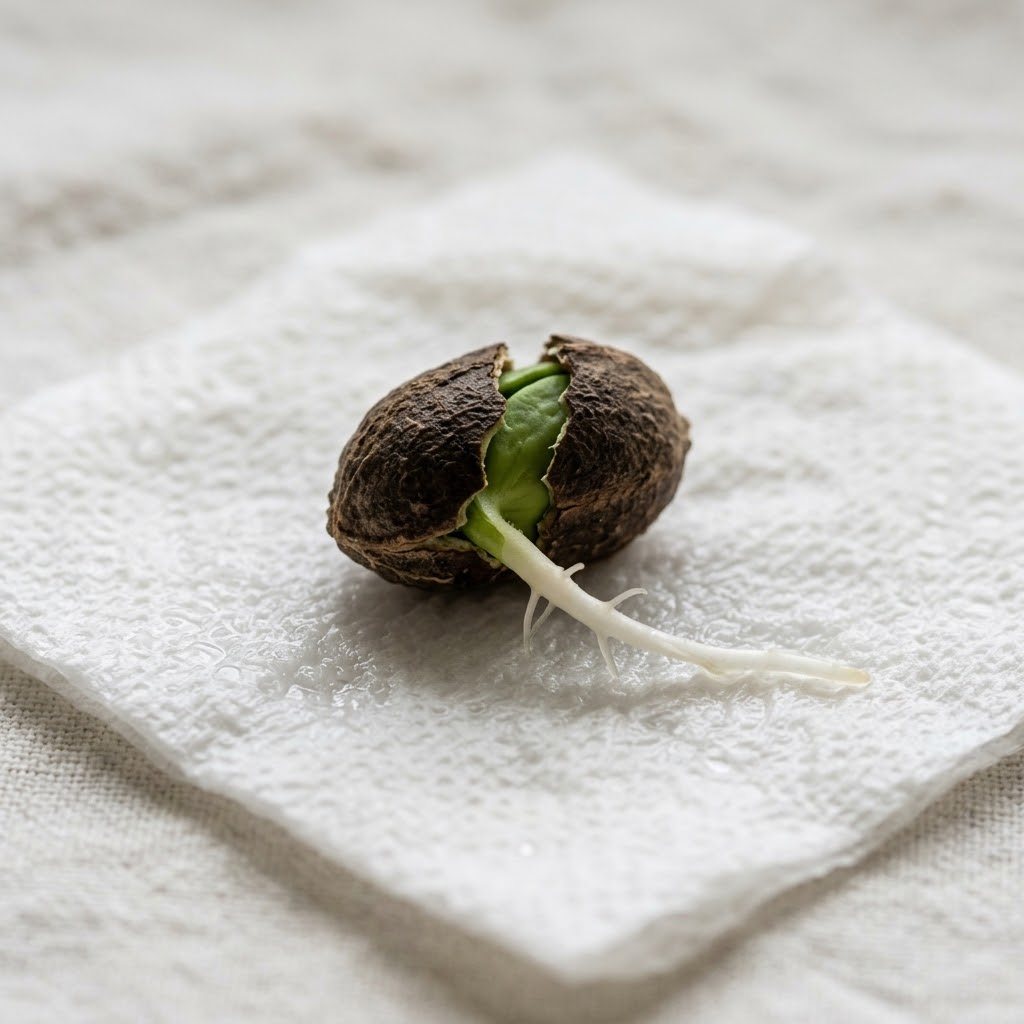
Weeks 3 to 5: the first true leaves
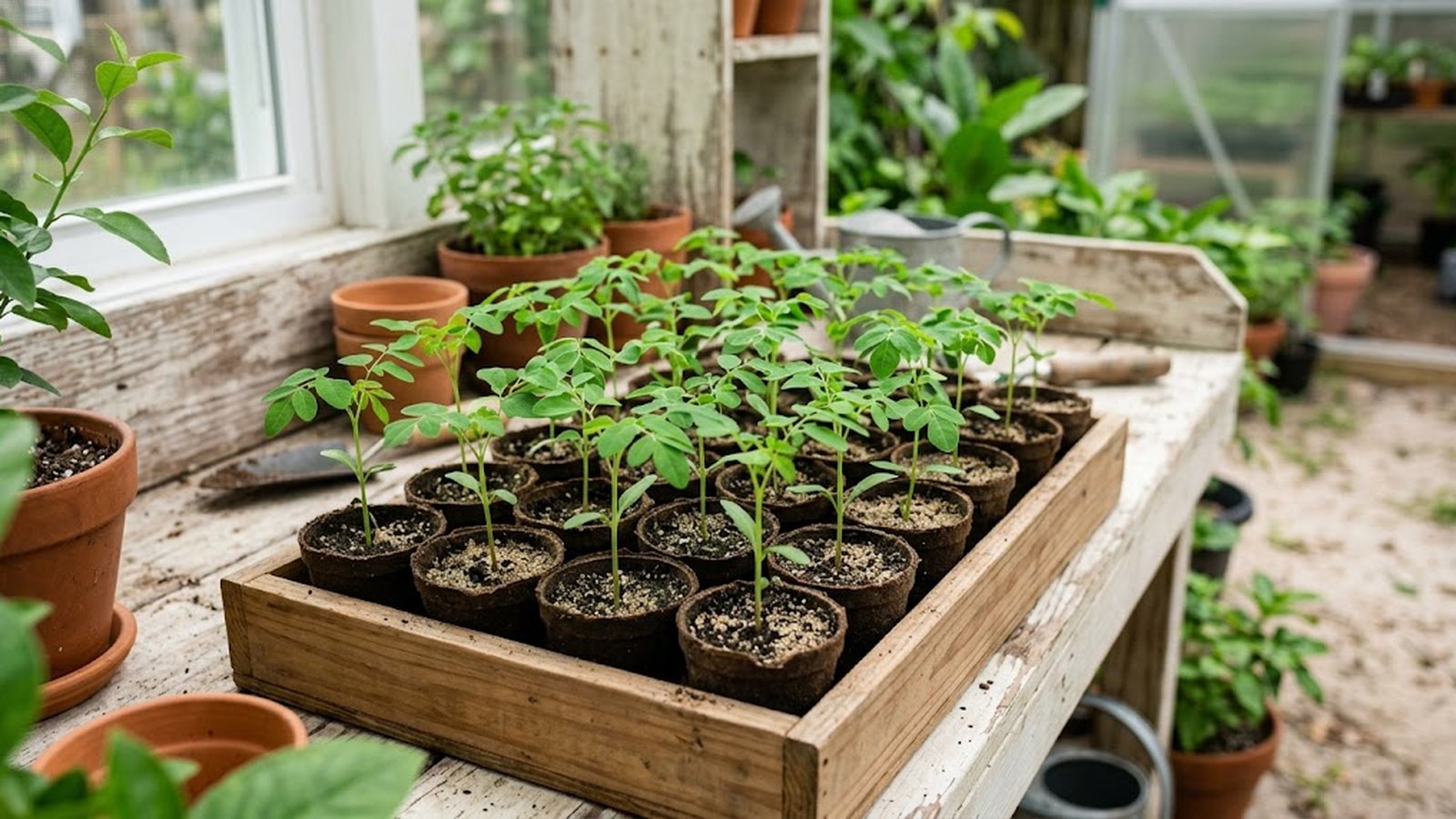
The first true leaves appear above the seed leaves within a week or so of emergence, and they look like moringa: small, feathery, compound. Growth now speeds up daily. The seedling will be six inches tall by week four and a foot by week six in real heat.
Sowed several seeds per spot? Thin now. Snip all but the strongest seedling at the soil line. Do not pull them; the roots are tangled and you will disturb the one you are keeping.
Water when the top inch is dry. Do not feed yet. The seedling is living on its seed and the soil, and fertilizer on roots this young does more harm than good. Full sun from the start if it was sown outside. If it was started indoors, harden it off over a week, a few hours of morning sun building to a full day, before it goes into the garden.
Weeks 5 to 8: the first pinch
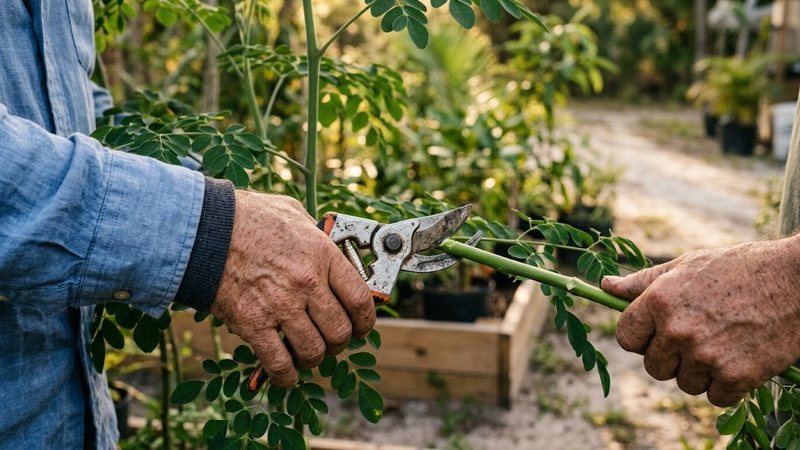
At two to three feet tall, usually somewhere in weeks five to eight, pinch the growing tip. Take the top inch or two with your fingers. The seedling will sulk for a few days and then push three to five side shoots from just below the pinch. This single pinch is the most important thing you will do for the tree's shape and its future yield. Skip it and you get a pole. The full logic is in how to prune moringa.
Start light feeding now. A diluted liquid organic fertilizer every two weeks, or a small handful of balanced organic granules worked into the surface, is plenty. A seedling in pure sand will show you it is hungry by going pale; one in decent soil may not need anything for months.
Stake a seedling in a windy spot loosely, with a soft tie, because the stem is soft and brittle at this age. Remove the stake once the trunk thickens, which happens fast.
Weeks 8 to 12: the first harvest
By the end of the third month a spring-sown seedling in good sun is three to four feet tall with several branches, and it can spare a few leaflets. Take a little from the outer branches, strip rather than cut, and leave the rest. This is a taste, not a harvest. The real picking starts once the tree is well branched and four to six feet, usually by late summer, and the routine from there is in when to harvest moringa leaves.
Keep pinching the side shoots as they reach a foot or so. Every pinch doubles the number of tips, and tips are where next month's leaf comes from.
Trouble in the first 90 days
- Seed never came up. Cold soil, wet soil, or old seed, in that order of likelihood. Wait two weeks past the expected date, then resow with fresh seed once the soil is warm.
- Seedling fell over at the soil line. Damping off. Too wet, too still. Resow, water less, and add airflow.
- Seedling is tall and pale and floppy. Not enough light. Move it into full sun and pinch it.
- Leaves yellowing from the bottom. Almost always too much water. Let it dry out. The yellow leaves guide sorts the other causes.
- Something ate it overnight. Caterpillars, snails, or grasshoppers love seedlings. Check in the morning, hand-pick, and consider a collar of cardboard or a mesh cover for the first month.
- Seedling snapped in wind. It happens; the wood is soft. If there is a node below the break, it will resprout. Stake the next one loosely.
FAQ
How long do moringa seeds take to germinate?
Five to ten days in warm soil at 80 to 90°F. Up to three weeks at 70°F. Below that, germination is slow and unreliable and the seed is likely to rot.
Should I soak moringa seeds before planting?
You can soak them overnight in room-temperature water to gain a day or two, but it is optional. Never soak longer than a day. Sow the morning after soaking.
How deep do you plant moringa seeds?
Three-quarters of an inch to one inch deep. Cover lightly and water once, then let the surface dry before watering again.
Can I start moringa seeds in seed trays?
Not in shallow ones. The taproot goes down before the top goes up and stalls when it hits the bottom of a shallow cell. Use deep four-inch pots or tall tree pots, or sow directly in the final spot.
How fast do moringa seedlings grow?
In full sun and warm weather, a foot tall by six weeks and three to four feet with branches by three months. Growth slows sharply below 70°F and stops in cool weather.
The short version
Fresh seed, warm soil at 70°F or better, sown an inch deep in a deep pot or the final spot, watered once and then only when the surface dries. Expect sprouts in five to ten days, true leaves a week later, and a pinch at two to three feet in weeks five to eight. Feed lightly from then on, keep pinching, and take a first small picking around week twelve. Wet soil and shallow trays are the two things that kill seedlings; avoid both and moringa is one of the easiest trees you will ever raise.