When to Harvest Moringa Leaves Without Hurting the Tree
When a moringa tree is ready for its first harvest, the time of day and season to pick, which leaves to take, how much is safe, and how to handle fresh leaf.
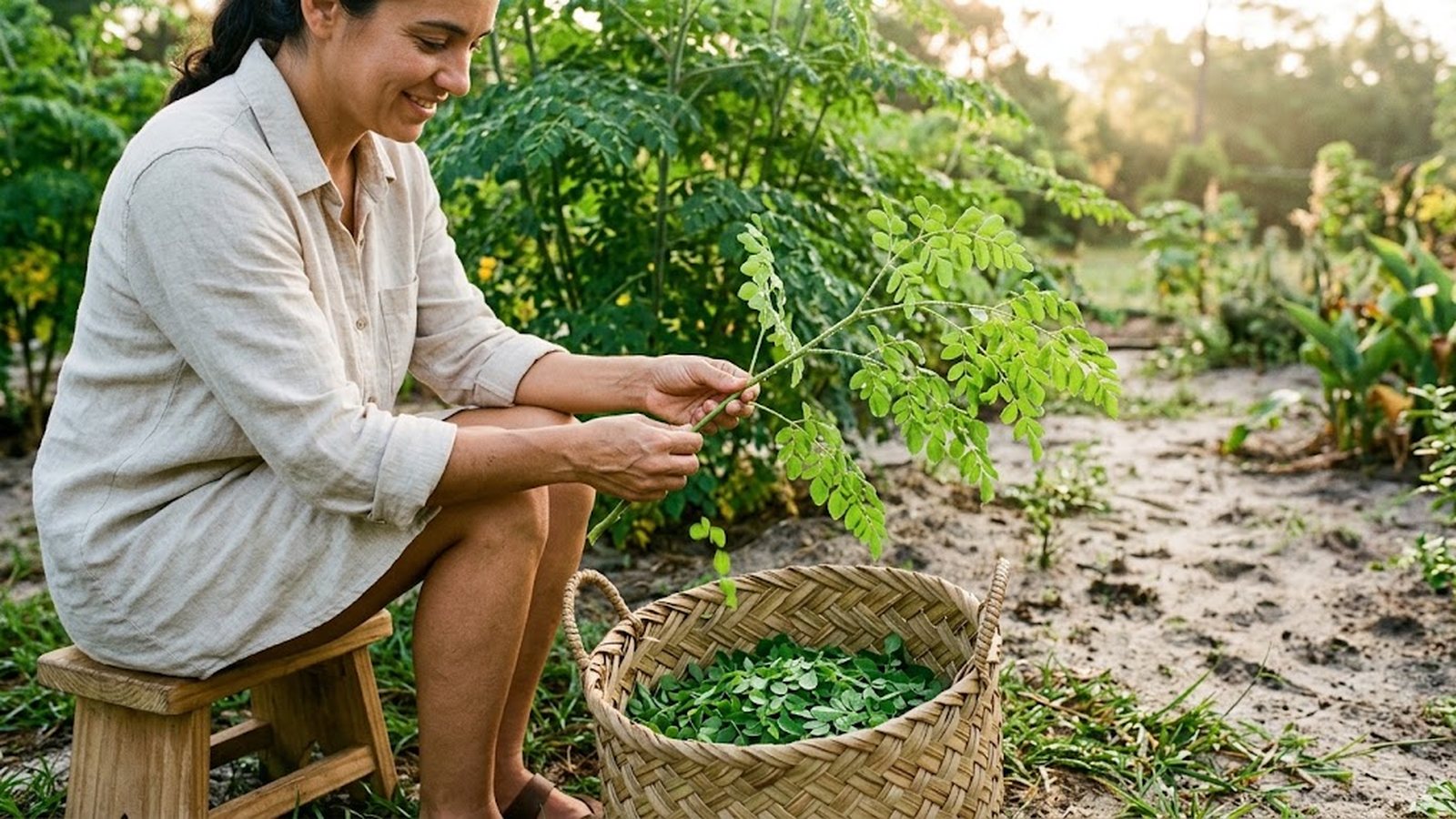
Knowing when to harvest moringa leaves is mostly a matter of knowing the tree's rhythm: it grows fastest in heat, it is at its best in the cool of early morning, and it forgives light, frequent picking far better than an occasional stripping. I harvest at the nursery in Weeki Wachee, most mornings from April to November, and the routine below is the one that keeps my trees producing without ever looking picked over. It covers the first harvest, the daily timing, the season, what to take, how much, and what to do in the ten minutes after the cut, which matters more than most people realize.
The first harvest: how soon
A moringa seedling started from seed in spring is ready for a light first picking at roughly eight to twelve weeks, once it is two to three feet tall and has been pinched at least once. Take a few leaflets from the outer branches, no more. A young tree is building its root, and the leaf is what feeds that work. Heavy picking in the first months trades a strong tree for a handful of greens.
By the end of the first summer the same tree is a branched bush four to six feet tall, and from then on it can carry a real harvest every week or two. A tree grown from a cutting is faster to leaf but slower to root; treat it the same way, lightly at first.
If your tree is more than a year old and cut back each spring as described in how to prune moringa, it is ready for its first cut of the season about four to six weeks after the spring regrowth starts, when the new shoots are a foot or more long.
Time of day: early
Pick in the early morning, after the dew has dried and before the sun is high. Overnight the tree rehydrates fully, and at dawn the leaflets are cool, crisp, and holding all the water they will hold. By early afternoon in a Florida summer the same leaflets have lost a measurable amount of moisture to the heat and gone slightly limp. Leaf picked at 8 a.m. keeps in the fridge for two days. Leaf picked at 2 p.m. is wilted by dinner.
Evening picking is the second-best option, once the heat has broken. The worst time is midday, and it is worst for the tree too, because an open cut in full sun loses water fast.
Season: the growing months
Moringa produces leaf when it is warm. Here that means April through early November, with the heaviest growth in June, July, and August, when a cut shoot regrows its length in two to three weeks. Spring leaf is the tenderest and mildest. Late-summer leaf is a little tougher and stronger tasting, and it is the leaf I dry for powder, because the tree is producing more than the kitchen can use.
Once nights drop into the 50s the tree slows, then stops. I make my last real cut in late September or early October and only pick individual leaflets after that, leaving the stems, so I do not push tender growth into a frost. Through winter the tree rests and there is nothing to pick. In frost-free Zones 10 and 11 you can pick year-round, though the winter growth is slow.
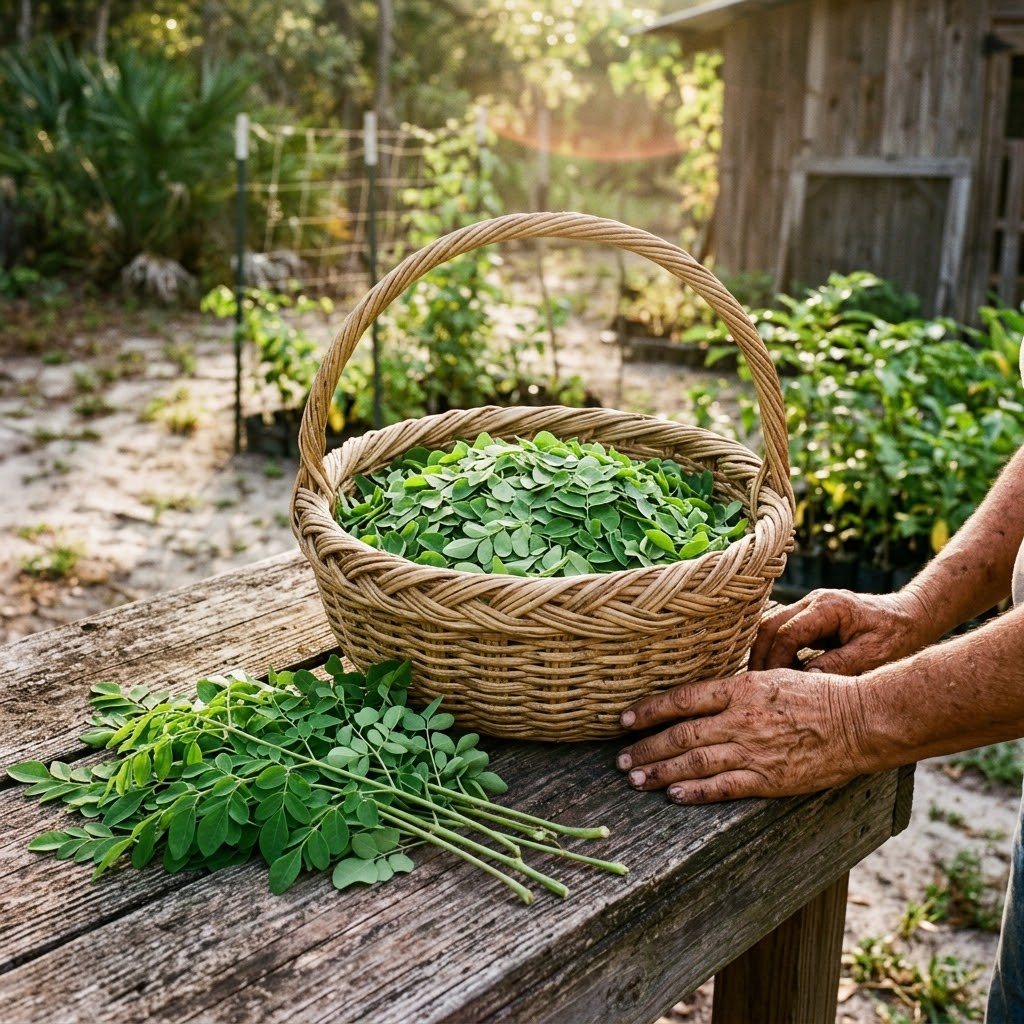
What to take
Mature leaflets from the outer part of each branch: full-sized, deep green, and firm. Skip the very newest growth at the tips, which is pale and mostly water, and skip the oldest, yellowing leaflets at the base of the branch, which are on their way out anyway. The middle of the shoot is the sweet spot.
There are two ways to take it.
- Strip leaflets from the branch and leave the stem on the tree. Hold the tip of the compound leaf in one hand and run your other hand down it against the direction of growth; the leaflets shower off. Gentlest method there is. Right for a young tree, or for a quick handful for dinner.
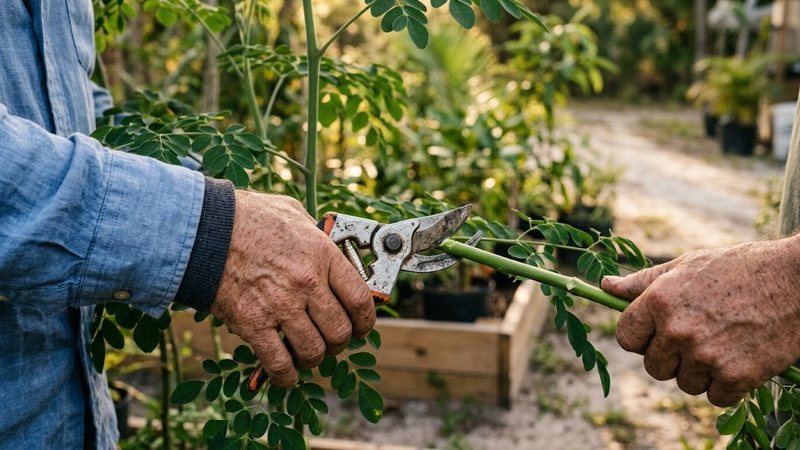
- Cut the leafy tip of the shoot, eight to twelve inches, and strip the leaflets afterward at the table. This is what I do for a real harvest, because every cut branches the tree and the next crop comes in thicker. It is harvesting and pruning in one motion. Cut just above a node, the ring on the stem where a leaf grew, so the buds below can push.
Either way, the stems are not eaten. They are woody and bitter. Thick straight ones root as cuttings; the rest go back under the tree as mulch.
How much is safe
Never more than about a third of the tree's leaf at one time. A third leaves the tree enough canopy to feed itself and regrow the rest within a few weeks in summer. Take half and it recovers, slowly. Strip it bare and you lose a month of production and, on a young tree, sometimes the tree.
The better pattern is little and often. I pick a section of the hedge each morning and get back to the first section ten days to two weeks later, by which time it has regrown. The tree never looks harvested, and the total yield over a season is far higher than it would be with a few big cuts.
The ten minutes after the cut
Fresh moringa wilts fast. This is not a leaf you leave in a bucket in the sun while you finish the yard. Get it into shade the moment it is cut, and into the kitchen or onto the drying screens within the hour.
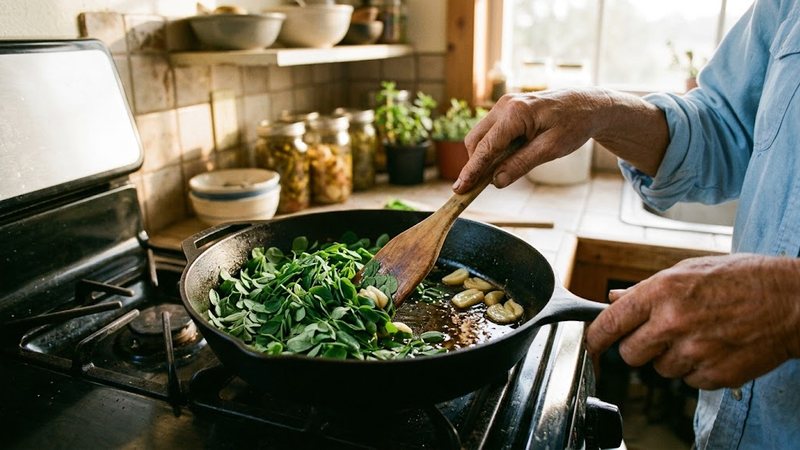
If you are using it fresh, strip the leaflets, rinse in cool water, spin or pat dry, and store in the fridge in a container lined with a paper towel. It keeps two or three days and is best the first day. Cooking with fresh moringa covers what to do with it.
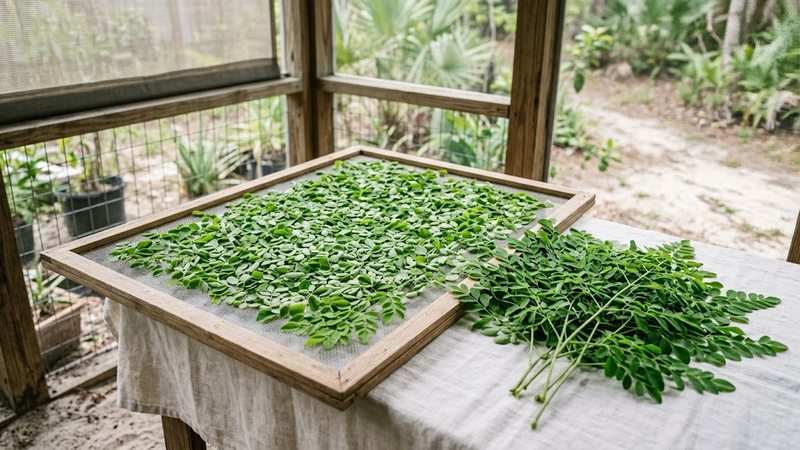
If you are drying it, strip, rinse, dry the surface, and get it onto screens in the shade the same morning. Leaf that sits in a pile for an afternoon heats up, starts to ferment, and dries brown.
Reading the tree
The tree will tell you whether you are harvesting well.
- Regrowth within two to three weeks, shoots branching below every cut, deep green leaf. You are doing it right.
- Slow regrowth, thin shoots, pale leaf. You are taking too much, or the tree is hungry or dry. Ease off for a month and feed lightly.
- Tall bare stems with leaf only at the tips. You are stripping leaflets without cutting stems, so the tree keeps running upward. Start cutting tips.
- Flowers and pods everywhere. You are not cutting often enough. The tree is mature enough to flower, which is fine if you want pods and seed, but for leaf, cut more.
FAQ
How long after planting can I harvest moringa leaves?
A light first picking at eight to twelve weeks from seed, once the seedling is two to three feet tall and has been pinched. Regular harvests from the end of the first summer onward.
What time of day is best to harvest moringa?
Early morning, after the dew has dried and before the heat builds. The leaf is fully hydrated and keeps far better than leaf picked in the afternoon.
How often can you harvest moringa leaves?
A section of a tree every ten days to two weeks in summer, taking no more than a third of the leaf each time. Light, frequent picking gives more leaf over a season than heavy, occasional cuts.
Should I harvest moringa leaves or the whole branch?
For a quick handful, strip leaflets and leave the stem. For a real harvest, cut the leafy tip of the shoot, eight to twelve inches above a node; that harvests and prunes in one motion, and the tree branches below the cut.
Can I harvest moringa in winter?
Not in areas that get cool nights. Once temperatures settle in the 50s the tree stops growing and drops leaf. In frost-free Zones 10 and 11 you can pick year-round, slowly.
The short version
First light picking at eight to twelve weeks from seed. Pick early in the morning, from April to early fall, taking mature leaflets from the middle of the shoots, and never more than a third of the tree at once. Cut leafy tips just above a node so the tree branches. Get the leaf into shade immediately. Fridge or drying screens within the hour. Little and often beats big and rare, every time.