How to Cook Moringa Pods (Drumsticks): Picking, Prep, Two Recipes
Everything about eating moringa pods: when a drumstick is young enough to cook, how to prep and eat the fibrous pod, a coconut curry, and a sambar-style stew.
Moringa pods are the vegetable most Americans have never met, and in South India they are the main reason the tree is grown at all. The long green pods, called drumsticks, go into sambar, curries, and stews, where they cook into something soft, sweet, and a little like asparagus crossed with green bean. They are also strange to eat the first time, because you do not eat the whole thing. At my nursery in Weeki Wachee, Florida, the PKM-1 trees I leave unpruned set pods from their first year, and by late summer there are more than the kitchen can use. This is how to pick them at the right stage, prep them, cook them, and eat them without confusion.
When a pod is ready to eat
Timing is everything with drumsticks. A pod that is right is tender all the way through; a pod a week too old is a fibrous stick that no amount of cooking will soften.
Pick pods when they are:
- Slim. Pencil to finger thickness. Once they swell and go lumpy, the seeds inside are maturing and the flesh is turning to fiber.
- Bright green and smooth, not ridged or dull.
- Snappy. Bend one; a young pod snaps cleanly with a wet break. An old pod bends and creaks.
- Twelve to eighteen inches long, give or take. Length matters less than thickness, and PKM-1 pods can run over two feet while still tender.
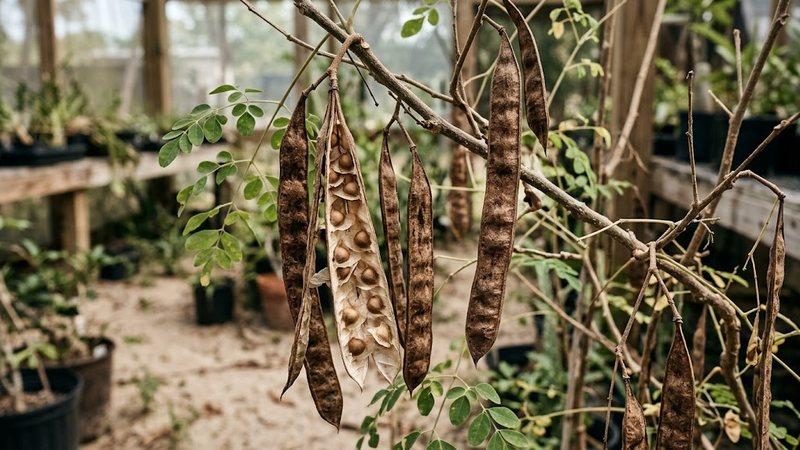
Very young pods, a few inches long and still pliable, can be cooked whole like green beans. The classic drumstick stage is a little older than that. Past the classic stage, the pod is for seed, not the table. Those go into the seed-saving guide.
Pods keep about a week in the fridge in a bag, and they freeze well cut into pieces and blanched for two minutes.
Prepping
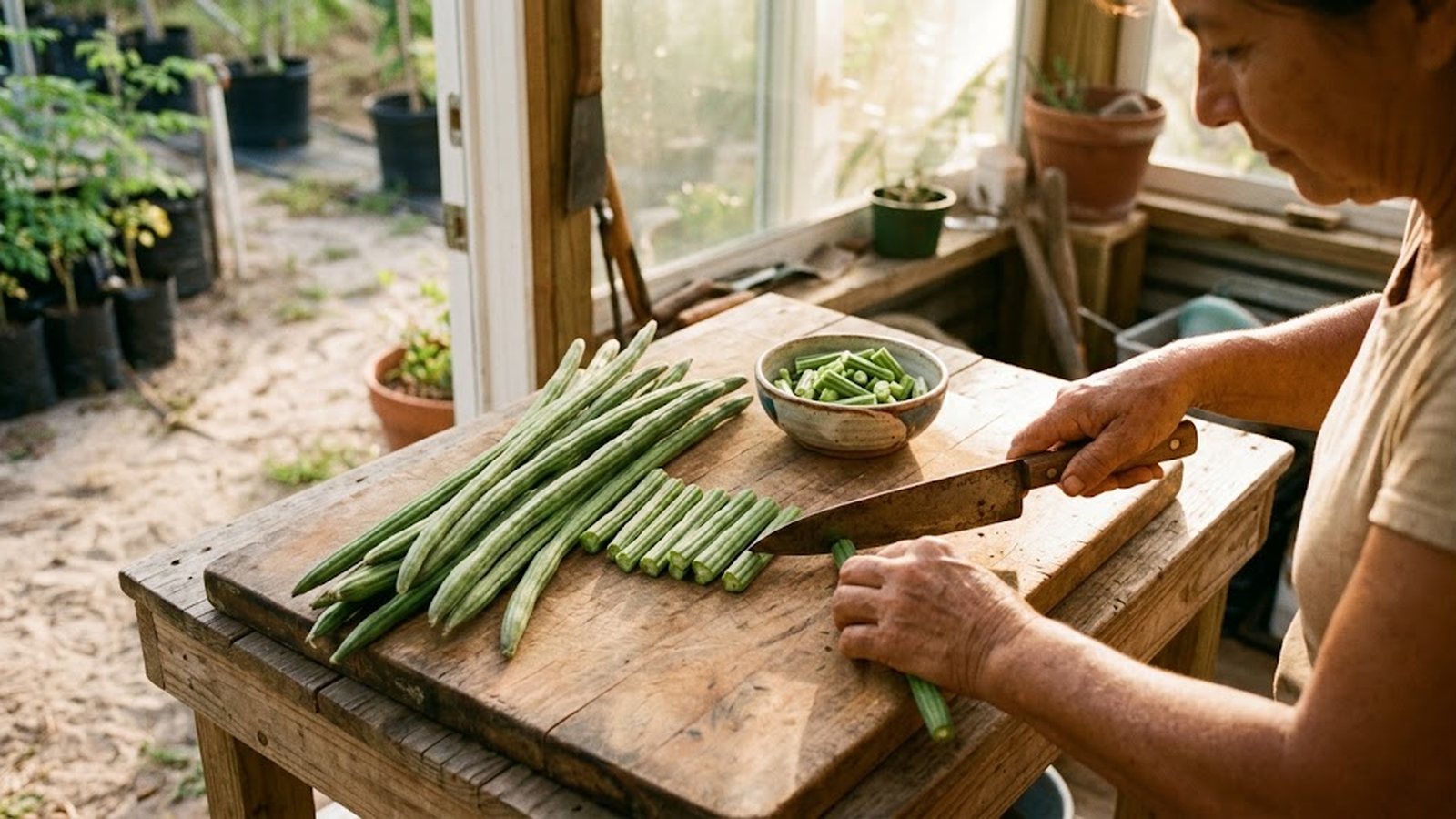
Wash the pods. Trim off the stem end and the tip. Then take a vegetable peeler or a paring knife and strip off the thin, tough outer skin, running the length of the pod. Some cooks skip this on very young pods; I do not, because the skin is the fibrous part and peeling makes the whole pod easier to eat. Cut the peeled pod into pieces two to three inches long.
That is all. The pieces are ready to simmer.
How to eat a cooked drumstick
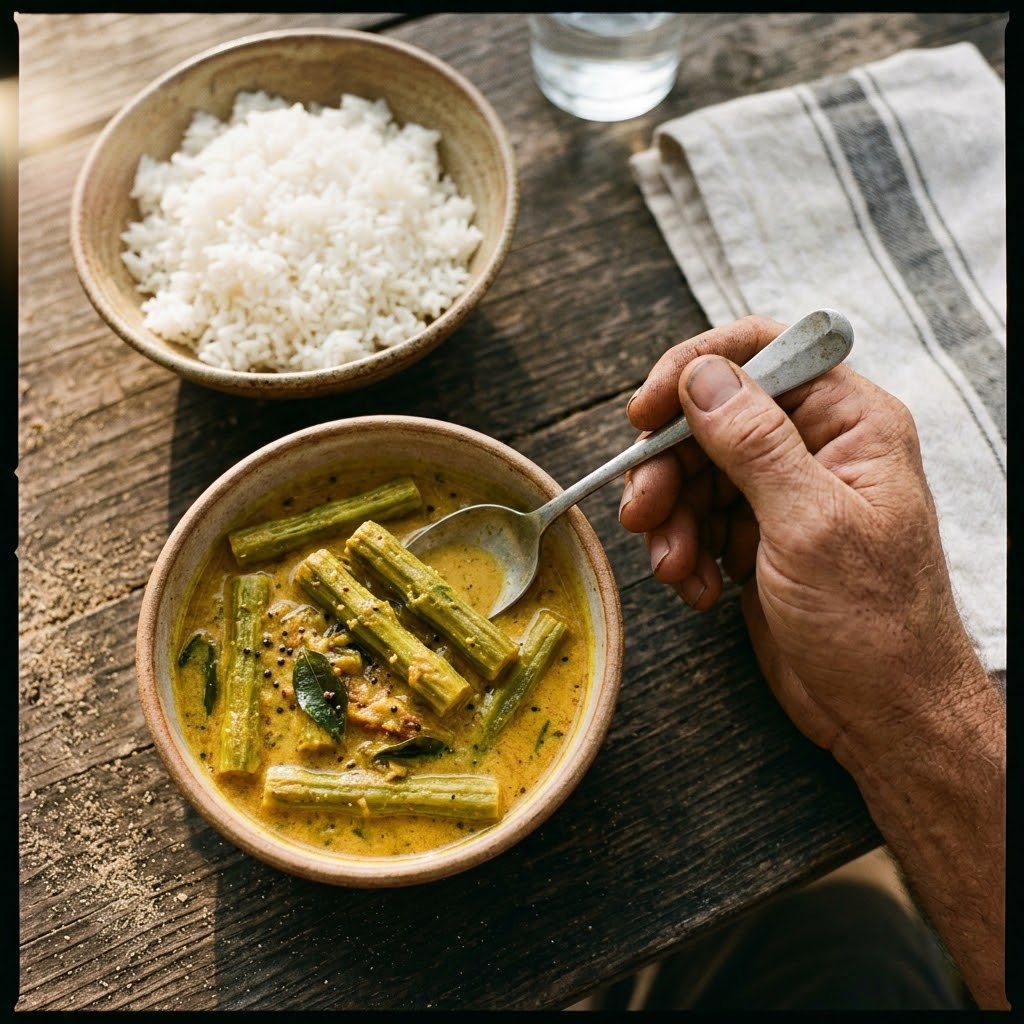
Here is the part nobody explains. A cooked drumstick piece is a tube of soft flesh and immature seeds inside a fibrous outer wall. You pick up the piece, split it lengthwise with a knife or your thumbs, and scrape out the soft interior with a spoon or your teeth. Or you put the whole piece in your mouth, chew, suck the flesh and the sauce off the fibers, and set the chewed fiber on the side of the plate. In a South Indian home, that pile of fiber is on every plate and nobody thinks twice about it. The pods flavor the sauce as they cook, so the sauce is as much the point as the flesh.
1. Coconut drumstick curry
A Kerala-style curry, mild and rich. Four servings with rice.
- 2 tablespoons coconut oil
- 1 teaspoon black mustard seeds
- 10 curry leaves, if you can get them
- 1 onion, sliced
- 2 green chilies, slit
- 1 tablespoon grated ginger, 3 cloves garlic, minced
- 1/2 teaspoon turmeric, 1 teaspoon ground coriander, 1/2 teaspoon chili powder
- 4 moringa pods, peeled and cut into 2-inch pieces (about 3 cups)
- 1 medium potato, cubed (optional)
- 1 1/2 cups water
- 1 can (14 oz) coconut milk
- Salt, lime juice
Heat the oil and pop the mustard seeds. Add the curry leaves, onion, and chilies and cook until the onion is soft. Add the ginger, garlic, and ground spices and stir a minute. Add the pods, potato, water, and a teaspoon of salt. Simmer, covered, for twelve to fifteen minutes until the pod flesh is tender when you press a piece and the potato is cooked. Pour in the coconut milk and simmer two or three minutes more without boiling hard. Finish with lime. Serve over rice.
The pod flesh should be soft and scoop out easily. If it is still firm after fifteen minutes, the pods were too old; give them ten more minutes and lower your expectations.
2. Quick sambar-style lentil stew with drumsticks
The everyday South Indian home for drumsticks. This is a simplified version that skips nothing important. Four to six servings.
- 1 cup toor dal (split pigeon peas) or red lentils, rinsed
- 1/2 teaspoon turmeric
- 4 cups water
- 3 moringa pods, peeled and cut into 2-inch pieces
- 1 onion, chopped, and 1 tomato, chopped
- 2 tablespoons tamarind paste dissolved in 1/2 cup warm water (or the juice of a lemon)
- 2 tablespoons sambar powder (from an Indian grocer), or 1 tablespoon ground coriander plus 1 teaspoon each cumin, chili powder, and fenugreek
- Salt
- For the tempering: 1 tablespoon oil, 1 teaspoon mustard seeds, a pinch of asafetida, 2 dried red chilies, 10 curry leaves
Simmer the dal with the turmeric and water until soft, twenty-five minutes for toor dal, fifteen for red lentils. Mash it a little. Add the pods, onion, and tomato and simmer ten to twelve minutes until the pods are tender. Stir in the tamarind, sambar powder, and salt and simmer five minutes more. In a small pan, heat the oil, pop the mustard seeds, add the asafetida, chilies, and curry leaves, and pour the sizzling mixture over the stew. Serve with rice or as a soup.
Simpler things to do with pods
- Boiled and buttered. Very young pods, whole or in pieces, simmered in salted water five to eight minutes and eaten with butter and salt like asparagus.
- In any soup or stew. Add pieces for the last fifteen minutes of a chicken soup, a bean stew, or a vegetable soup. They flavor the broth and you eat them as above.
- Roasted. Peeled pieces tossed in oil and salt and roasted at 425°F for twenty minutes get sweet and a little charred. Still scrape the flesh out.
Pods and leaf from the same tree
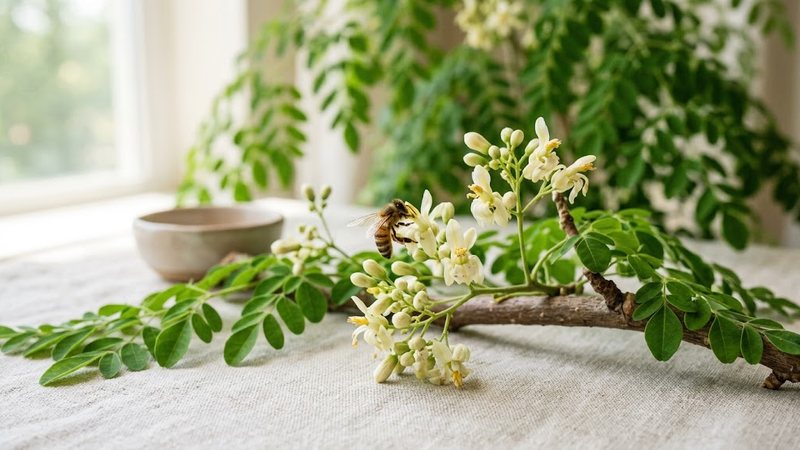
A tree cannot do both at full output. Frequent cutting for leaf removes the mature tips where flowers form, so a tree pruned every two weeks never sets pods. A tree left to grow flowers heavily and pods follow within a couple of months, but its leaf is high and sparse. The answer at my nursery is to keep most trees as a leaf hedge and leave a couple to run for pods and seed. The pruning guide explains how to manage each, and the flower guide covers the bloom stage in between.
FAQ
Can you eat moringa pods?
Yes. Young green pods, called drumsticks, are a common vegetable across South Asia. They are peeled, cut into pieces, simmered in curries and stews, and the soft flesh is scraped or sucked from the fibrous outer wall.
How do you know when moringa pods are ready to harvest for eating?
When they are pencil to finger thick, bright green, smooth, and snap cleanly when bent. Lumpy, ridged, or bendy pods are too old to eat and should be left for seed.
Do you have to peel moringa pods?
It is not strictly required for very young pods, but peeling removes the toughest fibers and makes every pod easier to eat. A vegetable peeler does it in a few strokes.
What do moringa pods taste like?
Mild and slightly sweet, somewhere between asparagus and green bean, with a faint green note. They absorb the flavor of whatever they are cooked in.
How long do you cook moringa pods?
Ten to fifteen minutes of simmering for pods at the right stage. Older pods take longer and never get fully tender.
The short version
Pick pods slim, green, and snappy. Peel, trim, and cut into two- to three-inch pieces. Simmer ten to fifteen minutes in a coconut curry, a lentil stew, or any soup. To eat, split the piece and scrape out the soft flesh, leaving the fibers. Pods too old for the table are seed for next year. A tree grown for pods is pruned less than a tree grown for leaf, so keep one of each.