Fresh Moringa Leaves vs Powder: Nutrition, Taste, and When to Use Each
Fresh moringa leaf and dried powder are two foods from one tree. What drying changes, how much fresh equals a teaspoon of powder, and when to use each.
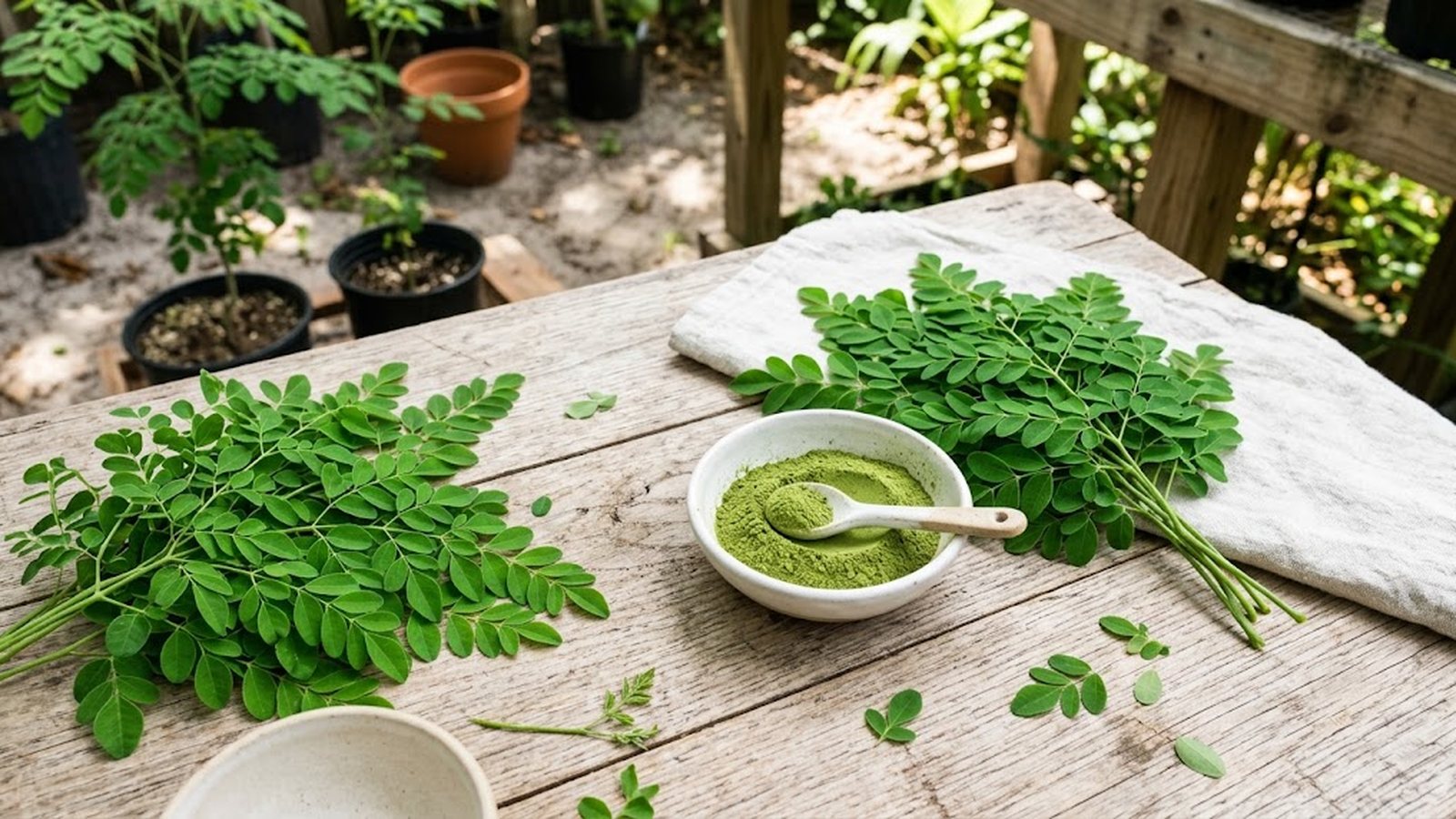
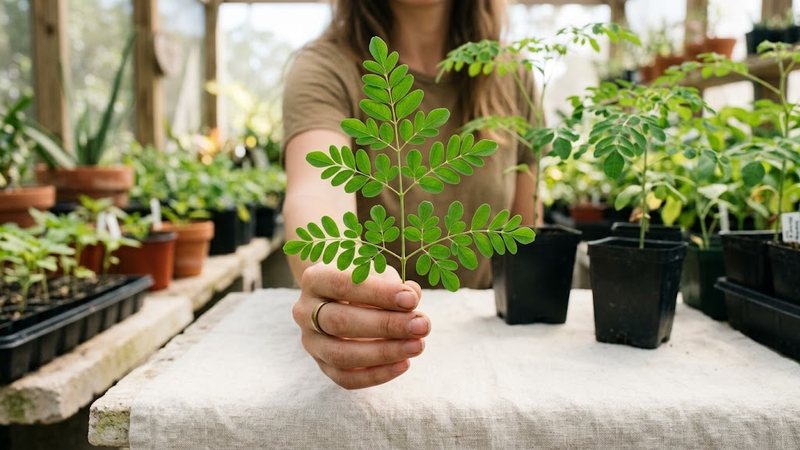
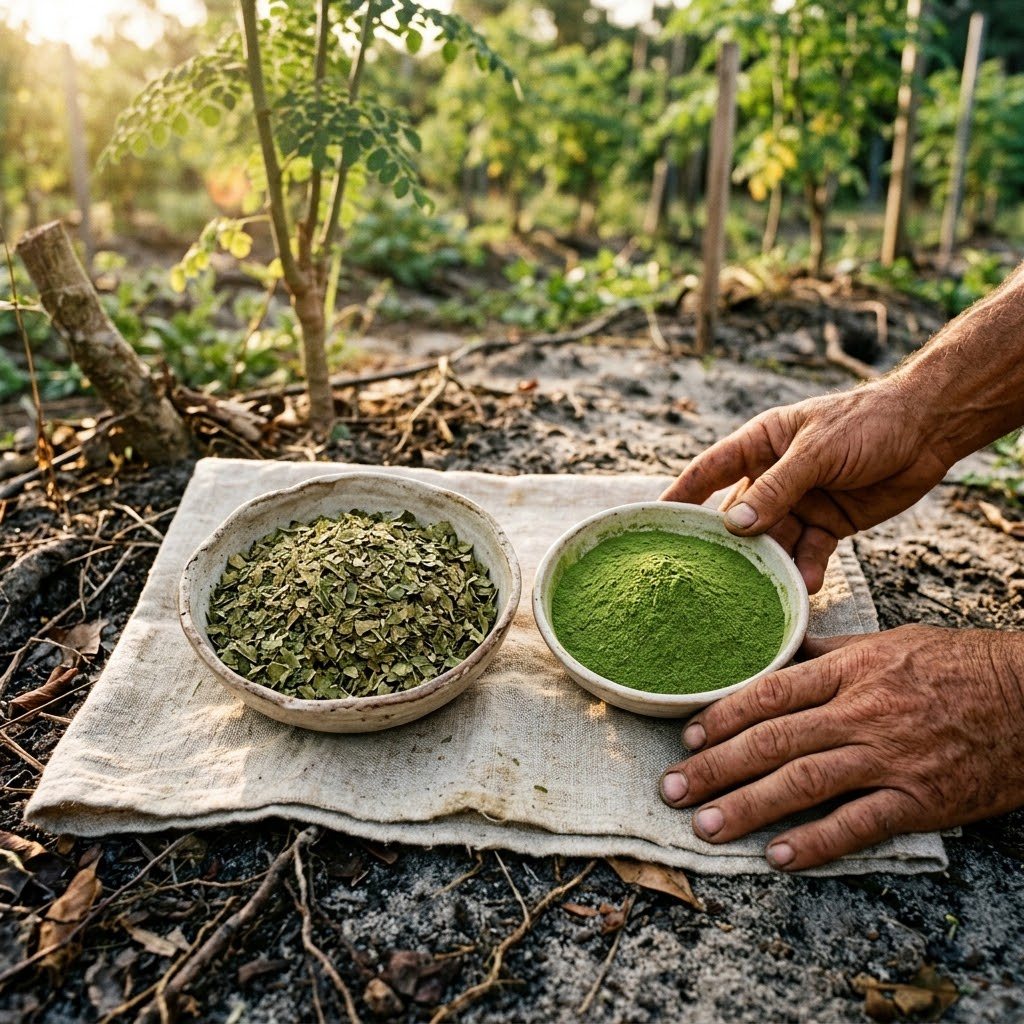
Fresh moringa vs powder is a question I get from two directions. Growers with a tree want to know whether they should bother drying it. Powder buyers want to know whether they are missing something by not having the fresh leaf. The answer to both is that fresh leaf and dried powder are two different foods that happen to come from the same tree, each better at some things and worse at others. I live with both on the sandy ground of my Weeki Wachee nursery: fresh leaf from April to November, powder the rest of the year, and powder even in summer for the things fresh leaf cannot do. Here is what drying actually changes, and how to use each one well.
What drying does
A fresh moringa leaflet is roughly three-quarters water. Drying removes that water and leaves everything else behind, concentrated. A pound of fresh leaflets becomes three to four ounces of powder. So the first thing drying does is make the leaf small, light, and shelf-stable, which is the whole point.
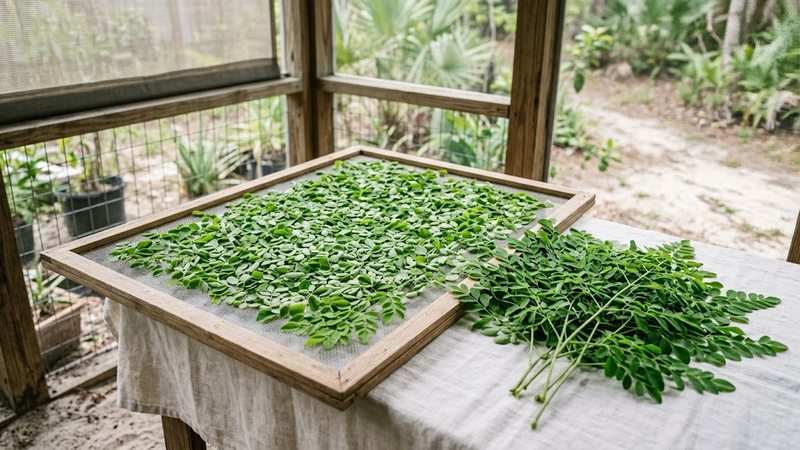
The second thing drying does is lose a little. Vitamin C is the big one; it is fragile, and a large share of it is gone by the time the leaf is powder, more if the leaf was dried hot. Some of the more delicate plant compounds decline too. Most of the rest, the minerals, the protein, the fiber, the carotenoids, comes through drying mostly intact, especially when the leaf is dried gently. That is why my standard is drying at or below 105°F, for my own harvest and for the growers I buy from.
The third thing drying does is change the flavor. Fresh leaf tastes green and peppery, like watercress. Dried leaf loses the pepper and gains an earthy, tea-like depth. Neither is better; they are different, the way fresh basil and dried oregano are different.
Nutrition: fresh versus powder, honestly
Gram for gram, powder is more concentrated in nearly everything, because the water is gone. A teaspoon of powder, about two grams, carries roughly the minerals and protein of a small handful of fresh leaflets. That makes powder the easier way to eat a meaningful amount of moringa every day: a teaspoon in a smoothie is effortless, and the equivalent handful of fresh leaf is a chore unless you are cooking anyway.
Fresh leaf wins on vitamin C and on the delicate compounds that fade in drying, and it wins on volume. When you cook two cups of fresh leaflets into a soup you have eaten a real serving of a green vegetable, with the fiber and bulk that implies. A teaspoon of powder is a concentrated pinch of that vegetable, not a plate of it.
Put simply: powder is denser per spoon; fresh leaf is better per leaf and gives you more of a vegetable. The nutrition overview covers what is in the leaf either way. Neither form treats or prevents anything; both are a leafy green, eaten as food.
Taste and texture
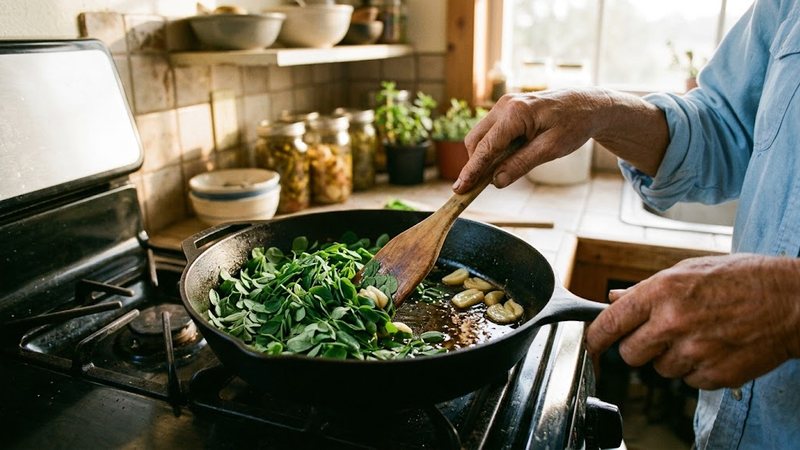
Fresh leaf is a tender vegetable with a mild peppery bite. Raw, young leaflets go into salads in small amounts; older ones want two minutes in a hot pan with garlic. It has texture: it wilts, it shrinks, it gives a dish body. The whole range is in cooking with fresh moringa leaves.
Powder is a seasoning and a pantry staple. It has no texture of its own; it disperses into liquids and blends into anything wet. Its flavor is earthier and more like green tea, and in the right amount it is barely noticeable behind fruit, fat, or spice. It does one thing fresh leaf cannot: it goes into a cup of tea, a coffee, a smoothie, or a jar of dressing in seconds. The amounts for each dish are in the ratio chart.
Convenience and shelf life
Fresh leaf keeps two or three days in the fridge and is best the day it is picked. It is seasonal, roughly April to November here, and it is available only if you have a tree or know someone who does. Almost no grocery store in the United States carries it.
Powder keeps a year or more sealed in a dark cupboard and six months to a year once opened, if you follow the storage guide. It is available everywhere, ships anywhere, and a jar lasts months. For most people in most of the country, powder is not the second choice; it is the only practical way to eat moringa at all.
Cost
If you have a tree, fresh leaf is free after the seed, and a single pruned tree supplies a household with more than it can eat. Making your own powder from the surplus is nearly free too, if you count your time as free.
If you buy, powder is the only option, and it is inexpensive per serving: a teaspoon a day from a jar works out to a few dozen cents. Fresh leaf, where it can be bought at all, is a specialty item at a specialty price.
When to use which
- You have a tree and it is growing season: fresh leaf, as a vegetable, several times a week. Sauté it, put it in eggs and soup, blend a handful into smoothies. Dry the surplus.
- You have a tree and it is winter: your own powder, made in the fall.
- You want moringa in a drink: powder. Fresh leaf makes a pleasant light tea, but powder is what goes into coffee, lattes, and smoothies without fuss.
- You want the most vitamin C from the leaf: fresh, lightly cooked or raw.
- You want the easiest daily habit: powder, a teaspoon a day.
- You want a plate of green vegetable: fresh, or two cups of it in a soup.
- You do not have a tree and never will: powder, from a source that can tell you how it was dried.
The case for both
At my nursery the answer has never been one or the other. In summer the kitchen runs on fresh leaf, and the powder jar still comes out every morning for the smoothie, because a teaspoon is faster than stripping a branch. In winter, when the trees are resting, the powder is the whole story. Both come from the same leaf, dried the same careful way or not dried at all, and both are held to the same standard.
If you are thinking about growing a tree to get the fresh leaf, the growing guide and the seed guide will get you there in one summer. Until then, and after, a jar of good powder is the right thing to have in the cupboard.
FAQ
Is fresh moringa better than powder?
Fresh leaf has more vitamin C and eats like a vegetable. Powder is more concentrated per spoon, keeps for a year, and goes into drinks. Neither is better overall; they are different foods with different uses.
How much fresh moringa equals one teaspoon of powder?
Roughly one loosely packed handful of fresh leaflets. A pound of fresh leaf dries to about three to four ounces of powder, so the concentration is around four to five times.
Does drying moringa destroy its nutrients?
It reduces vitamin C substantially and some delicate compounds a little, and gentle drying at or below 105°F keeps the loss small. Minerals, protein, fiber, and carotenoids come through drying largely intact.
Can I eat fresh moringa leaves every day?
Yes, as a vegetable. Cooked or raw, fresh leaflets are a normal green in the countries where the tree grows, eaten daily in season.
Which tastes better, fresh moringa or powder?
Fresh leaf is milder and peppery, like watercress, and most people find it easier to enjoy as food. Powder is earthier and tea-like, and easy to hide in sweet or rich dishes. Preference varies; try both if you can.
The short version
Fresh moringa is a tender peppery vegetable, best in season, highest in vitamin C, and a real plate of greens when you cook a couple of cups. Powder is the same leaf with the water gone: four to five times as concentrated, earthier in taste, shelf-stable for a year, and the only form that goes into a drink. A teaspoon of powder is about a handful of fresh leaf. Growers should eat fresh in summer and dry the surplus for winter; everyone else should buy powder from someone who can tell you how it was dried.