How Big Does a Moringa Tree Get? Size, Growth Rate, and Roots
What to expect before you plant a moringa tree: how fast it grows, how tall it gets pruned and unpruned, how the roots behave, and how close to a house is safe.
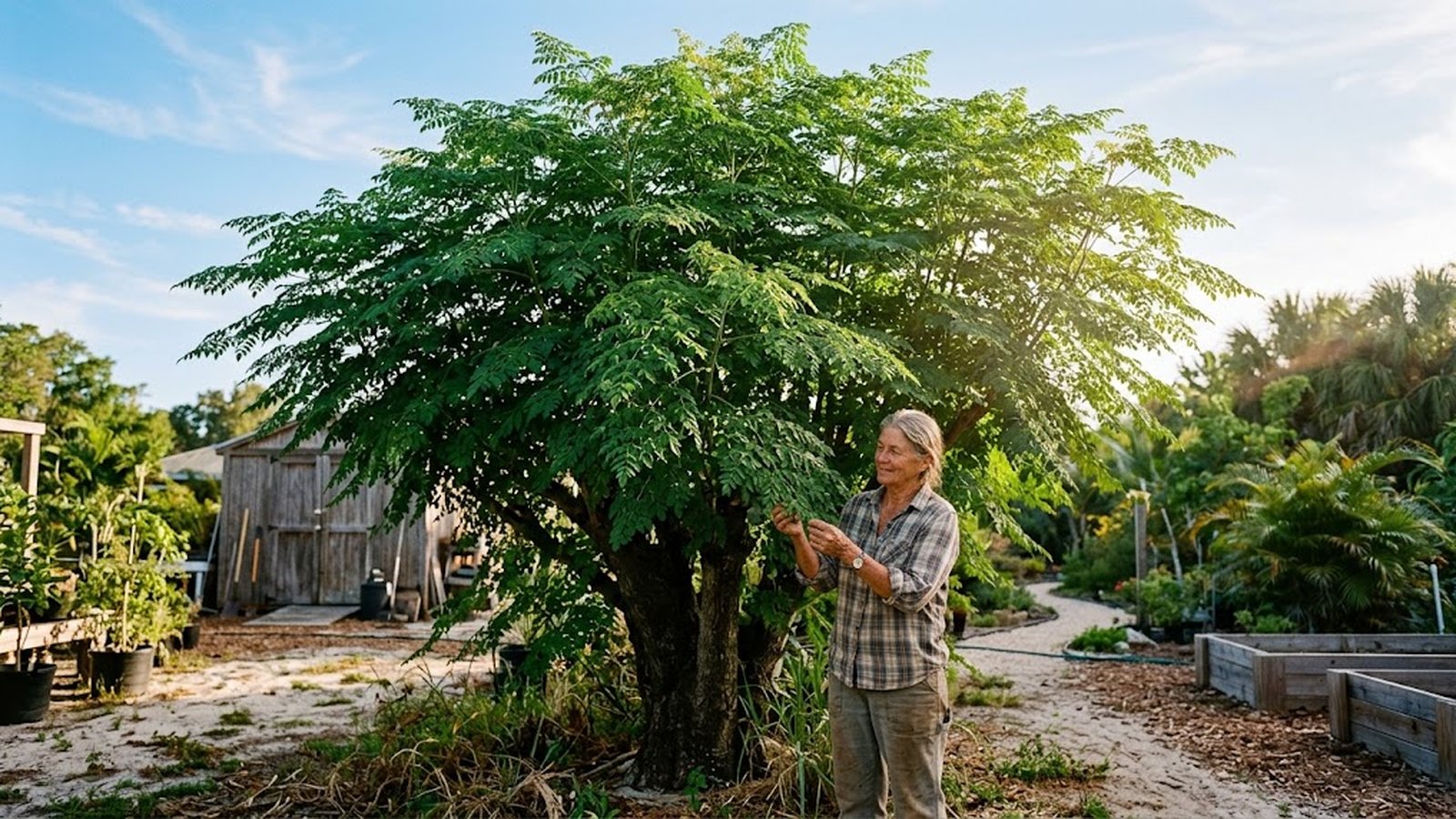
People ask how big does a moringa tree get before they plant one, and the honest answer is: as big as you let it. Unpruned in a warm climate it is a genuine tree, thirty feet or more, brittle and gangly. Pruned the way a grower prunes it, it is a waist-high hedge that never needs a ladder. Both are the same plant. I grow moringa on the sandy ground of my Weeki Wachee nursery, in Zone 9b, and I have seen both versions in my own yard. This is what to expect from the tree in terms of height, speed, spread, roots, wood, and lifespan, so you can put it in the right spot the first time.
Growth rate: the fastest tree most people will ever plant
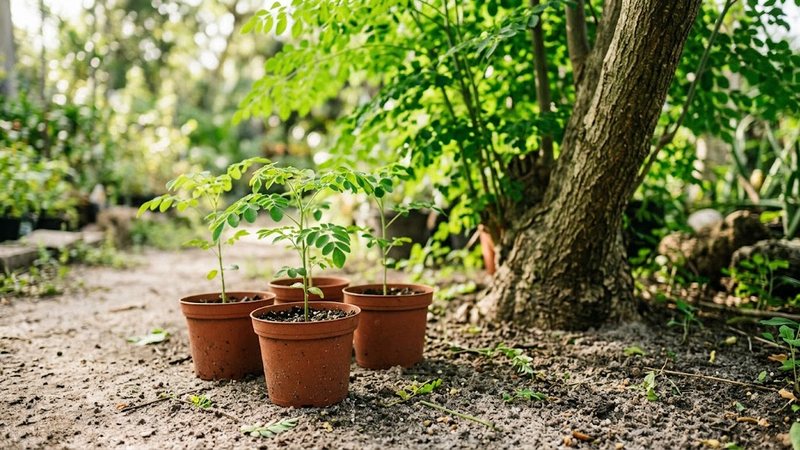
A moringa seedling sown in April in warm soil is knee-high by June, head-high by August, and ten to fifteen feet by the time it stops for winter, if nobody cuts it. In the true tropics, where it never stops, first-year growth of twenty feet is reported. In summer heat a cut branch regrows a foot or more a week. There is no other tree in my yard that comes close.
That speed comes with a trade-off. The wood is soft and light, closer to a giant weed than to an oak, and the tree puts all its energy into height rather than strength. An unpruned first-year tree is a tall pole with a small crown, and it leans, whips, and snaps in wind. Speed is the reason to prune, not just the reward for it.
Growth is tied to temperature. Below about 70°F it slows, below 60°F it stops, and the tree sheds most of its leaf in cool weather. Here, the growing season runs from April to early November. The winter guide covers what happens in the months between.
Height: unpruned versus managed
- Unpruned in the tropics: 30 to 40 feet over several years, occasionally more. A real tree, with a trunk a foot or more across.
- Unpruned in Zone 9: 15 to 20 feet in a season, then frost cuts it back most winters and it regrows from lower down. It rarely gets the chance to become a big tree here.
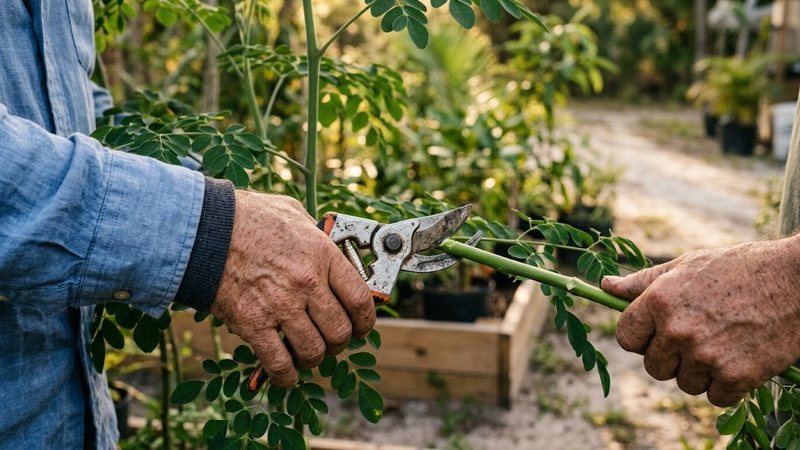
- Managed for leaf: 4 to 6 feet, held there by cutting every week or two through the season and a hard cut-back each spring. This is how I keep every tree I harvest from, and how the pruning guide tells you to keep yours.
- Managed for pods: 8 to 12 feet, pinched low once or twice as a seedling to build a branched frame, then allowed to run so it flowers on mature tips.
Whatever height you choose, the tree accepts it. It is one of the few trees that can be cut back to a stump every year and come back stronger.
Spread and shape
Unpruned, moringa is narrow for its height: an open, umbrella-shaped crown eight to twelve feet across on a tall trunk, with drooping branches and feathery, almost lacy foliage that casts light shade. Nothing much grows badly under it. Pruned, it becomes a dense, round shrub as wide as it is tall, and a row of them planted two to three feet apart knits into a solid hedge in a single summer.
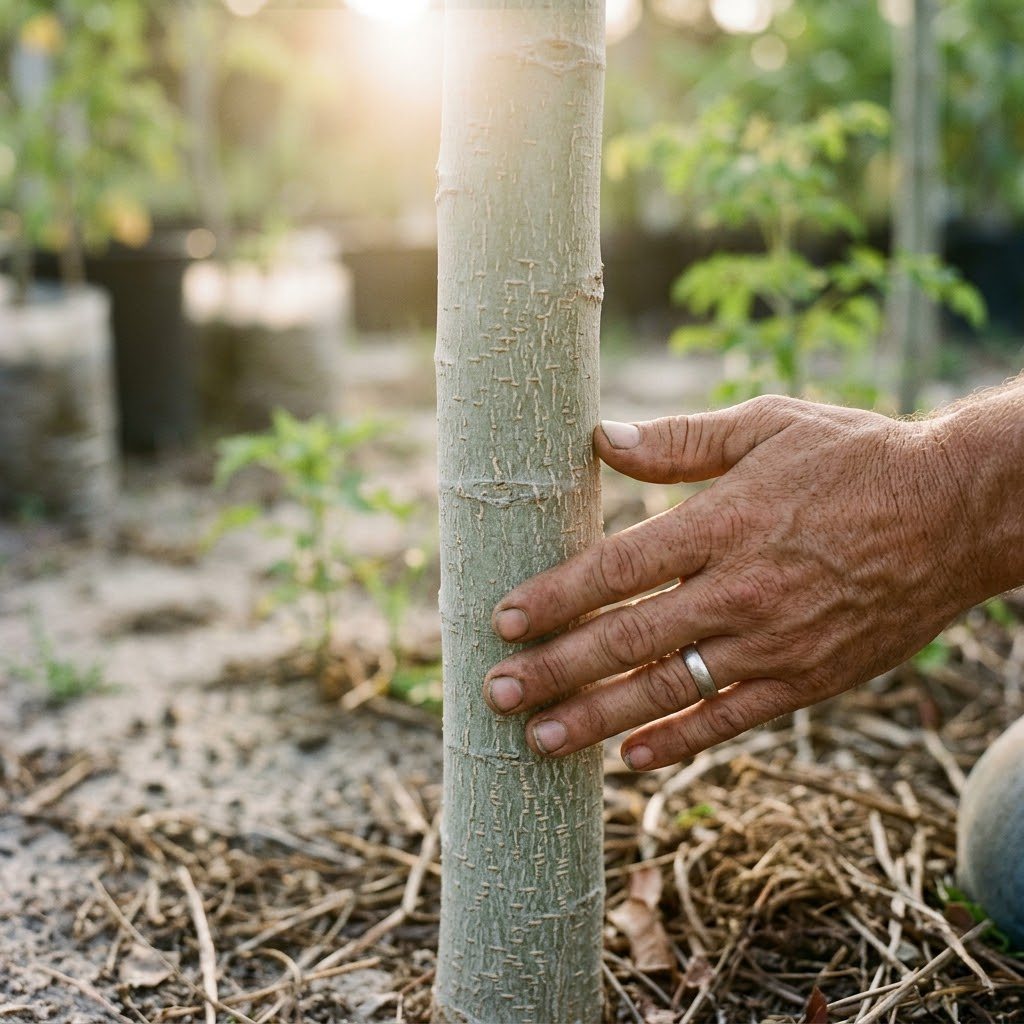
The trunk is smooth and pale grey-green when young, corky and whitish-grey with age. Bark and wood both bruise easily; a mower or trimmer knock on a young trunk leaves a wound that takes a season to close.
Roots: the part you cannot see
Moringa grows from a thick, fleshy taproot that looks like a pale carrot, sometimes a foot long within the first two months. It stores water, which is why the tree is so drought-tough, and it is why the tree resents transplanting: break the taproot and the seedling stalls.
From that taproot, a network of lateral roots spreads out in the top foot or two of soil, roughly as far as the canopy and often further. They are not aggressive in the way a fig or a ficus is. Moringa roots do not heave sidewalks or hunt for pipes, and I have never seen them damage a foundation. They are shallow and soft.
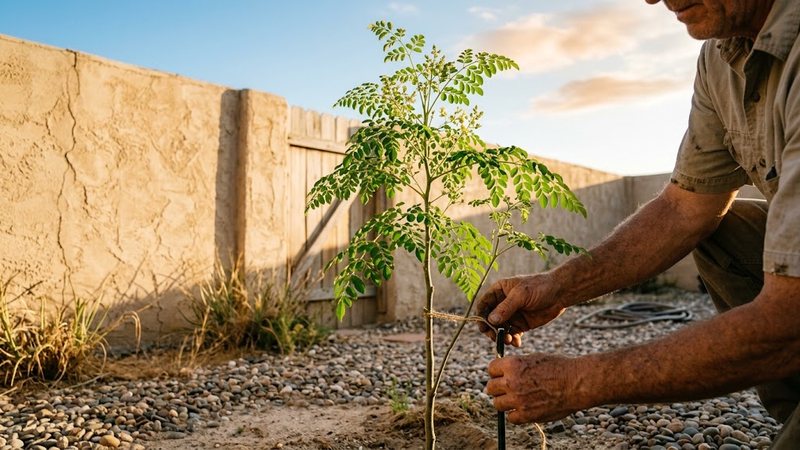
Still, give the tree room. I keep moringa ten feet from any building, mostly for the sake of the wall when a branch drops, and I keep it out of the septic drain field, not because the roots are destructive but because any tree in a drain field is a bad idea. A tree that will be cut back hard each year can go closer, since it never develops a big crown or the root mass to match.
The taproot is also why the tree survives things that should kill it. Frost, drought, a bad pruning, a mower: the root sits below it all and pushes new shoots when conditions improve.
Wood and wind
This deserves its own warning because it surprises everyone. Moringa wood is among the lightest and weakest of any tree you will grow. Branches snap under their own weight once they get long, and a tall unpruned tree loses limbs in every tropical storm and sometimes just in a summer thunderstorm. It is not a tree to plant over a car, a roof, or a spot where people sit.
The fix is the same as everything else: keep it short. A hedge at five feet has nothing to drop. A tree pinched low as a seedling into several strong scaffold branches is far more stable than a single tall pole. If you inherit a tall one, cut it to four feet in spring and start over. It will thank you.
Lifespan
A moringa tree lives about twenty years in the tropics, sometimes longer, and its productive life is most of that. Here in Zone 9, with the top killed most winters and regrown each spring, a tree behaves more like a long-lived perennial than a tree: the root persists for many years while the top is replaced annually. My oldest trees are still producing, and I expect them to keep going.
Because it is so fast and cheap from seed, lifespan matters less than with most trees. A tree lost to a hard freeze or a wet winter is replaced from seed in a single season.
How it grows through a year
- March to April: Spring cut-back. Buds swell at the trunk within two weeks of warm soil.
- May to June: Explosive regrowth, a foot a week on a cut tree. Thin the shoots, start harvesting.
- July to August: Peak leaf production. Cut every one to two weeks. Flowers on any branch left uncut.
- September to October: Growth slows with the shortening days. Last real cuts. Pods maturing on flowering trees.
- November to February: Leaf drop, rest, frost damage on exposed wood. Root alive underground.
FAQ
How fast does a moringa tree grow?
From seed to ten or fifteen feet in a single warm season if left unpruned. A cut branch regrows a foot or more a week in midsummer. Growth slows below 70°F and stops in cool weather.
How tall does a moringa tree get?
Thirty to forty feet unpruned in the tropics. Fifteen to twenty feet in a season in Zone 9 before frost cuts it back. Four to six feet if pruned regularly for leaf, which is how most growers keep it.
Are moringa tree roots invasive?
No. The tree has a deep fleshy taproot and shallow, soft lateral roots that do not heave pavement or damage foundations. Keep it about ten feet from buildings anyway, mainly because the brittle branches drop in storms.
How long does a moringa tree live?
Around twenty years in frost-free climates. In areas with winter dieback, the root persists for many years while the top regrows each spring.
How much space does a moringa tree need?
Ten feet from structures and other trees if you let it grow tall. Two to three feet apart in a row if you keep it as a harvest hedge, which is the more useful way to grow it.
The short version
Moringa is the fastest tree you will plant: ten to fifteen feet in its first season, thirty or more over years in the tropics, with soft brittle wood that drops limbs in wind. The taproot is deep, the lateral roots are shallow and harmless, and the tree lives about twenty years. None of that has to matter, because the plant accepts any size you choose. Keep it at four to six feet with regular cutting, and you get more leaf, no ladder, no storm damage, and a tree you can cover on a frost night.