Moringa Seeds and Water Purification: How It Works and a Kitchen Demo
How crushed moringa seeds clear muddy water: the coagulant protein, what research shows, a jar demo you can do at home, and why clear water is not yet safe water.
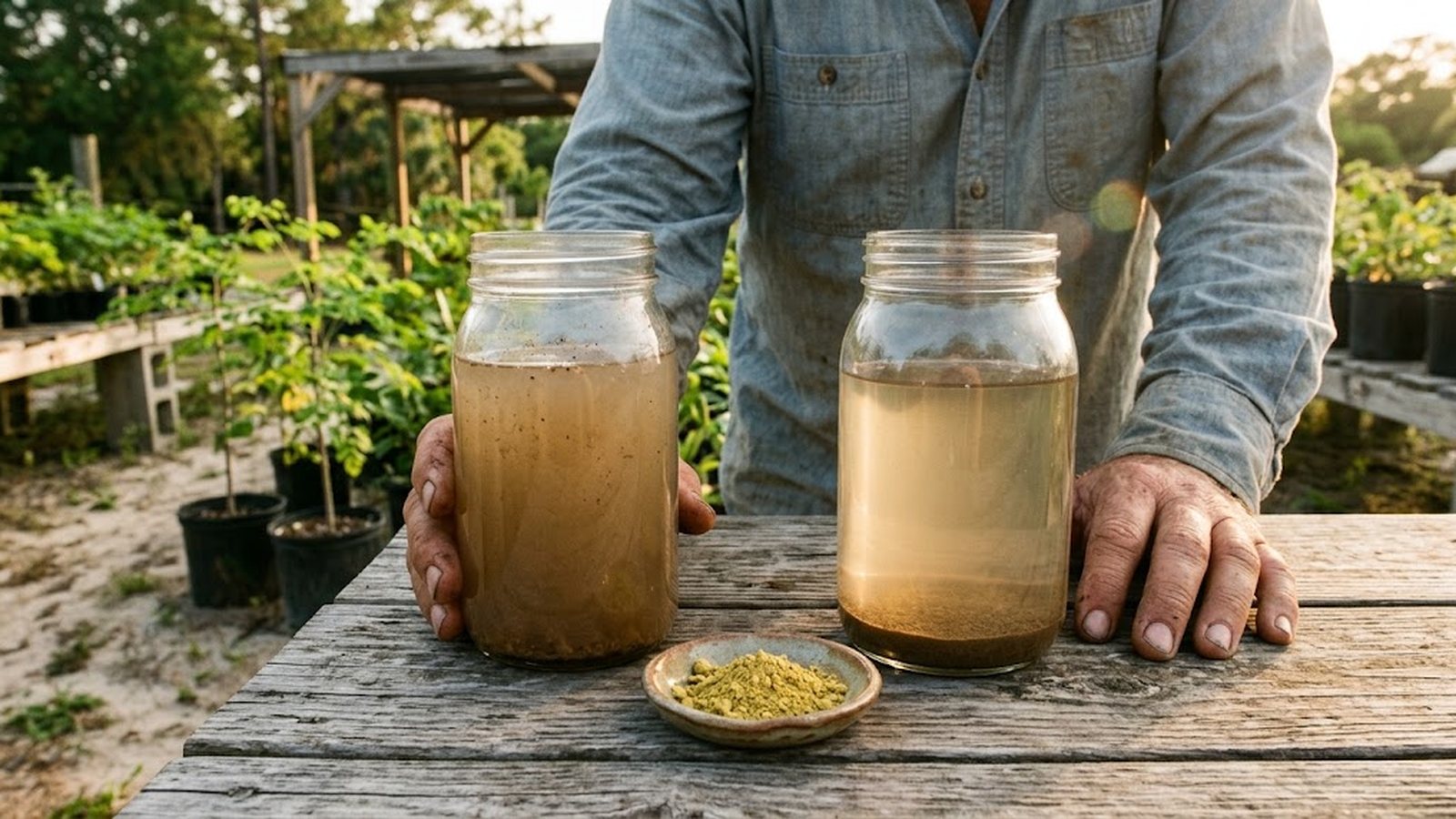
Moringa seeds water purification is the one moringa claim I can demonstrate on my kitchen counter in an hour, and for that reason it is my favorite thing to show visitors to my nursery in Weeki Wachee, Florida. Crush a seed, stir it into a jar of muddy water, and watch the cloud settle and the water clear. It is real, it has been studied for decades, and it is used at village scale in parts of Africa and Asia. It is also widely misunderstood, so this guide covers what is actually happening, what the research supports, how to do the demonstration yourself, and the important limits: cleared water is not the same as safe water.
What is happening in the jar
Muddy water is muddy because of tiny suspended particles of clay and organic matter, far too small and light to sink on their own. They stay suspended partly because they carry a slight negative electrical charge and repel each other.
Moringa seed kernels contain a small, positively charged protein. When crushed seed is mixed into turbid water, that protein binds to the negatively charged particles, neutralizes their charge, and lets them clump together into larger flocs. Flocs are heavy enough to sink. Within an hour or two, the particles that were clouding the water are a layer of sediment at the bottom of the jar and the water above is clear.
This is coagulation and flocculation, and it is the same first step that municipal water plants perform, except they use aluminum sulfate (alum) or iron salts. The moringa protein does the job alum does, from a seed you can grow in the yard. Research groups have isolated and characterized the protein, and studies over the past few decades have measured turbidity reductions of 80 to 99 percent in cloudy water treated with crushed seed, with results depending on how dirty the water was to start with and the dose.
What it does to bacteria, and what it does not
Here is where the claim needs care. As the flocs form and sink, they carry down a large share of the bacteria that were attached to the suspended particles. Studies have found reductions in bacterial counts of ninety percent and often much more in the treated water. That is a real and useful effect.
It is not disinfection. A ninety or ninety-nine percent reduction still leaves living organisms in the water, including anything that was not attached to a particle. Viruses and dissolved chemicals are largely unaffected. And the settled sludge at the bottom is now a concentrated layer of everything that was removed, which can regrow if the water sits. Where moringa seed is used for drinking water in practice, it is a first step that makes the water clear enough for the second step, boiling, filtration, chlorination, or sunlight disinfection, to work well. It is not the whole treatment, and nobody serious presents it as one.
The kitchen demonstration
You need two clear glass jars, a quart or a liter each, some dirt, a moringa seed or two, and a spoon.
- Make muddy water. Put a tablespoon of garden soil or clay in each jar, fill with tap water, stir hard, and let it sit ten minutes so the sand settles and the fine clay stays suspended. Both jars should be a uniform cloudy brown. One is your control; do nothing more to it.
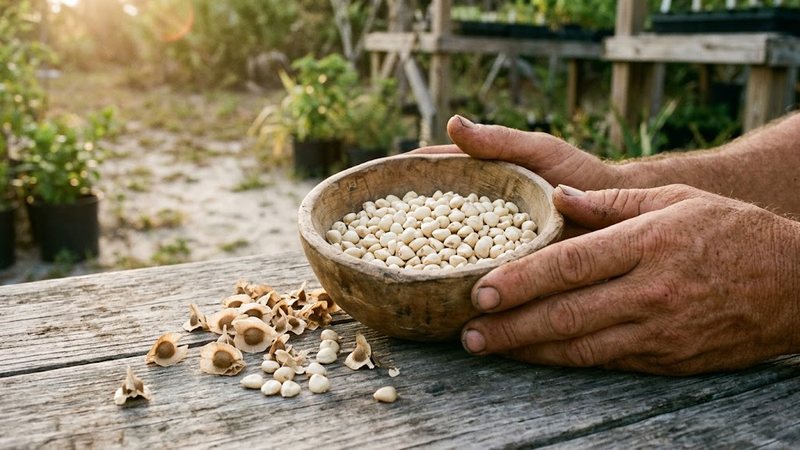
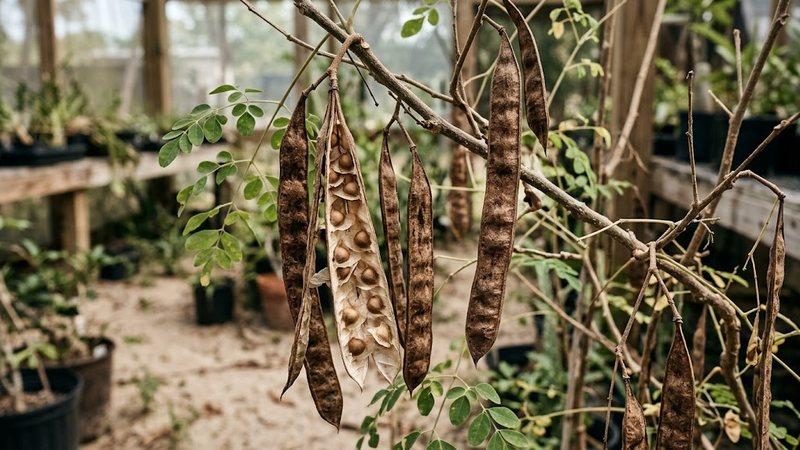
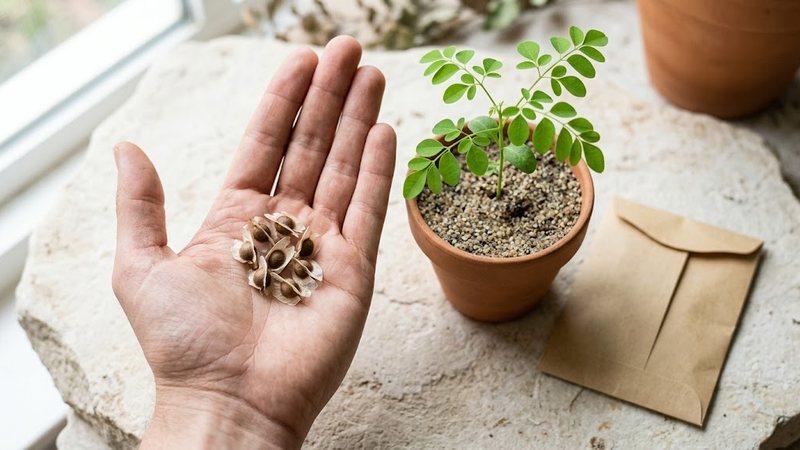
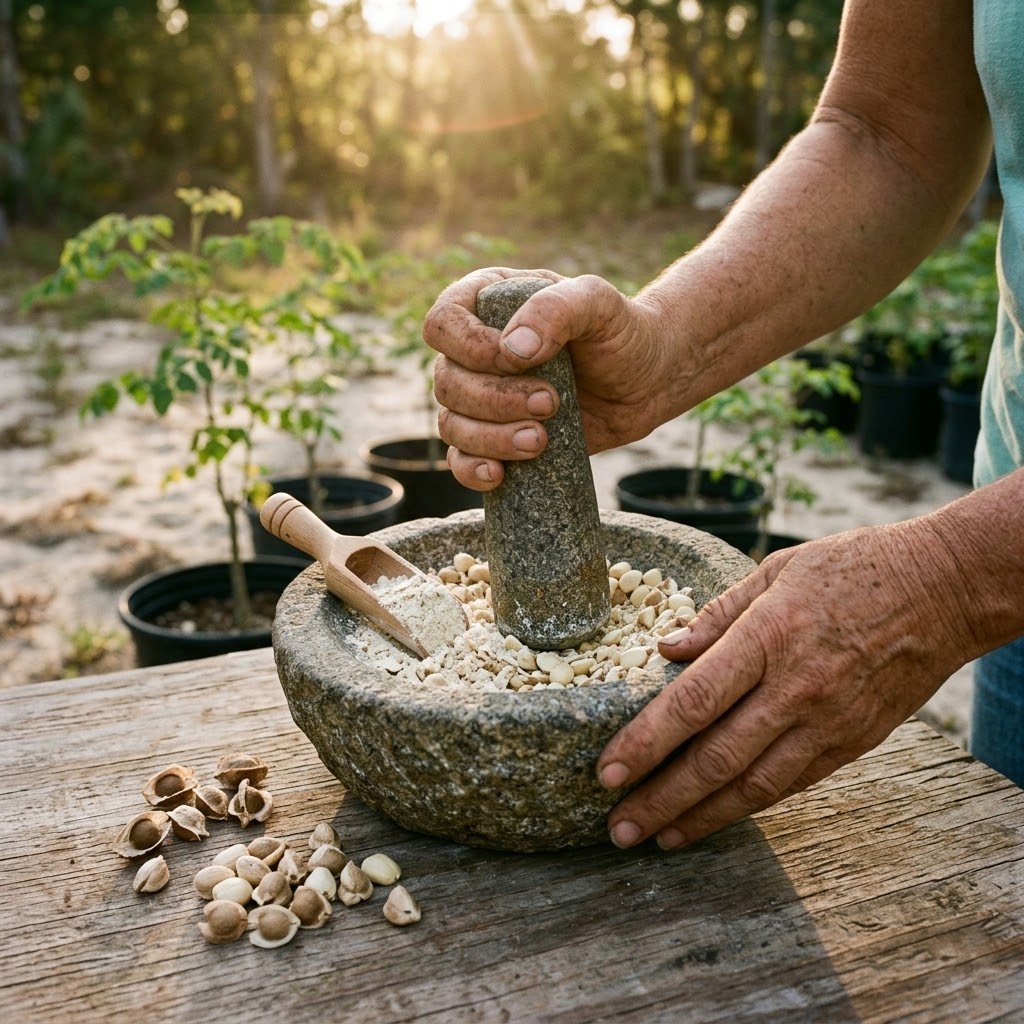
- Prepare the seed. Shell one dry moringa seed per liter of water, removing the papery coat and wings, and crush the pale kernel to a fine powder in a mortar or with the back of a spoon. Fresher seed works better; the protein declines as seed ages.
- Make a seed paste. Mix the crushed kernel with a tablespoon of clean water into a milky paste, and stir it for a minute. This extracts the protein into the water. Some methods strain the paste through cloth at this point to leave the solids behind; for a demonstration it is not necessary.
- Dose and mix. Pour the paste into the muddy jar. Stir fast for one minute, then slowly and gently for five minutes. The fast stir spreads the coagulant; the slow stir lets flocs form and grow without being broken apart. You will start to see the water go from a uniform haze to a grainy look as tiny clumps appear.
- Wait. Set both jars side by side and leave them alone. Check at fifteen minutes, then at an hour. In the treated jar, flocs settle into a loose brown layer at the bottom and the water above clears noticeably. The control stays cloudy for hours or days.
Dose matters. Too little seed and the water clears only partly. Too much and the excess protein itself makes the water slightly cloudy and adds organic material. About one crushed kernel per liter of moderately muddy water is a good start; very muddy water may take two. The effect is best in water that is genuinely turbid; in already-clear water there is nothing for the protein to grab, and adding seed makes it worse, not better.
Where it is actually used
Rural households in parts of Sudan, Malawi, and elsewhere have used moringa seed this way for generations, and development organizations have promoted it as a low-cost first stage of household water treatment. The appeal is obvious: the tree grows in exactly the hot, dry regions where clear water is scarce, the seed is free, and the method needs no equipment beyond a cloth and a container. Research programs have also explored the protein as a replacement for alum in small treatment plants, and as a way to treat wastewater and industrial effluent.
The limits that keep it from replacing chemical treatment at scale are practical: dose has to be adjusted to each water, the treated water does not keep well because of the added organic matter, and the seed's coagulant strength varies with age and variety.
Why this matters for a grower
For most people reading this in the United States, the honest use of moringa seed water purification is as a science lesson and an emergency skill rather than a daily practice. It is a wonderful demonstration for kids, and it is a genuinely useful thing to know if you ever face a muddy water source and a way to boil it afterward. It is also a reason to grow a couple of trees for seed and keep some in the jar. The seed-saving guide covers harvesting and storing your own; the seed guide covers buying it.
And if you are curious about the seed as a food rather than a filter, the same kernel, shelled, is covered in how to eat moringa seeds, with the cautions that apply.
FAQ
Can moringa seeds purify water?
Crushed moringa seed kernels clear turbid water by clumping suspended particles so they settle, removing most of the cloudiness and a large share of the bacteria attached to the particles. They do not disinfect water. Cleared water still needs boiling, filtering, or chemical treatment before it is safe to drink.
How many moringa seeds does it take to purify water?
About one shelled, crushed kernel per liter of moderately muddy water, up to two for very muddy water. Too much seed makes the water cloudy again.
How long does moringa seed take to clear water?
Flocs begin forming within minutes of mixing and most of the settling happens within one to two hours. Leaving the jar undisturbed for a few hours gives the clearest result.
Does moringa seed kill bacteria in water?
It removes a large proportion of bacteria by carrying them down with the settling particles, but it does not kill everything and does not remove viruses or dissolved chemicals. Treat it as a pre-treatment, not a disinfectant.
Can I drink water treated with moringa seeds?
Only after a proper disinfection step such as boiling. Moringa clarification makes water clear, which makes boiling, filtering, and chlorine more effective, but on its own it does not make water safe.
The short version
A positively charged protein in moringa seed kernels binds the negatively charged particles that make water muddy, clumps them into flocs, and lets them settle, clearing the water and carrying most of the attached bacteria down with them. About one crushed kernel per liter, stirred fast for a minute and slowly for five, clears a jar of muddy water in an hour. It is real, well studied, and used at village scale. It is not disinfection: clear is not safe, and the water still needs boiling or filtering before you drink it.