Cooking With Fresh Moringa Leaves: How to Strip, Wash, and Use Them
What to do with fresh moringa leaves from your own tree: stripping, raw vs cooked, a five-minute garlic sauté, eggs, rice, and how fresh leaf compares to powder.
Fresh moringa leaves are a different food from the powder most Americans know. Powder is a dried, concentrated pantry green. The fresh leaflet is a tender, mild, slightly peppery vegetable that cooks in two minutes and belongs in the same part of your kitchen as spinach and watercress. If you have a tree, or a neighbor with one, this is the guide to actually eating it. I grow moringa in Zone 9b Florida, where I grow it, and from spring to fall the fresh leaf is what we eat; the powder is for winter. Here is how to handle it and what to do with it, starting at the branch.
From branch to bowl in five minutes
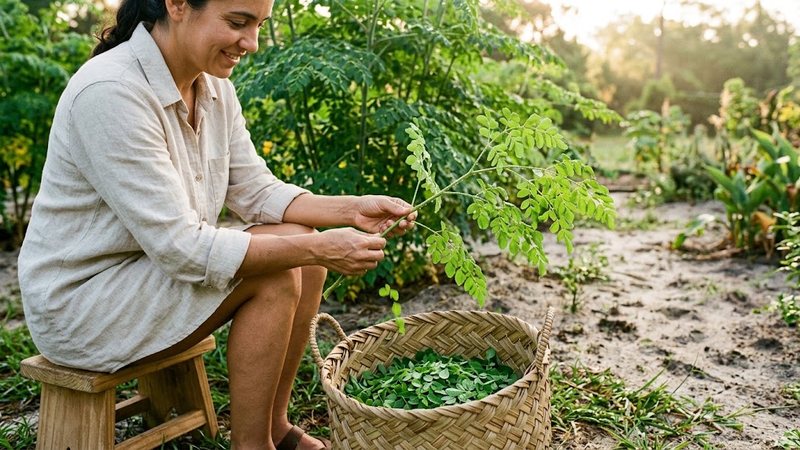
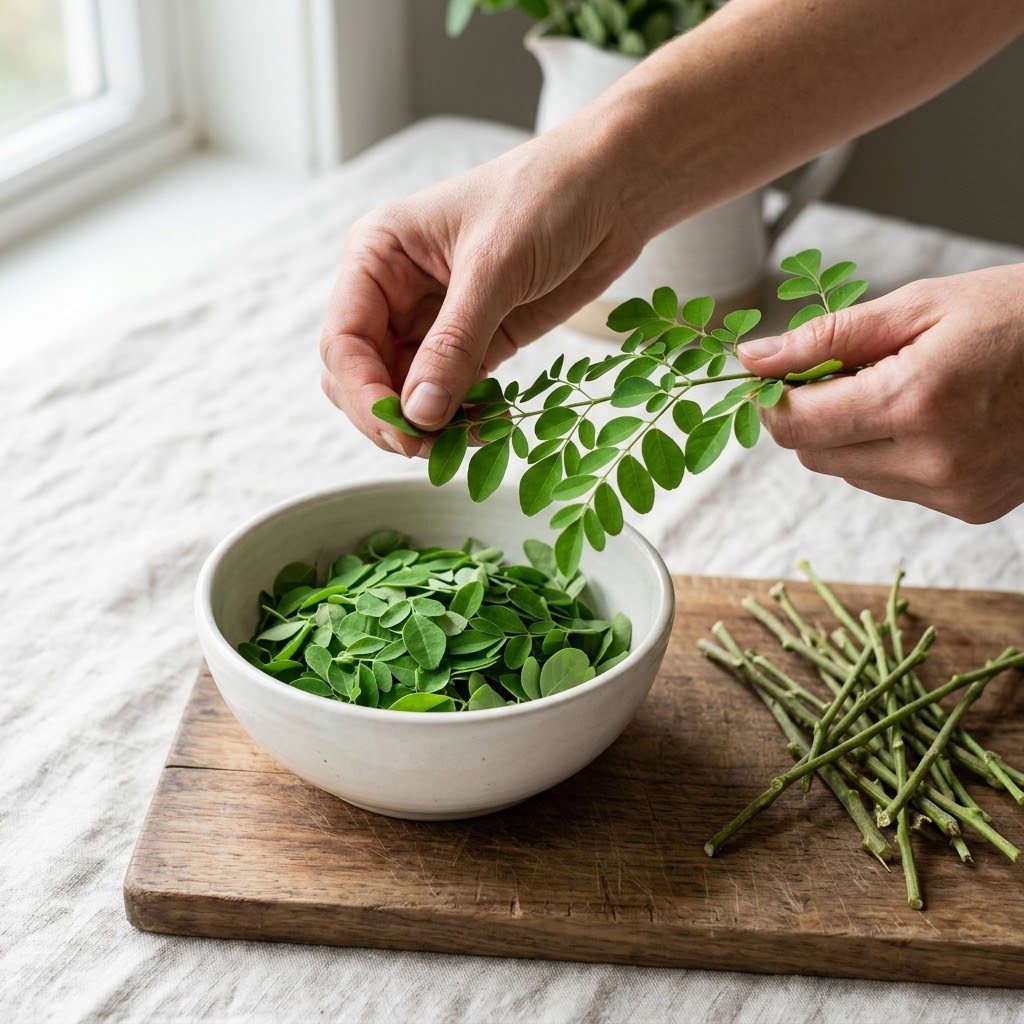
Strip. Moringa leaves are compound: a long stem carrying dozens of small oval leaflets. You eat the leaflets, not the stem, which is woody and bitter. Hold the stem by its tip and run your other hand down its length against the direction of growth; the leaflets come off in a shower. A branch that took ten minutes to cut strips in one.
Wash. Rinse in a bowl of cool water, swish, and lift the leaflets out so any grit stays behind. Repeat once. Spin or pat dry if the leaflets are going into a salad or a sauté; wet leaflets steam instead of sizzling. For soup, wet is fine.
Sort. Tender, bright green leaflets from the outer parts of the shoot are the ones for raw use and quick cooking. Older, darker, thicker leaflets from lower down are better cooked a little longer. Yellowing ones go to the compost.
Fresh leaflets keep two or three days in the fridge in a container lined with a paper towel. They are at their best the day they are picked, which is why harvesting in the morning matters.
What it tastes like raw
Fresh moringa raw tastes green and a little peppery, close to watercress or young arugula, with a faint horseradish note at the finish; the plant is called the horseradish tree for a reason, though the leaf is much milder than the root. Young leaflets are pleasant in a salad in small amounts, a handful mixed through other greens rather than a bowl on their own. Older leaflets are slightly bitter raw and want cooking.
A squeeze of lemon and a bit of oil soften the raw flavor the way they do for any peppery green. If you want to eat it raw regularly, the green sauces are the easiest route.
The five-minute garlic sauté
This is the recipe that will get you eating moringa several times a week, because it is the same one you already use for spinach.
- 2 tablespoons olive oil
- 3 cloves garlic, sliced thin
- A pinch of chili flakes
- 4 to 5 cups loosely packed fresh moringa leaflets
- Salt, a squeeze of lemon
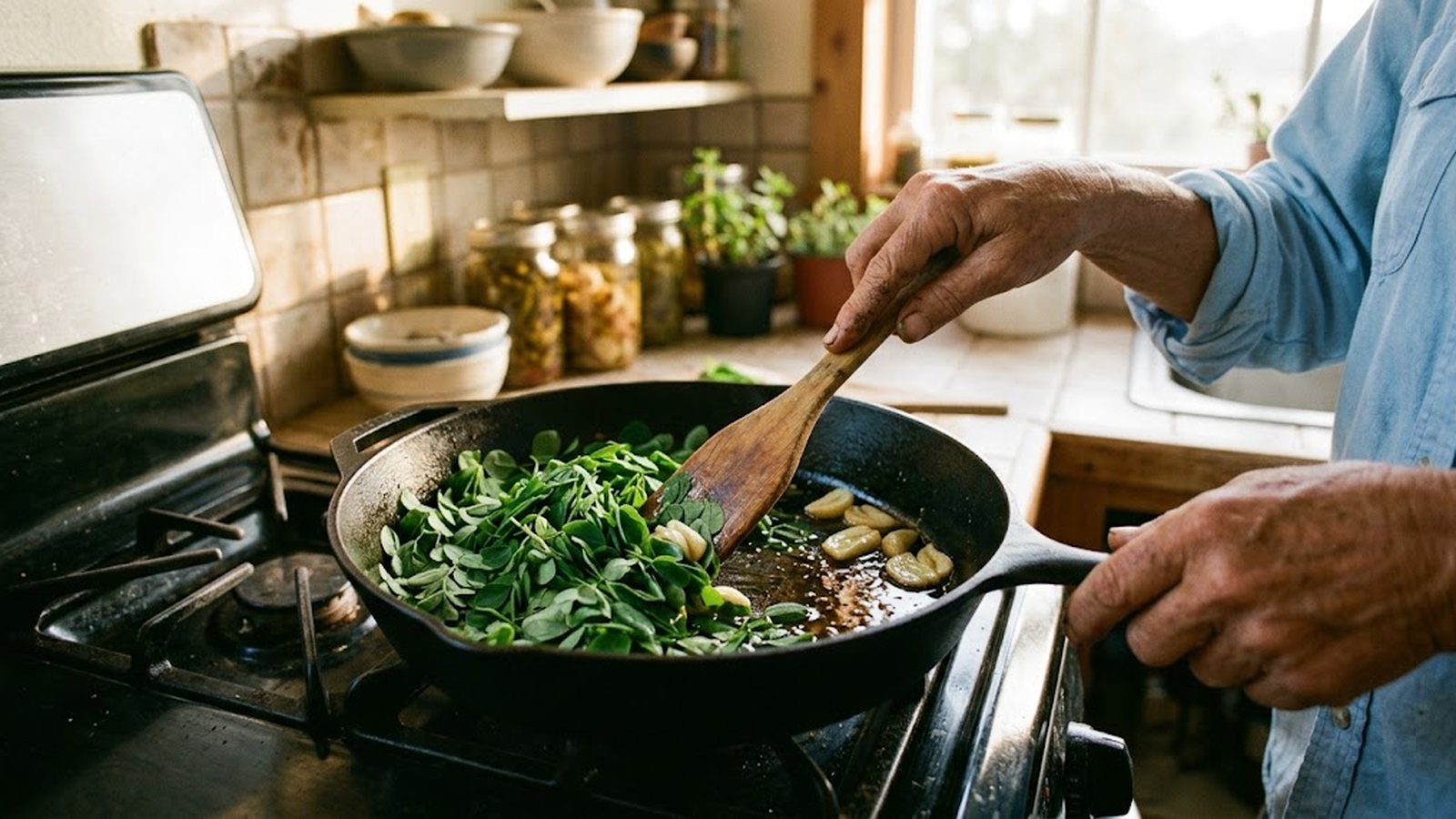
Warm the oil in a wide pan over medium heat and cook the garlic until it just starts to color. Add the chili, then all the moringa at once. It looks like far too much. Toss with tongs for one to two minutes until it wilts and turns a deeper green, salt it, squeeze the lemon over, and take it off the heat. Do not cook it further. Serve as a side, on toast, under a fried egg, or stirred through pasta.
Five cups of raw leaflets become about a cup cooked. The leaf shrinks less than spinach but more than kale, and the texture is finer than either.
Eggs
Moringa and eggs are a natural pair everywhere the tree grows. Beat two eggs, add a handful of leaflets, a pinch of salt, and scramble gently in butter; the leaflets soften in the time the eggs take to set. For an omelet, wilt the leaflets in the pan for thirty seconds first, then pour the eggs over. A frittata takes two cups of leaflets stirred into eight eggs. It is a fast breakfast and one of the best ways to use a small morning picking.
Rice, grains, and beans
Stir a cup or two of leaflets into rice for the last two minutes of steaming, or fold them through cooked quinoa, farro, or a pot of beans off the heat. The residual heat wilts them. In a fried rice, add them at the end with the scallions. The mild flavor works with nearly any seasoning, and the color makes plain grains look like you made an effort.
Soups and stews
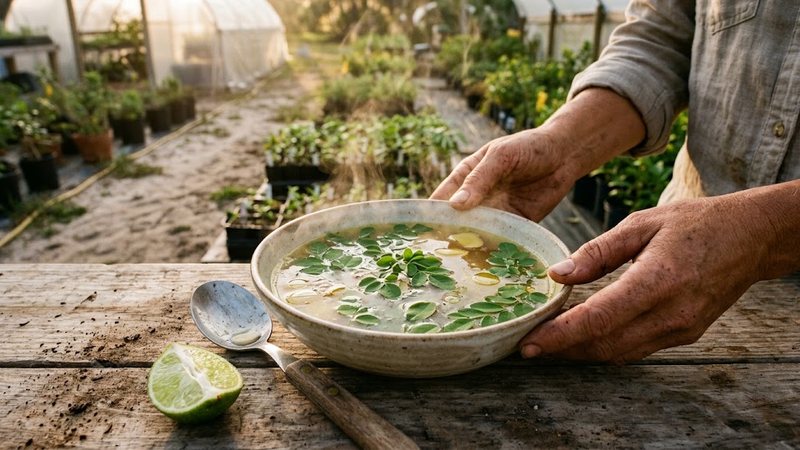
Fresh leaflets are the classic finishing green for brothy soups, dals, and coconut stews across South and Southeast Asia. Stir them in off the heat and cover for two minutes. Three full moringa soup recipes, built around fresh leaf, are in their own guide.
Blended
Fresh leaflets blend smoothly into a smoothie, and a small handful gives a greener, fresher flavor than the same amount of powder. They also make a fresh version of moringa tea: steep a handful of rinsed leaflets in hot, not boiling, water for five minutes, strain, and add lemon. It is lighter and grassier than tea made from dried leaf.
Fritters and flatbreads
In India, fresh moringa leaflets go into chickpea-flour batter for pakoras and into the dough of flatbreads and parathas. Both are excellent uses for a big harvest. For a simple fritter, mix a cup of chickpea flour with water to a thick batter, season with salt, cumin, and chili, fold in two cups of leaflets and a sliced onion, and fry spoonfuls in shallow oil until golden.
Fresh versus powder in the kitchen
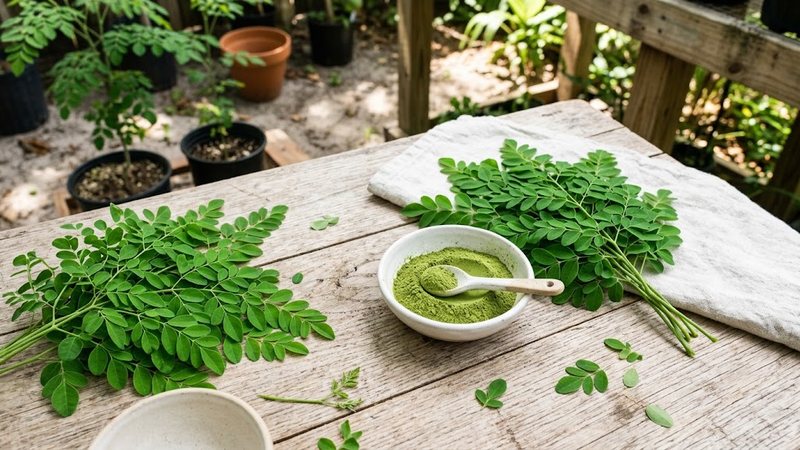
They are not interchangeable, and each has jobs the other cannot do. Fresh leaf is a vegetable: it has texture, it wilts, it shrinks, it tastes bright. It cannot be stirred into coffee or kept for the winter. Powder is a seasoning and a pantry staple: it disperses into liquids, it keeps for a year, and a teaspoon carries the nutrition of a good handful of leaflets. It cannot be sautéed with garlic. Roughly, one teaspoon of powder stands in for a loosely packed handful of fresh leaflets, though fresh leaf has more vitamin C and powder has more of everything else by the spoon. The full comparison is in fresh moringa versus powder.
The right answer for a grower is both. Eat the leaf fresh while the tree is producing, and dry the surplus into powder for the months when it is not.
Don't eat these parts
The leaflets, the young pods, the flowers, and the seed kernels are the food parts of the tree. The stems are fibrous and not worth eating. The root and root bark are the one part of the plant with a genuine caution attached; they contain compounds that make them unsuitable as food, and there is no reason to eat them. Stick to the leaf.
FAQ
Can you eat moringa leaves raw?
Yes, in moderation. Young, tender leaflets have a mild peppery flavor like watercress and are good mixed into salads or blended into sauces. Older leaflets are better cooked.
How do you prepare fresh moringa leaves?
Strip the leaflets from the stems by running your hand down the stem against the direction of growth, rinse them twice in cool water, and spin or pat dry. Discard the stems.
How long do you cook moringa leaves?
One to two minutes. They wilt like spinach in a hot pan or in the residual heat of a soup. Longer cooking turns them drab and soft.
How long do fresh moringa leaves last?
Two to three days in the fridge in a container lined with a paper towel. They are best the day they are picked.
Are moringa stems edible?
The leaf stems are fibrous and bitter and are normally discarded. Very young, pencil-thin green shoots can be cooked like a vegetable, but the mature stems are not worth eating.
The short version
Strip the leaflets, rinse twice, and treat them like a tender, peppery spinach. Sauté with garlic for two minutes, scramble into eggs, fold into rice and beans off the heat, finish soups with a handful, or blend a few into a smoothie. Cook briefly or not at all. Eat it fresh while the tree is producing and dry the rest for winter; fresh leaf and powder are two different foods from the same tree, and a grower gets to have both.