Moringa vs Kale, Wheatgrass, and Chlorella: An Honest Comparison
How moringa compares with kale, wheatgrass, and chlorella: what each is, taste, use, nutrition in plain terms, cost, and sourcing, from a moringa grower.
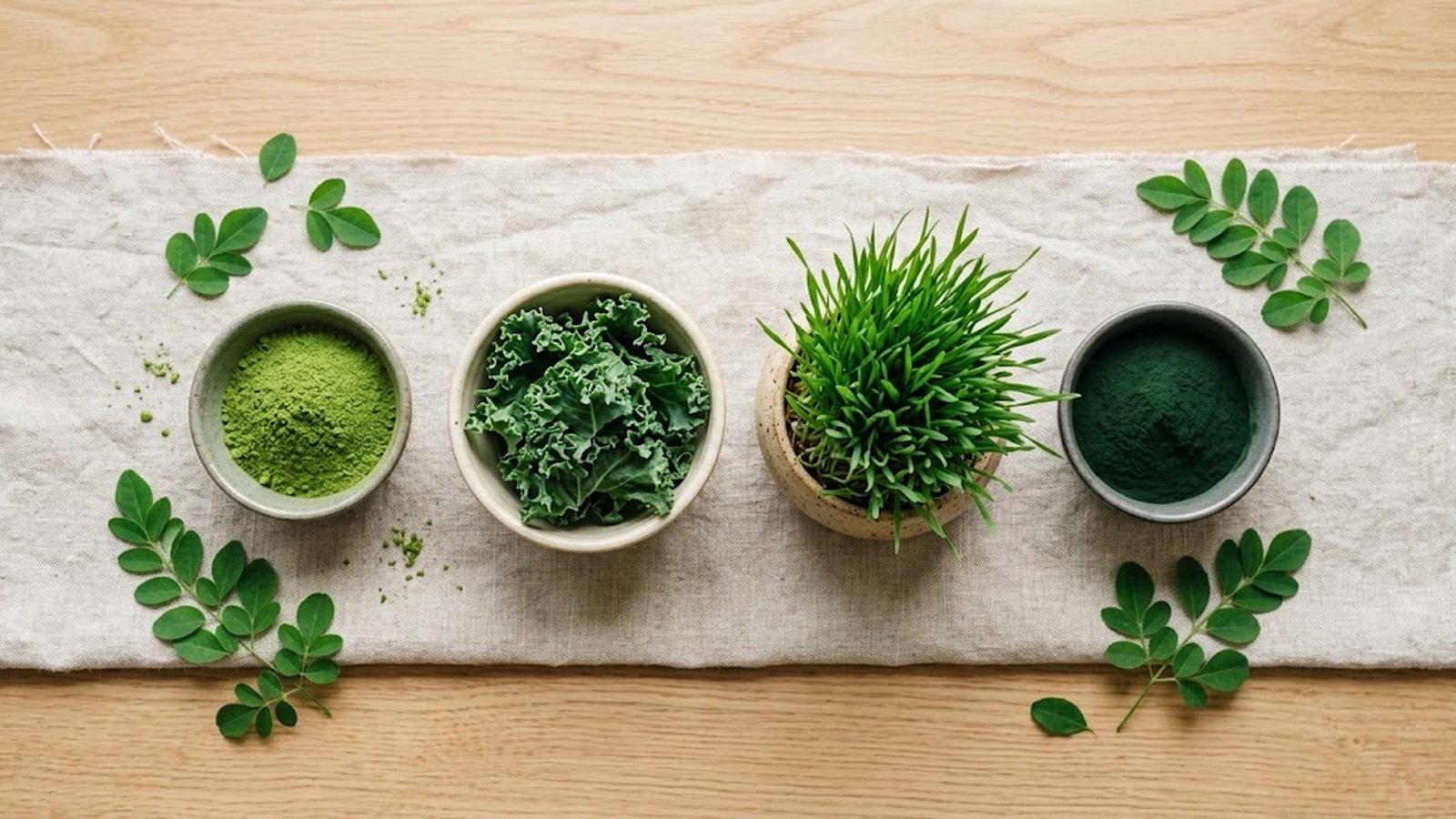
Moringa vs kale is a question that sounds like it should have a winner and does not, and the same goes for wheatgrass and chlorella. All four get sold under the same green-powder umbrella, and all four are different foods with different jobs. One is a vegetable you cook. One is a young grass you juice. One is a freshwater alga grown in tanks. One is the dried leaf of a tree, and I grow that one in Zone 9b Florida, where I grow it. This is the fair comparison I would want if I were choosing: what each thing is, what it tastes like, how you actually use it, what it offers in plain terms, and what it costs. I compared moringa to matcha and spirulina in a separate article; this one covers the other three names that come up.
What each one actually is
Kale is a leafy brassica, a cousin of cabbage and broccoli. It is a vegetable in the ordinary sense: you buy it fresh in a bunch, cook it or eat it raw, and it is available everywhere. Kale powder exists but is a niche product.
Wheatgrass is the young shoot of the wheat plant, cut at a few inches tall before it forms grain. It is sold as fresh juice from juice bars, as frozen juice cubes, and as a dried powder. The grass itself is too fibrous to eat; you drink it.
Chlorella is a single-celled green freshwater alga, grown in tanks or ponds, harvested, dried, and sold as a powder or tablets. Its cell wall is tough and is usually cracked mechanically so the contents are digestible. It is a cultivated microorganism, not a plant you could grow in a garden.
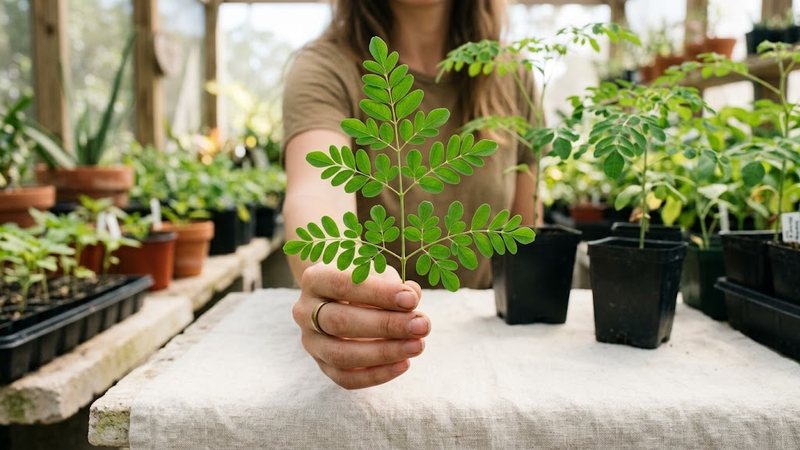
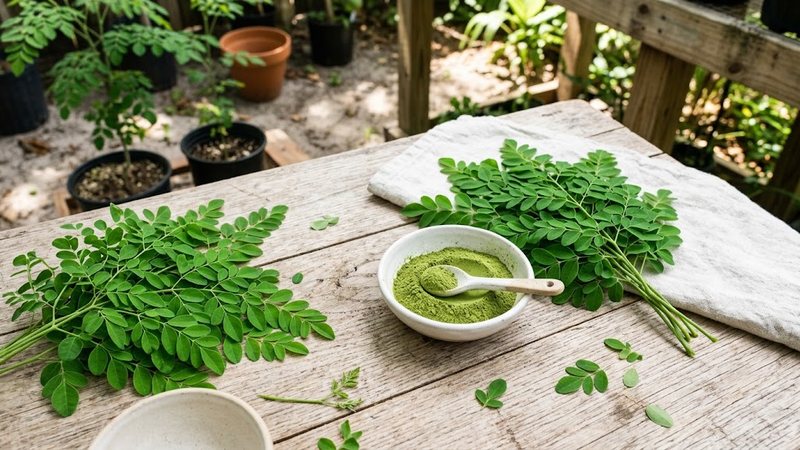
Moringa is the leaf of a fast-growing tropical tree, eaten fresh where it grows and dried into powder for everywhere else. It is a leafy green like kale, concentrated by drying like wheatgrass powder, and it is the only one of the four you can grow in a backyard in most of the warm United States. The basics are in what is moringa.
Taste
- Kale: Earthy, slightly bitter raw; sweeter and milder cooked. Familiar to nearly everyone.
- Wheatgrass: Intensely grassy and sweet-green, with a flavor most people either love or cannot drink. Strongest of the four.
- Chlorella: Deep, marine, almost fishy, with a heavy green taste. Hard to hide in food; most people take it in tablets for that reason.
- Moringa: Green and mildly grassy, like a soft spinach with a faint radish note; fresh leaf is peppery like watercress. Easiest of the powders to cook with, and the one that disappears into sauces and soups.
If taste is the deciding factor, moringa and kale are the ones you can eat as food. Wheatgrass and chlorella are the ones you take.
How you use each one
Kale goes in salads, sautés, soups, chips, and smoothies. It is a vegetable and behaves like one.
Wheatgrass is drunk as a one- or two-ounce shot of juice, or a teaspoon of powder stirred into water or a smoothie. Nobody cooks with it.
Chlorella is swallowed as tablets or stirred into a smoothie in small amounts. Its flavor rules out most other uses.
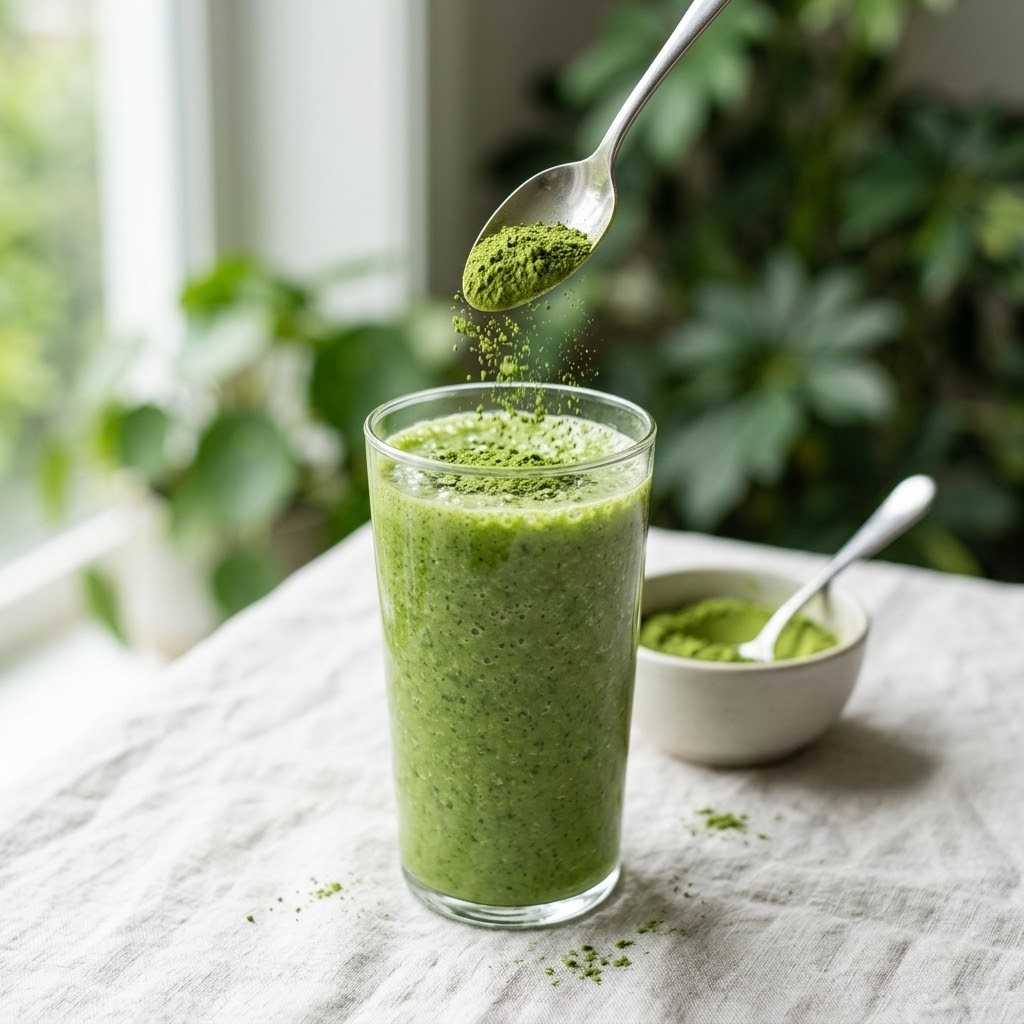
Moringa does both jobs. Fresh leaf cooks like spinach; the powder goes into smoothies, tea, soups, dressings, eggs, and dough. The ratio chart covers amounts, and the fresh-leaf guide covers the vegetable side.
Nutrition, in plain terms
Precise numbers are a trap here. They vary by database, by growing conditions, and above all by whether you are comparing fresh weight to dried weight. A cup of raw kale is mostly water; a teaspoon of moringa powder is a dried leaf; a tablet of chlorella is a dried alga. Per gram, every dried powder beats every fresh vegetable, which tells you nothing useful. So here is the honest shape of each, without pretending to a precision that does not exist.
Kale is one of the more nutrient-dense fresh vegetables: a good source of vitamin K, vitamin C, vitamin A as carotenoids, and some calcium, with fiber and a modest amount of protein. Its great advantage is that you eat a lot of it. A big salad or a sautéed bunch is a serious serving of green vegetable in a way a teaspoon of anything is not.
Wheatgrass juice is drunk in small amounts and provides chlorophyll, some vitamins, and some minerals, but an ounce of juice is an ounce of juice. The powder is more concentrated. Claims about it tend to run far ahead of what a shot glass can carry.
Chlorella is notable for protein, around half its dry weight, and for containing some vitamin B12, iron, and a lot of chlorophyll. It is the one of the four with an interesting protein story, and the one most often sold with claims I would not repeat.
Moringa dried leaf is a broad-spectrum green: plant protein with all the essential amino acids, calcium, iron, potassium, magnesium, vitamin A as carotenoids, and a range of polyphenols. Vitamin C is high in the fresh leaf and drops a lot in drying. It is closer to kale in character than to the other two, a vegetable's profile in concentrated form, which is exactly what you would expect from a dried leaf. The fuller picture is in what moringa powder actually offers.
None of these four prevents or treats anything. They are foods, and the sensible way to use any of them is as part of eating a lot of green things.
Cost
Per serving, kale is cheapest by a mile. A bunch costs a couple of dollars and makes several meals. Moringa powder comes next; a jar lasts months at a teaspoon a day, and the cost per serving is a few dozen cents. Chlorella is similar to moringa or a little more, and quality varies wildly. Wheatgrass is the most expensive per serving if you buy juice-bar shots, and mid-range as a powder.
Sourcing: the part that matters more than the comparison
Kale is fresh produce and you can see what you are buying. The other three are dried powders, and all three depend entirely on how they were grown and processed. Chlorella is grown in water and takes up whatever is in that water, so the source and the testing matter. Wheatgrass powder can be pale and stale. And moringa powder ranges from vivid green and fresh-smelling to olive-brown hay, depending on how it was dried and how long it sat.
That last point is the one I can speak to, because I grow the plant and dry my own leaf at or below 105°F, and I hold the growers I buy from to the same bar. Whatever powder you choose, the quality question comes before the comparison question. The buying guide applies to any dried green.
Which one is for you
- You want a vegetable to cook and eat in quantity: kale, and fresh moringa if you can grow it.
- You want a green powder that tastes mild enough to use in real food every day: moringa.
- You want the highest-protein powder and do not mind the taste: chlorella.
- You like the taste of wheatgrass: wheatgrass, and you already know it.
- You want to grow your own green: moringa in a warm climate, kale in a cool one. Both are easy.
- You want to spend the least: kale.
Most people who eat well end up with kale in the fridge and one green powder in the cupboard for the days the fridge is empty. For most of them, moringa is the powder that gets used up rather than forgotten, because it tastes like food.
FAQ
Is moringa better than kale?
Neither is better. Kale is a fresh vegetable you eat in quantity; moringa powder is a concentrated dried leaf you use by the teaspoon. Fresh moringa leaf, for growers, is a close cousin to kale as a vegetable. Eat both if you can.
Is moringa the same as wheatgrass?
No. Wheatgrass is the young shoot of the wheat plant, juiced or powdered, with an intense grassy flavor. Moringa is the leaf of a tropical tree. It is milder, and it works as a vegetable and in cooking.
Moringa or chlorella, which is better?
Chlorella is a freshwater alga notable for protein and B12, with a strong marine taste usually taken in tablets. Moringa is a mild-tasting leaf with a broad vegetable-style profile you can cook with. Choose by taste and use; they are different foods.
Can I take moringa and chlorella together?
Yes. They are both foods and there is no reason not to. A common pattern is chlorella in tablets and moringa in food, since one is hard to eat and one is easy.
Which green powder tastes best?
Moringa is the mildest of the powders and the easiest to use in food. Wheatgrass is the strongest. Chlorella has a marine taste most people avoid by taking tablets. Kale powder is uncommon; kale is better fresh.
The short version
Kale is a vegetable, wheatgrass is a juiced grass, chlorella is a cultivated alga, and moringa is a tree leaf that works as both a vegetable and a mild green powder. Kale is cheapest and best eaten in quantity. Chlorella has the most protein and the strongest taste. Wheatgrass is for people who like wheatgrass. Moringa is the powder that tastes enough like food to get used every day, and the only one of the four you can grow in a warm backyard. Whichever you pick, judge the sourcing before the comparison.