Moringa Tea vs Green Tea: Caffeine, Taste, Brewing, and Which to Drink
An honest side-by-side of moringa tea and green tea: what each is made from, caffeine, flavor, how to brew each without ruining it, and what is really in the cup.
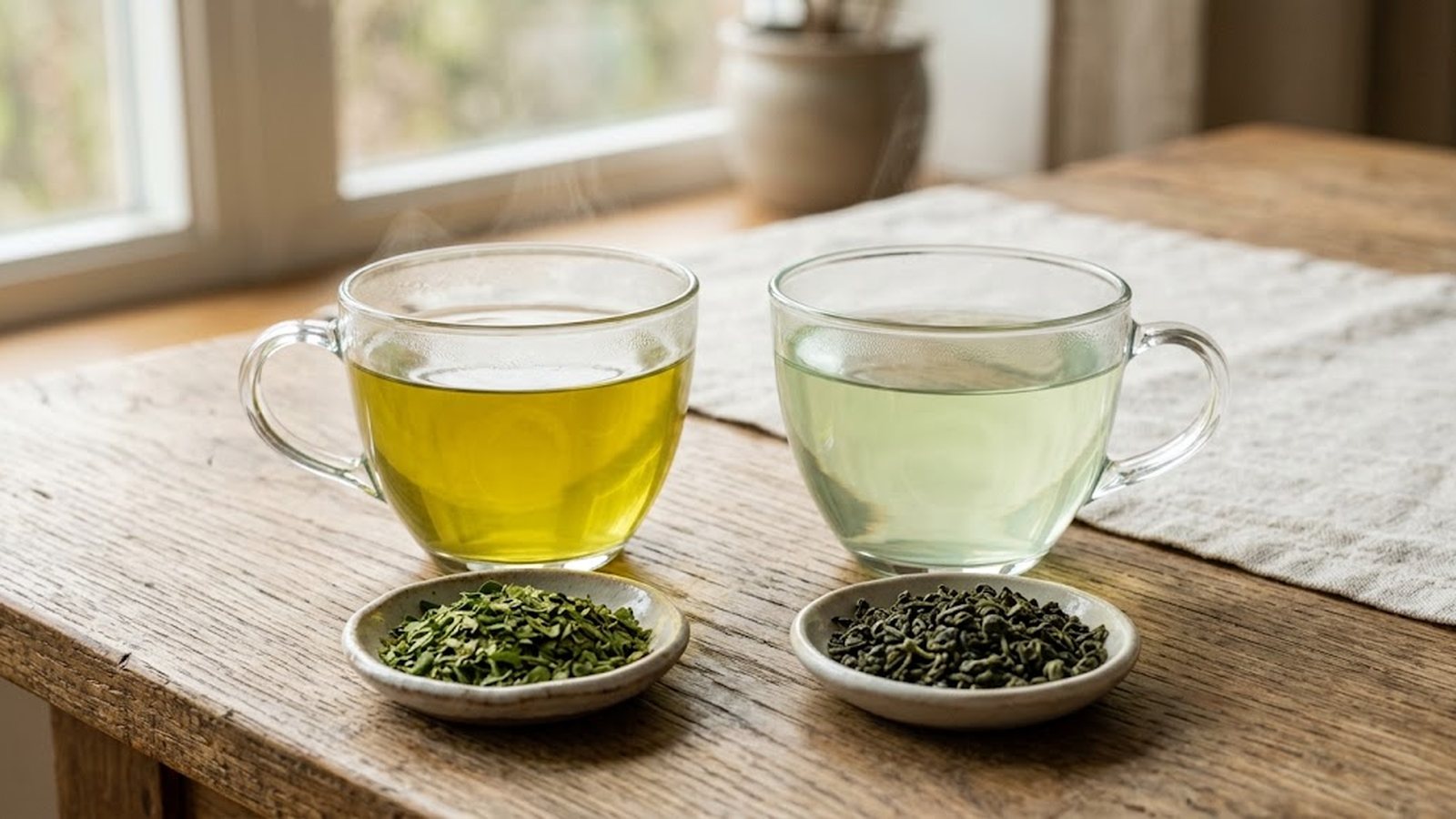
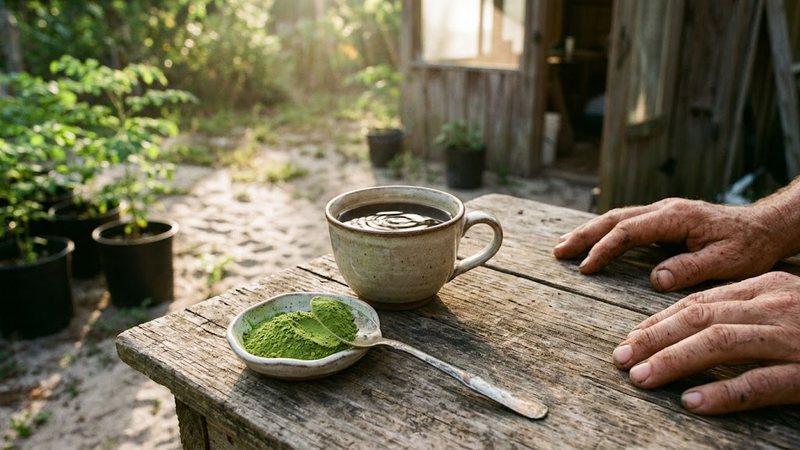
Moringa tea vs green tea is not really a contest, because they are different plants doing different jobs. Green tea is a lightly processed leaf of the tea bush, Camellia sinensis, and it is the world's second most popular drink after water. Moringa tea is the dried leaf of a tropical tree steeped like an herbal tea, and it has no caffeine at all. I grow moringa on my small nursery plot in Hernando County, Florida, and I drink both: green tea in the morning, moringa in the afternoon. Here is how they compare on the things that matter in the cup, without pretending either one is a magic drink.
What each one is
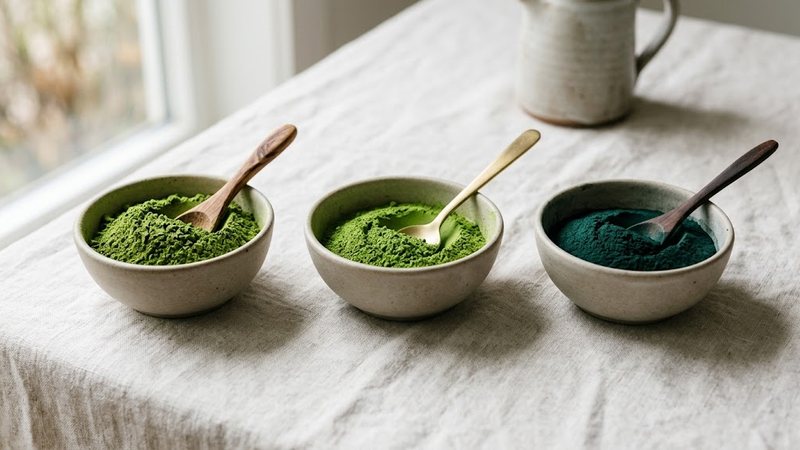
Green tea is made from the young leaves and buds of the tea plant, heated soon after picking to stop oxidation, which is why it stays green instead of turning into black tea. Styles range from grassy Japanese senchas to toasty Chinese pan-fired teas, and matcha is green tea leaf ground to a powder and whisked whole into water.
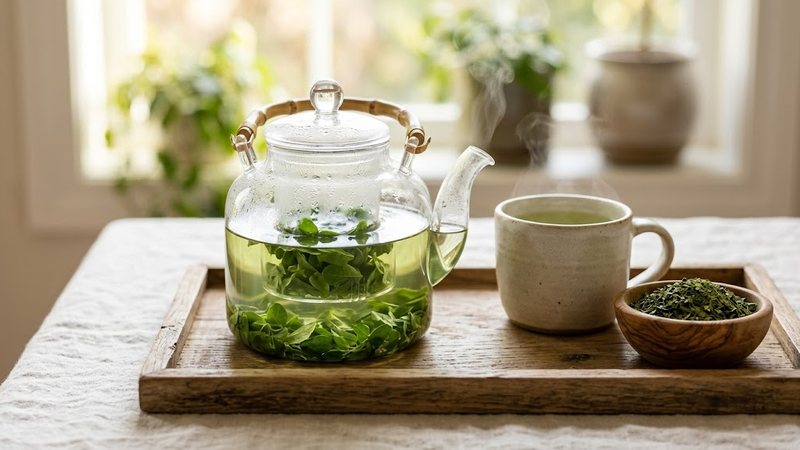
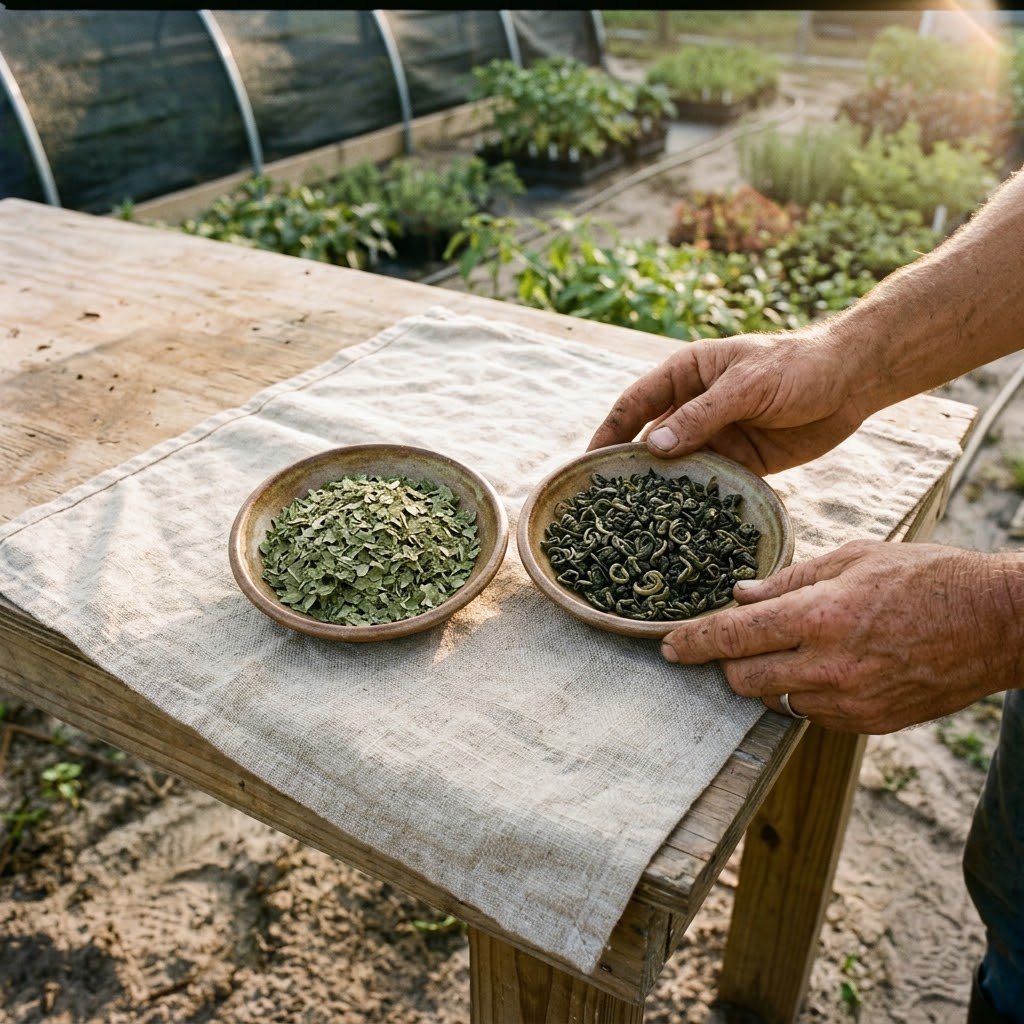
Moringa tea is dried moringa leaf, either whole leaflets steeped and strained or leaf powder whisked into water and drunk whole, the same way matcha is. There is no oxidation step and no processing beyond drying; what is in the cup is what came off the tree, which is why the drying temperature matters so much. The moringa tea guide covers both forms in detail.
Botanically, they have nothing in common. Culturally, they overlap: both are green, both are brewed hot, both come in a powdered whisk-it-in form, and both get compared to each other constantly.
Caffeine
This is the biggest difference and the one most people are actually asking about.
- Green tea contains caffeine, roughly 20 to 45 milligrams in an eight-ounce cup depending on the tea and how long you steep it. Matcha is higher, around 60 to 70 milligrams a serving, because you drink the whole leaf. Green tea also contains L-theanine, an amino acid that many people feel takes the edge off the caffeine.
- Moringa tea has zero caffeine. None in the leaf, none in the cup. Whole-leaf tea or powder, hot or iced, it does not matter.
So: green tea in the morning if you want the lift, moringa at 4 p.m. or before bed if you want a green cup without it. That is the single most useful sentence in this article.
Taste
Green tea tastes of the tea plant: vegetal, sometimes grassy, sometimes nutty or toasty, with a characteristic astringency that grows the longer you steep. Over-steeped or brewed too hot, it turns bitter. Matcha is richer, thicker, and more savory.
Moringa tea made from whole leaf is lighter and softer than most green teas. It tastes green, faintly sweet, a little like a mild spinach broth with a grassy top note, and it has almost none of green tea's astringency; you can steep it ten minutes and it just gets greener, not bitter. Powder whisked into water is stronger and earthier, closer to matcha in body, with a flavor some people describe as green tea crossed with a green vegetable. Lemon and honey suit both moringa styles.
If you like green tea for its brisk, slightly drying finish, moringa will feel gentle. If you find green tea harsh, moringa may be the green cup you were looking for.
Brewing: the same rule, for different reasons
Both teas are ruined by boiling water, which is the one thing they truly share.
Green tea wants water at 160 to 180°F, steeped one to three minutes. Hotter or longer pulls out tannins and the cup turns bitter and astringent.
Moringa tea wants water at 160 to 175°F, steeped five to seven minutes for whole leaf, or whisked in for powder. The reason is different: moringa does not get bitter with heat, but the leaf was dried gently to protect its flavor and its heat-sensitive nutrients, and a boiling kettle undoes that work. Use a heaping teaspoon of dried leaflets or half to one teaspoon of powder per eight-ounce cup.
Cold brew works beautifully for both. A tablespoon of either leaf in a quart of cold water in the fridge overnight gives a smooth, mellow tea with none of the edges.
What is in the cup
Honesty is required here, because both teas get wildly oversold.
Green tea is drunk for its plant compounds, mainly a family of polyphenols called catechins, and for its caffeine-plus-theanine combination. It contributes very little in the way of vitamins or minerals; the leaf stays in the pot. What you get is flavor, caffeine, and those compounds.
Moringa tea made from whole leaf is similar in that respect: the water pulls flavor, color, and some water-soluble compounds out of the leaf, and the leaf itself stays in the strainer. Moringa tea made from powder is a different thing, because you drink the leaf. Dried moringa leaf is a nutrient-dense green, notable for its calcium, iron, potassium, vitamin A, and plant protein, and a teaspoon of powder in a cup delivers all of that. Whole-leaf moringa tea delivers a fraction of it.
Neither drink treats or prevents anything, and I do not sell moringa on the promise that it does. Moringa powder in water is a small serving of a leafy green in a cup. Green tea is a pleasant, mildly caffeinated brew with a long track record. Both are good things to drink. Neither is medicine.
Cost and sourcing
Decent loose-leaf green tea and decent moringa leaf cost about the same per cup, a few cents to a few dozen cents depending on the grade. The sourcing problem is the same too. Both are dried leaves whose quality depends entirely on how they were grown, picked, and dried, and both are sold by plenty of people who could not tell you. For moringa, the test is color and smell: vivid green and fresh-grass, not olive-brown and hay. The buying guide has the full checklist, and it applies to leaf for tea as much as to powder.
Which to drink when
- Morning, want a lift: green tea.
- Afternoon or evening, want a warm green cup: moringa.
- Want the most nutrition from the cup: moringa powder whisked into water, because you drink the leaf.
- Prefer a brisk, astringent tea: green tea.
- Find green tea harsh or hard on the stomach: whole-leaf moringa, which is mild.
- Iced, on a hot afternoon: either, cold-brewed. Moringa with lemon is my Florida default.
- Cutting back on caffeine: swap the second and third cups of the day to moringa and keep the first.
Most people who ask end up with both jars on the shelf. That is the right answer. For a comparison of moringa against the other green powders, matcha included, see moringa vs matcha vs spirulina.
FAQ
Does moringa tea have caffeine?
No. Moringa leaf contains no caffeine, so moringa tea, whole leaf or powder, hot or iced, is caffeine-free. Green tea has roughly 20 to 45 milligrams per cup and matcha more.
Is moringa tea better than green tea?
Neither is better; they do different things. Green tea gives caffeine, theanine, and catechins. Moringa tea gives a caffeine-free green cup, and moringa powder in water delivers the minerals and protein of a leafy green. Many people drink green tea in the morning and moringa later.
Does moringa tea taste like green tea?
Not quite. Whole-leaf moringa is softer and less astringent, with a mild green, faintly sweet flavor. Powder is earthier and closer to matcha in body. Neither gets bitter with long steeping the way green tea does.
Can you mix moringa and green tea?
Yes. A teaspoon of green tea leaf and a teaspoon of moringa leaf steeped together at 170°F makes a pleasant cup with green tea's briskness and moringa's softness. A quarter teaspoon of moringa powder whisked into a cup of green tea also works.
Which has more antioxidants, moringa or green tea?
They contain different plant compounds, green tea mainly catechins and moringa a range of polyphenols and carotenoids, and the amounts in a cup vary with the leaf and the brew. Comparing single numbers is not meaningful. Drink whichever you enjoy, and if you want the leaf's full content, use moringa powder rather than a steeped tea.
The short version
Green tea is the caffeinated leaf of the tea bush, brisk and slightly astringent, brewed at 160 to 180°F for one to three minutes. Moringa tea is the caffeine-free dried leaf of a tropical tree, softer and greener, brewed at 160 to 175°F for five to seven minutes, or whisked in as powder to drink the whole leaf. Green tea in the morning, moringa in the afternoon, both cold-brewed in summer, and neither one is medicine.