What Moringa Soap Is (and Isn't): Cold-Process Bars Explained Honestly
A plain guide to moringa soap: how cold-process bars are made, where the moringa goes, what tea tree, lemongrass, and patchouli add, and how to judge a bar.
Moringa soap gets searched with the word "benefits" attached, and I want to be straight with you before you read further: soap is soap. It cleans. A good bar of handmade cold-process soap cleans gently, lathers well, and leaves the skin comfortable rather than tight, and that is the whole list of promises I will make. I sell a tea tree moringa soap, and have sold lemongrass and patchouli versions, from my small nursery in Weeki Wachee, Florida, so I have an interest here. What I can offer is an honest explanation of what a moringa soap bar is, how it is made, what the moringa is doing in it, and how to tell a good handmade bar from a bad one.
How cold-process soap is made
Every real soap starts with fat and lye. Oils, plant or animal, are mixed with a solution of sodium hydroxide, and a reaction called saponification turns them into soap and glycerin. In cold-process soap, the oils and lye are combined warm, poured into a mold, left to set for a day or two, cut into bars, and then cured on racks for four to six weeks while the last of the reaction finishes and the water evaporates. A cured bar is hard, mild, and free of lye; the lye has all become soap.
The word "cold" is relative. The mixture heats itself as it reacts. What it does not get is the cooking that hot-process and commercial soaps get, and that gentler path is why cold-process bars keep their glycerin, a natural humectant that commercial soap makers usually strip out and sell separately.
A good soap maker also "superfats" the bar: a few percent more oil than the lye can convert, so a little free oil is left in the finished soap. That leftover oil is what makes a handmade bar feel less stripping than a supermarket one.
Where the moringa goes
There are three ways moringa ends up in a soap bar, and a bar can use any or all of them.
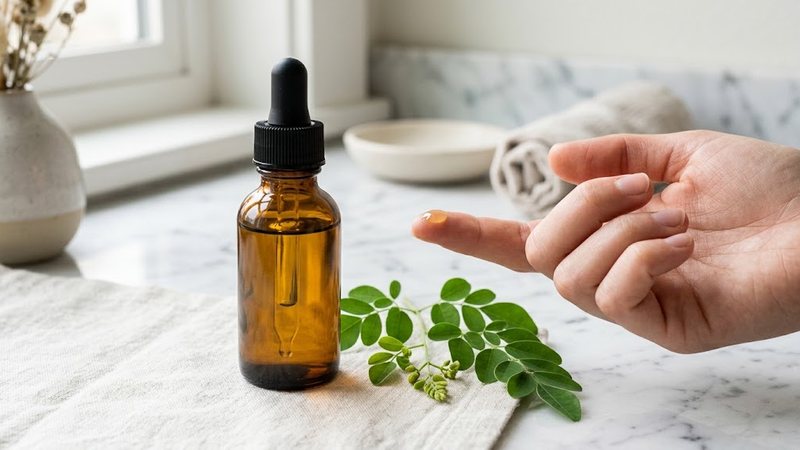
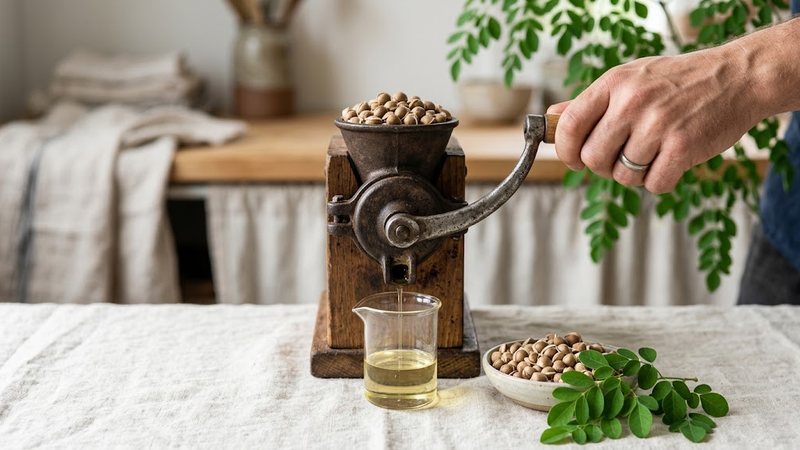
Moringa oil as part of the fat blend. Moringa seed oil is a high-oleic oil, similar in that respect to olive oil, and it contributes a mild, conditioning lather. On its own it makes a soft bar with a low, creamy lather, so it is nearly always blended with harder oils such as coconut, which gives bubbles and hardness, and shea or palm for firmness. In most moringa soaps the moringa oil is a supporting oil, five to fifteen percent of the blend, rather than the base. The oil itself is described in the cold-pressed moringa oil guide.
Moringa oil as the superfat. Some makers add moringa oil at the end, after the main oils have started reacting, so more of it survives unconverted as the free oil in the bar. This is the smarter use of an expensive oil, and it is the one that puts moringa oil on your skin rather than turning it all into soap.
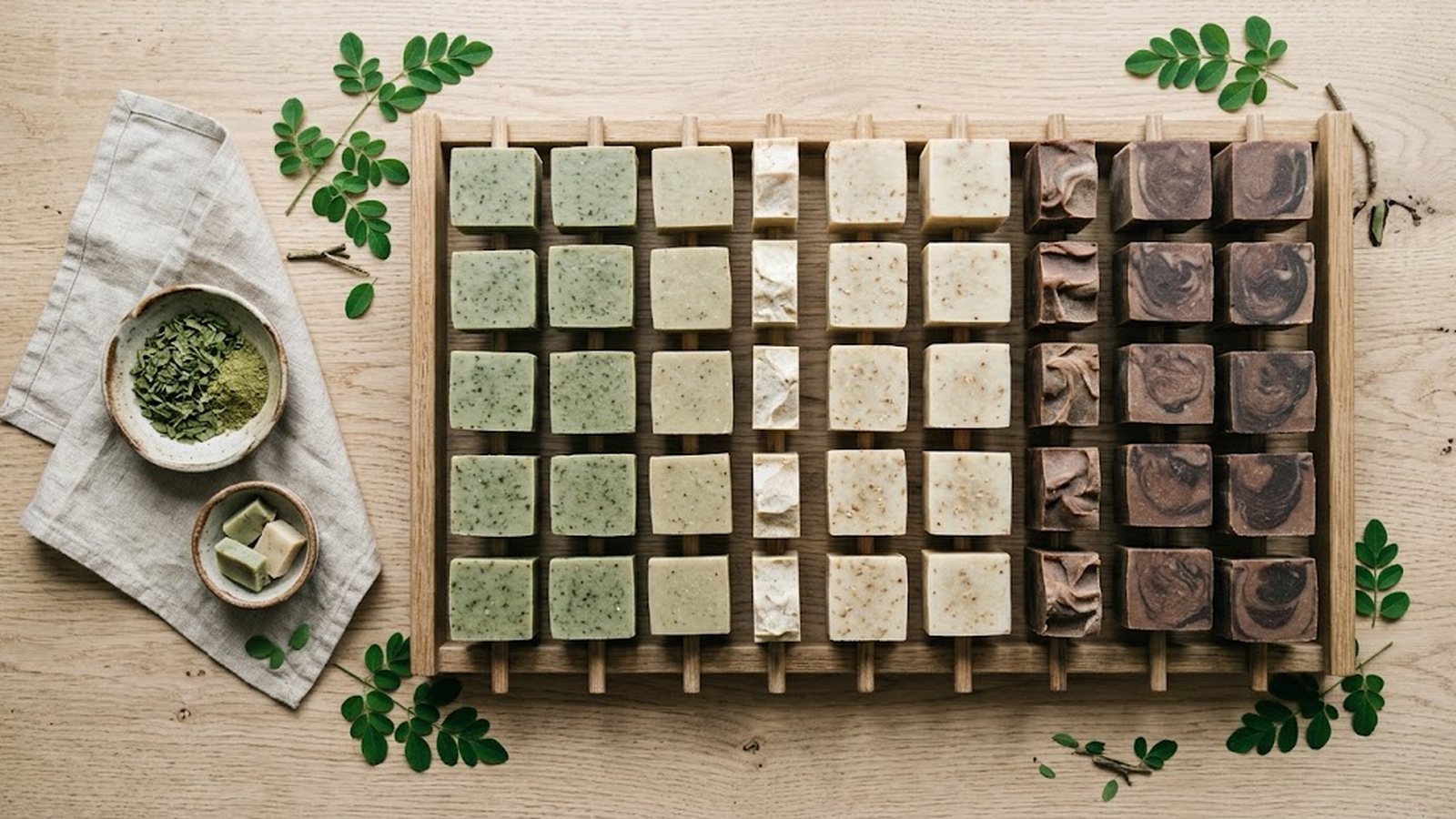
Moringa leaf powder as a botanical addition. A tablespoon or two of leaf powder per batch colors the bar a soft sage green, gives it fine flecks, and adds very mild exfoliation. Powder in soap is mostly about color and texture; the alkaline environment of fresh soap is not kind to the delicate compounds in the leaf, and I would not claim the powder does anything beyond looking and feeling nice.
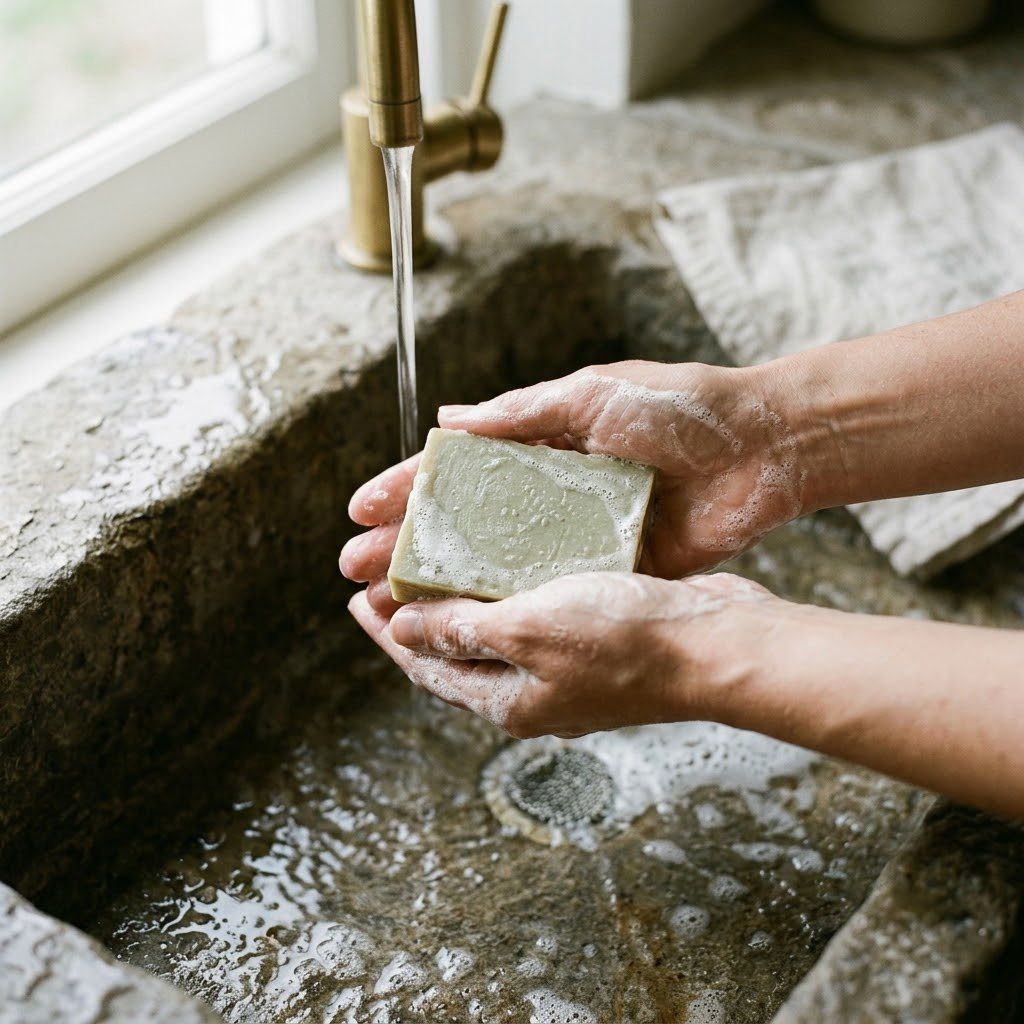
My tea tree bar uses moringa in the oil blend and leaf powder for the color. It is a sage-green, lightly flecked bar, and the green is the leaf, not a dye.
The scents
Cold-process bars are scented with essential oils added just before the soap goes into the mold. The scent is real plant oil, it fades a little over months, and it does more than smell nice: it is the thing most people choose a bar for.
- Tea tree. Sharp, clean, medicinal-green. The classic pairing with moringa because the two smell like they belong together, and the bar most people reach for in a hot Florida summer. Tea tree oil is used at a low percentage because it is strong.
- Lemongrass. Bright, citrusy, and grassy. A morning-shower scent, and a natural fit with the green flecks of the leaf.
- Patchouli. Deep, earthy, and warm. Divisive, in the way patchouli always is; the people who like it buy nothing else.
Essential oils are the one part of a handmade bar most likely to bother sensitive skin. If fragrance of any kind has ever given you trouble, an unscented moringa bar exists from most makers, and the honest advice is to try that first.
What a moringa bar can and cannot do
Can: clean, without the squeak of a detergent bar. Lather creamily, more so if the blend has coconut oil. Leave the skin feeling soft rather than tight, because of the glycerin and the superfat. Smell good. Look good, if the maker used the leaf for color.
Cannot: treat, prevent, or improve any skin condition, and I will not write that it does. Soap is on the skin for thirty seconds and rinsed off. Whatever is in the bar, from moringa to tea tree, spends those thirty seconds mixed with lather and water and then goes down the drain. The oils and botanicals change how a bar feels and smells; they are not a treatment.
If a moringa soap seller promises more than that, be skeptical of the rest of what they say too.
How to judge a handmade bar
- Ingredients listed as oils, not just "saponified oils of..." with a mystery blend. A maker who names the oils, the essential oils, and the botanicals is a maker with nothing to hide.
- Cure time. Ask, or look for it on the listing. A bar cured six weeks or more is milder and lasts longer in the shower than a bar rushed out at two.
- Hardness. Press a thumbnail into the bar. Firm is right; a bar that dents easily is under-cured or soft-oil-heavy and will dissolve fast.
- Scent that smells like the plant, not like perfume. Essential oils smell like their source; fragrance oils smell like a candle.
- Color that makes sense. Sage green from moringa powder is a natural, muted green. A bright emerald bar was colored with something else.
Making a bar last
Handmade soap is softer than commercial soap and the number one complaint is that it disappears. It does not have to.
- Keep it dry between uses. A draining soap dish, out of the shower spray. A bar sitting in a puddle dissolves from the bottom up.
- Let it cure longer at home. A bar unwrapped and left on a shelf for a few more weeks before use gets harder and lasts longer.
- Use a washcloth or a bag, not the bar directly on the body, which wears it down fast.
- Store extras unwrapped in a drawer or linen closet, where they scent the linens and keep curing. Do not seal them in plastic; they want air.
A four-ounce bar treated this way lasts a month or more in daily use.
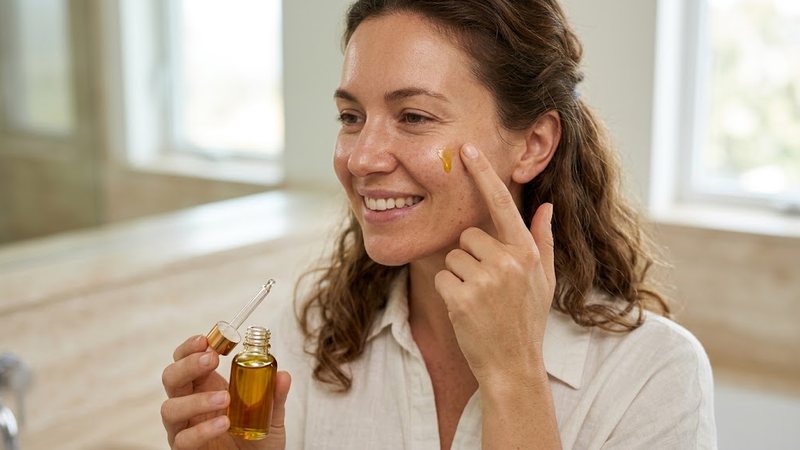
If you want the oil on its own rather than in a bar, moringa oil for skin and hair covers it, and the face routine shows how little you need.
FAQ
What is moringa soap good for?
Washing. A handmade cold-process moringa bar cleans gently, lathers creamily, and leaves the skin feeling soft rather than tight because of its glycerin and free oil. It is not a treatment for any skin condition.
Is moringa soap good for your face?
Many people use a mild handmade bar on the face, especially the unscented versions. Scented bars with tea tree or other essential oils can be too strong for some facial skin. Patch-test, and use a face oil or moisturizer afterward.
Why is moringa soap green?
Moringa leaf powder added to the batch colors the bar a soft sage green with fine flecks. A bright, uniform green is a dye, not the leaf.
How long does moringa soap last?
A four-ounce bar lasts a month or more in daily use if it is kept dry on a draining dish between showers. A bar left in water dissolves in a couple of weeks.
Is moringa soap safe for sensitive skin?
The base soap is mild, but the essential oils used for scent can bother reactive skin. Choose an unscented bar and patch-test on the inner forearm first.
The short version
Moringa soap is a cold-process bar in which moringa oil is part of the oil blend or the superfat, and moringa leaf powder colors the bar sage green. It is made from oils and lye, cured four to six weeks, and keeps its natural glycerin, which is why it feels milder than a supermarket bar. Tea tree, lemongrass, and patchouli are the usual scents. It cleans well and feels good; it treats nothing. Judge a bar by its listed ingredients, its cure time, and its hardness, and keep it dry so it lasts.