Does Moringa Oil Go Bad? Shelf Life, Storage, and How to Tell
How long moringa oil lasts, why it keeps far longer than most plant oils, how to store it so it stays fresh for years, and the three signs it has gone rancid.
Moringa oil shelf life is one of the best things about the oil and one of the least advertised. Most plant oils are on a clock from the day they are pressed; some are stale within months. Moringa oil, stored with a little care, is good for years, and the reason is in its chemistry rather than in anything a seller adds to it. I sell cold-pressed moringa oil, pressed by a partner I have vetted and checked by hand here in Weeki Wachee, on Florida's Gulf coast, and every bottle ships in amber glass because of what is on this page. Here is how long the oil lasts, what makes it go bad, how to store it, and how to tell when a bottle has turned.
Why moringa oil keeps
Oils go bad by oxidizing. Oxygen attacks the double bonds in unsaturated fatty acids, and the more double bonds an oil has, the faster it goes. Polyunsaturated fats, with two or more double bonds per molecule, are the fragile ones. Flax oil, hemp oil, and rosehip oil are mostly polyunsaturated, and they go rancid within months of opening. Argan and sunflower are around a third polyunsaturated and last about a year.
Moringa oil is roughly 70 percent oleic acid, a monounsaturated fat with a single double bond, and under 2 percent polyunsaturated. It also carries several percent behenic acid, a long saturated fat that gave the oil its old name, ben oil, and that contributes to its stability. Add naturally present tocopherols, which slow oxidation, and you have one of the most stable liquid plant oils there is. Watchmakers used it for centuries precisely because it did not gum up or go off. That history is in the cold-pressed guide.
How long it actually lasts
- Unopened, in amber glass, in a cool cupboard: two to three years is a conservative figure, and well-made oil stored this way is often fine well past that. I print a two-year best-by on mine and expect the oil to outlast it.
- Opened, used normally: a year or two, sometimes more. Every time you open the bottle, air gets in, so a bottle used daily for a year will have had a lot of air exposure. In practice a one-ounce dropper used on the face is gone in well under a year, long before the oil declines.
- Stored badly: in a hot bathroom, on a sunny windowsill, or in clear plastic, the oil can turn within months. Storage, not time, is what kills moringa oil.
Those numbers apply to real cold-pressed oil. Oil that was heat-extracted or refined has lost some of its natural tocopherols and may be less stable. Oil that has been diluted with a cheaper carrier inherits the shelf life of whatever it was cut with.
The three enemies
Heat. Every ten degrees of storage temperature roughly doubles the rate of oxidation. A bottle kept in a 90°F bathroom cabinet is aging several times faster than one in a 68°F bedroom drawer. The single most common reason a bottle of good oil goes off is that it lived in the bathroom.
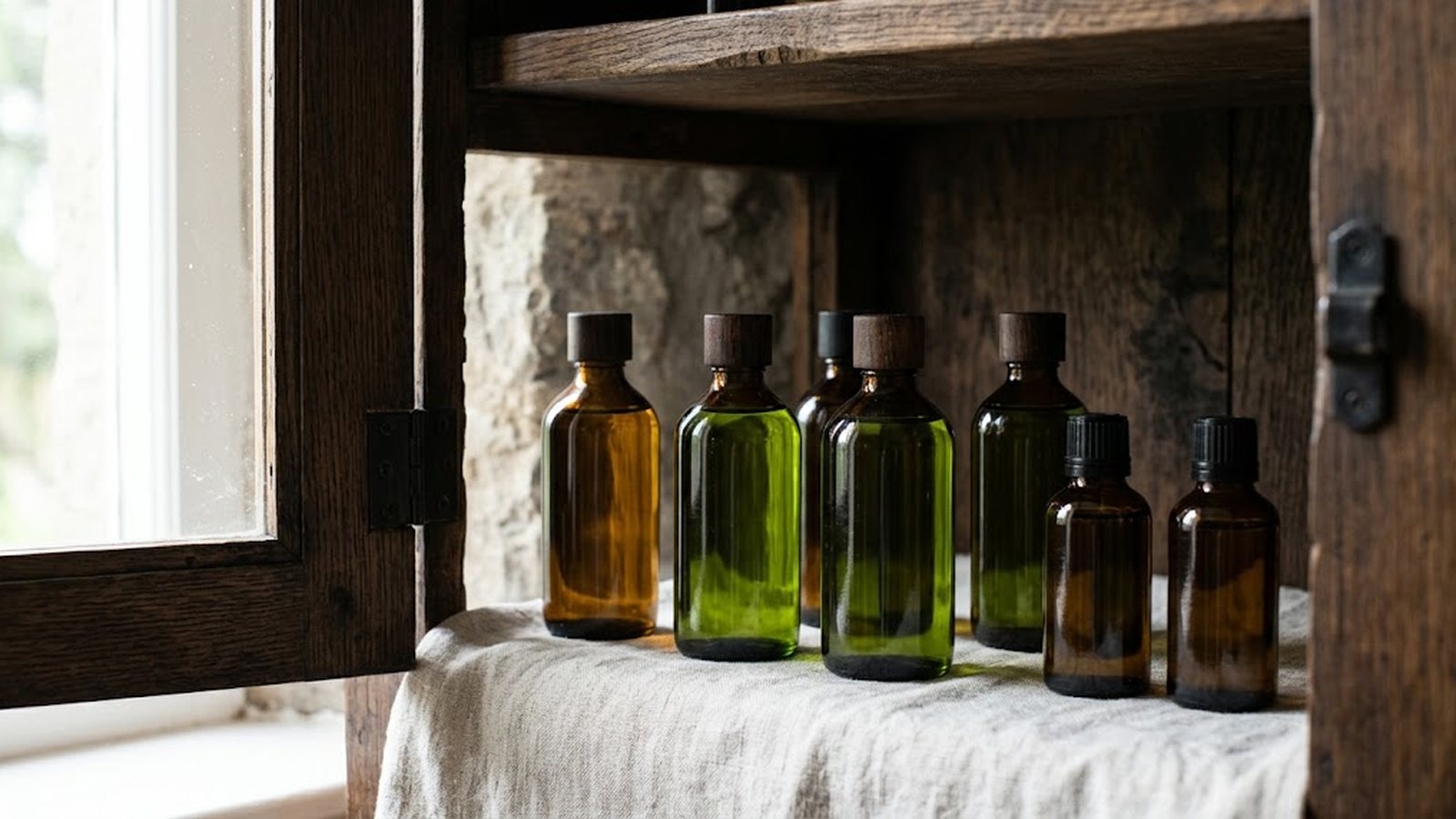
Light. Ultraviolet light drives oxidation directly. This is why amber glass exists, and why oil in clear bottles on a lit shop shelf is already aging before you buy it. Amber blocks most of the damaging wavelengths; a dark cupboard blocks all of it.
Air. Oxygen is the reagent. A full bottle has little air in it; a nearly empty one is mostly air. The dropper itself introduces a small amount each use, which is fine, and it is another reason to buy a size you will finish in a year rather than a large bottle you will nurse for three.
How to store it
- Amber or dark glass, always. If you decant or buy in bulk, use dark glass with a tight cap. Never clear plastic, which lets light in and can leach into the oil.
- A cool, dark place. A bedroom drawer, a linen closet, a kitchen cupboard away from the stove. Not the bathroom, not the windowsill, not the car.
- The refrigerator is fine but unnecessary. Moringa oil goes cloudy and thick in the cold as its saturated fats solidify. That is harmless; it clears at room temperature in a few minutes. Refrigeration extends the life of a large bottle you will use slowly, but for a one-ounce dropper in regular use it is not needed.
- Keep the cap tight and the dropper clean. Do not let the pipette touch your skin and go back into the bottle; dispense into your palm.
- Buy the size you will use in a year. A bottle finished in eight months never has the chance to go off.
How to tell it has gone bad
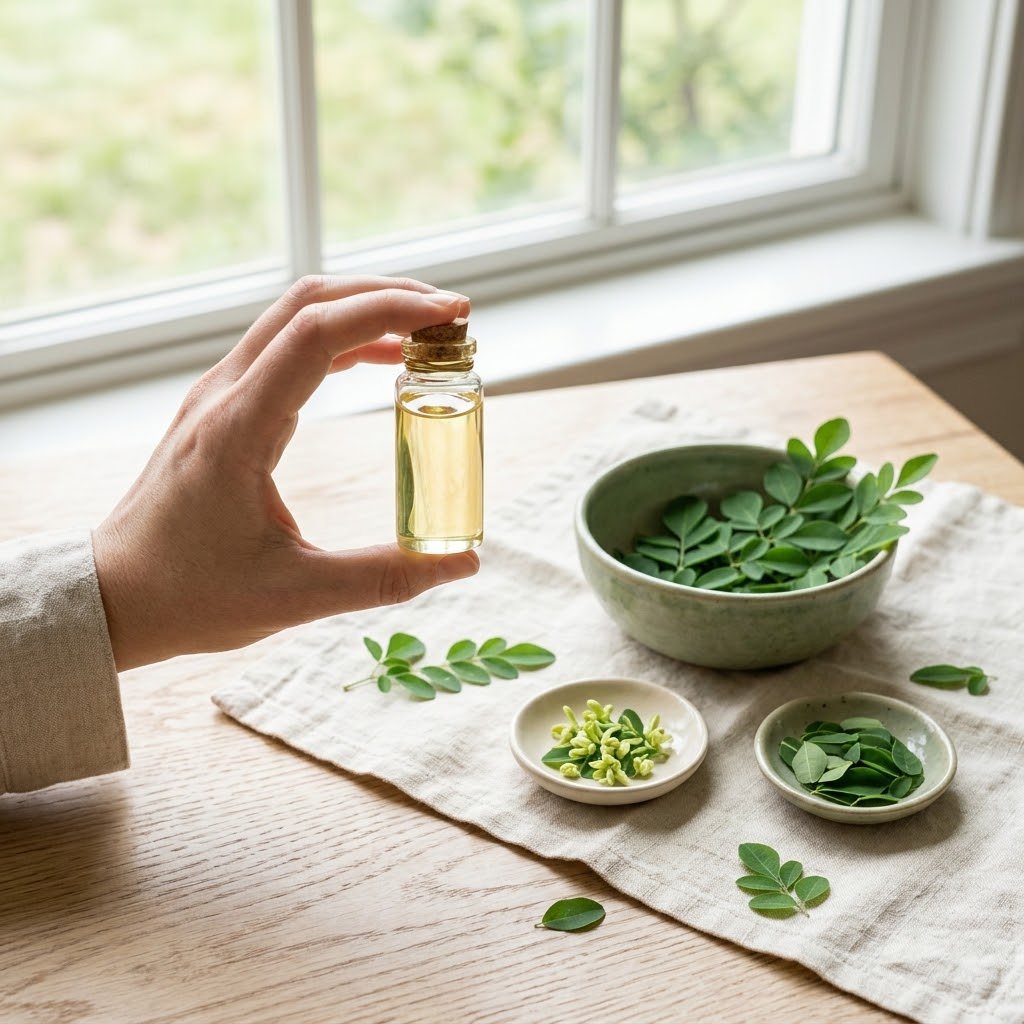
Fresh moringa oil is clear, pale gold, and nearly odorless, with a faint nutty, green note when you rub a drop warm between your fingers. Rancid oil announces itself.
- Smell. This is the reliable test. Oxidized oil smells sharp, waxy, like crayons, putty, old nuts, or stale paint. Once you have smelled rancid oil you will not mistake it. If you have to ask, rub a drop between your palms, warm it, and sniff; warmth brings out the smell.
- Feel. Rancid oil often feels stickier or tackier on the skin and takes longer to absorb than fresh oil does.
- Color and clarity. Oil that has darkened noticeably from pale gold toward amber-brown at room temperature, or developed a haze that does not clear when warm, is aging. Cold-cloudiness that clears at room temperature is not a problem.
The best-by date on the bottle is a guide, not a verdict. Oil stored well can be fine past it, and oil stored on a sunny sill can be off before it. Trust your nose.
What to do with oil that turned
Do not put rancid oil on your face. Oxidized oils are harsh on skin and smell unpleasant. That said, the bottle is not useless: rancid oil is fine for conditioning wooden cutting boards, leather, garden tools, and squeaky hinges, which is roughly what the old watchmakers used it for anyway. Wipe it on, let it soak, buff it off.
Buying for a long shelf life
The practical checklist, which overlaps with the one in the cold-pressed guide:
- Amber or dark glass, not clear, not plastic.
- Pale gold color, nearly no scent, clear at room temperature.
- A seller who can say the oil is cold-pressed and mechanically extracted, without solvents.
- A press date or a best-by date that implies one. Two years from pressing is a reasonable best-by for this oil.
- A size you will finish within a year.
My own oil is cold-pressed and mechanically extracted by a partner whose process I have checked, and I inspect every batch for color and smell before it goes into amber glass. I do not name the press partner, for reasons explained on the nursery page, but I will tell you exactly what to look for so you can hold my oil to the same test as anyone else's.
FAQ
How long does moringa oil last once opened?
A year or two with normal use, stored in amber glass in a cool, dark place. A one-ounce bottle used daily is usually finished long before it declines.
Does moringa oil need to be refrigerated?
No. It keeps well at cool room temperature in a dark cupboard. Refrigeration is harmless and can extend the life of a large bottle, but the oil goes cloudy and thick in the cold and needs a few minutes to clear.
Why is my moringa oil cloudy?
Cold. The saturated fats in moringa oil solidify below about 60°F and turn the oil hazy or thick. It clears at room temperature. Cloudiness that does not clear when warm, combined with a sharp smell, is a sign of age.
What does rancid moringa oil smell like?
Sharp, waxy, like crayons, putty, old nuts, or stale paint. Fresh oil is nearly odorless with a faint nutty, green note when warmed.
Can I use moringa oil past its expiration date?
If it smells clean and looks clear and pale gold, yes. The date is a guide; storage matters more. If it smells sharp or waxy, retire it to the workshop.
The short version
Moringa oil is roughly 70 percent oleic acid and almost free of polyunsaturated fat, which is why it keeps two to three years unopened and a year or two once opened, far longer than most plant oils. Heat, light, and air are what age it, so store it in amber glass in a cool, dark cupboard, never the bathroom, and buy a size you will finish in a year. Cloudiness in the cold is harmless. A sharp, waxy, crayon smell means it has turned, and a turned bottle is for cutting boards, not faces.